

You find a pair online, the photo is good, the price is 42 euros, and the description says “genuine leather straps.” Then they arrive and after two wears the strap has a crease that won’t flatten and a white line along the edge. You didn’t do anything wrong. The word on the label did the lying.
I spend a lot of time looking at shoes at the cheaper end of the market, and the strap is where the money gets saved. On a closed pump, most of the upper is hidden. On ladies strappy heels, two thin strips of leather are holding your entire body weight, so every shortcut in the material is visible and every one of them has a cost. The good news is that you can spot almost all of it in the shop, in daylight, before you pay.
What “genuine leather” actually covers
The phrase is legal and almost meaningless. It covers full-grain hide, which is the top layer with the grain intact, and it also covers a bonded material made from leather fibres glued and pressed with a binder. Both can be labelled genuine leather in most markets, and both feel similar for the first week.
The difference shows up in three places. Full-grain bends and springs back with a fine crease pattern, like the skin on your knuckle. Bonded leather creases in one deep fold, then starts to crack along it. Full-grain has a fuzzy, fibrous edge when cut. Bonded has a sharp edge that has been painted shut to hide the fibres.
In this trade, the giveaway is weight. Pick up a strappy sandal by one strap and let it hang. Full-grain at 1.2 mm has a bit of body and hangs with a slight curve. A 0.8 mm bonded strap hangs like a ribbon and swings. If the pair feels light in a way that seems like a good thing, check the strap thickness before you decide it’s a bargain.
The economics explain the rest. A yard of good upper leather costs several times what a yard of coated split does, and a strappy sandal uses very little material, so the upper isn’t where a 40 euro pair spends its budget. That money goes on the box, the photo shoot, and the return rate. When a brand tells you the leather is the selling point at that price, what they usually mean is the look of the leather. The difference between grain, split and bonded leather is worth ten minutes of reading before your next purchase, because the three behave nothing alike after a month.
The window test takes about three seconds
Take the shoe to the shop window, or outside, or under the brightest light you can find. Hold the strap so the light passes through it from behind. This is the single fastest check I know, and it costs nothing.
- Full-grain or good split: light comes through unevenly, with darker and lighter patches and a visible grain pattern. The colour deepens rather than flattening out.
- Coated or corrected leather: the strap goes uniformly bright, like a coloured gel filter. No grain, no variation, one flat tone.
- PU or bonded with a heavy finish: almost opaque, but you’ll see a faint cloudy core at the fold, and the surface will show a fine plastic sheen at the edges.
None of these are automatically bad. A coated leather strap can be a sensible choice for a rainy climate, and a PU strap at 25 euros is honest if the price reflects it. The point is knowing what you’re buying instead of trusting a phrase. Coatings aren’t a scam either: patent leather has been a deliberate finish since the early 1800s, and a good patent is a durable one. It’s the cheap patent, with a thin film over a soft core, that cracks in the first cold snap.
Edges and lining show the price before the upper does
Turn the sandal over and look at the cut edge of every strap. Then look at the inside face, the part that touches your skin.
Good construction has an edge that’s folded and stitched, or a clean cut with a thin, even coat of edge paint that follows the shape without bleeding onto the face. Cheap construction has a thick bead of paint sitting on top of a raw edge, and after a month that bead starts to flake off in chips you’ll find on the floor.
Lining matters just as much, and it’s the thing buyers notice last. An unlined strap on a heel means the underside is the back of the upper leather, which is suede-like and grabs your skin. That’s fine for a photo and miserable in July. A lined strap with a smooth synthetic or a thin leather lining slides instead of sticking, and it holds its shape for longer because two layers support each other.
The OEKO-TEX leather standard is worth knowing about if you react to finishes, since it covers restricted substances in leather and lining materials rather than just the outer shell. It won’t tell you whether a strap is strong. It does tell you what’s in it.
One more check while you’re in there: bend the strap in half and look at the fold line. If the surface goes white or chalky at the crease, the finish is a coating and it will crack there. If the colour stays and the crease is fine and textured, you’re holding a leather that will age instead of fail.
Strap width is a separate decision from strap quality, and buyers mix the two up. A 10 mm strap spreads the same tension over nearly twice the skin area of a 6 mm one, which is why a wide-strap sandal can feel calmer at the end of a long day than a delicate one at the same heel height. Thin straps look lighter and they are, in the sense that less material means less support. If you want the delicate look and need to stand for hours, look for two thin straps placed close together rather than one. Together they act like a wider band and they still read as fine from a metre away.
What three weeks of real wear does to a cheap strap
New straps look alike. Three weeks in, they don’t.
The first thing to go is the buckle. On cheaper pairs the pin is a thin casting and the hole is punched through a strap that’s slightly too thin, so the hole stretches into an oval. Once that happens, the strap no longer holds the setting you chose and you’re tightening it every hour. Look at the buckle plate. Stamped steel with a visible thickness of 1 mm or more is a decent sign. A buckle that flexes when you pinch it is not.
The second is the strap-to-sole join. On a well-made sandal, the strap is anchored through the sole or stitched into a midsole layer. On cheaper ones it’s glued to the top surface and covered with a decorative stitch. Pull gently at the base of the strap where it meets the footbed. Any movement, even half a millimetre, means glue only.
Third is colour. Black and dark brown finishes on corrected leather can transfer onto bare feet in heat, and a coated strap can go shiny at the flex point within a month, in a way that reads as worn out rather than broken in. This isn’t a defect, it’s the finish behaving exactly as cheap finishes do. If you wear strappy heels barefoot in summer, expect it and don’t pay much for the pair.
I’d rather buy one pair at 90 with a stitched anchor than three at 35 that need replacing each season. Not because expensive is better, but because the anchor at the base of the strap is the one part that can’t be repaired.
Which brings up repairs, because most people never ask. A cobbler can replace a heel tip, re-glue a sole, restitch a buckle and shorten a strap. What a cobbler can’t do is rebuild the bond between a glued strap and a footbed once the glue has let go across the full width, because the surface it was glued to is finished leather and nothing sticks to it twice. Ask about the heel tip first, though. A pair with replaceable tips will outlast a pair with moulded plastic heels by years, and the replacement costs about the price of a coffee.
Where a strappy pair is the wrong answer
Strappy heels are a bad pick for some feet and some days, and the industry doesn’t say so because the category sells.
If your daily step count goes past 6,000, thin straps are the wrong structure. Two 6 mm straps can’t distribute load the way a closed upper does, and the pressure lands on a narrow band across your instep. You’ll feel it at the arch first, usually around the third hour. For that kind of day, a block heel with a wider strap across the foot does the same visual job with a fraction of the grip work.
If you have a high instep, most strappy designs will cut across the highest point of your foot and there’s no material above it to give. Look for an adjustable buckle rather than elastic, or an open-sided design that skips the instep entirely. If you have a wide forefoot and the sandal has a narrow sole, the foot will spill over the edge no matter how the straps are arranged, so check the footbed width before the straps.
And if you’re shopping for a wedding where you’ll be standing for six hours on grass, take a backup pair. That’s not pessimism. It’s the most common single piece of advice I’d give anyone buying strappy heels for one specific day.
Weather is the other factor nobody weighs. A coated strap wipes clean and survives a wet pavement. An unsealed suede strap takes one rain shower badly and never quite comes back. If you live somewhere with four wet months, choose the finish for the pavement and not for the five sunny days you’re imagining. This is also why the same pair can be a great buy for someone in a dry city and a poor one two hundred kilometres away.
How to check a pair you already own
You don’t need to be in a shop to run most of this. Take the sandals to a window on a bright morning and go through it in order.
- Hold each strap to the light. Note whether the grain shows or the light flattens out.
- Bend each strap at the point where it creases when you walk. Look for white at the fold.
- Press a thumbnail into the strap near the buckle. A quick spring back means leather. A slow dent that stays means coated or PU.
- Check the edge paint at the buckle holes. Flaking there is the first sign of a finish on its way out.
- Look at the inside of the strap where it touches your skin. Shiny and smooth is fine. Fuzzy and grabbing means it was never lined.
If two or more of those fail, the pair has maybe a season left, and it’s worth deciding now if they’re for wearing to death this summer or for saving for one event. Either is fine. Just don’t buy a second pair from the same source expecting different results.
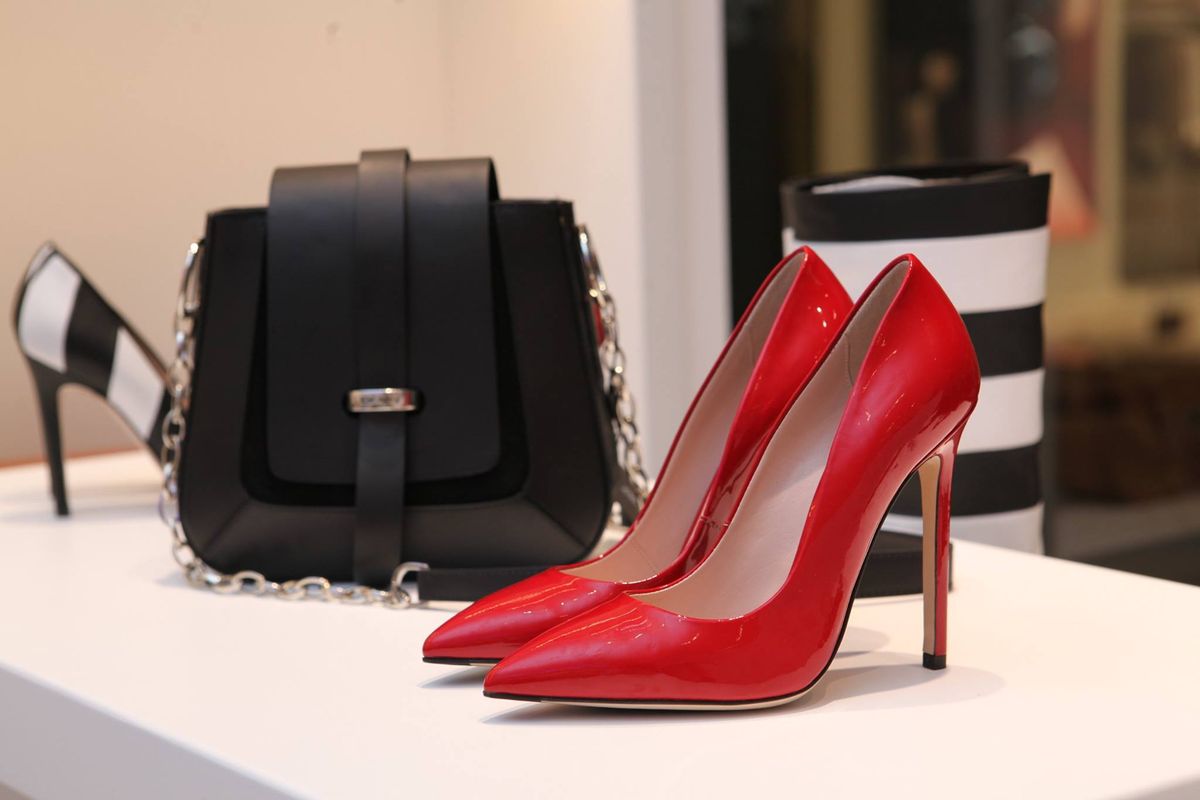
Where it gets interesting is the middle of the market. There are pairs around 60 to 80 euros with a full-grain strap, a stitched anchor and a lined underside, and they’re not hard to find once you know to look at the edge instead of the photo. Woven leather straps like these are a good example of a construction where the material is doing the work, because a weave can’t be faked with a coating. Suede options behave differently again: soft from day one, but they mark and they need a brush, so they’re a poor choice for anyone who wants a pair to look new in October.
For the wider context on how heel shape and strap placement interact, this fit-first buying guide covers the geometry, and the women’s shoes range is where I’d start browsing if you want to compare straps side by side.
Next time you’re in a shop, skip the mirror for thirty seconds and take the sandal to the window instead. Light is the cheapest quality check there is, and it doesn’t care what the label says. If the strap shows grain and springs back under your thumbnail, buy it and stop worrying. If it goes flat and bright, ask yourself whether the price matches what you’re actually holding.
