

You take the gold strappy pair out of the box, put them on with the navy dress, and something is off. Not the colour. The straps sit exactly where your ankle bends, and every step pulls them a little tighter until you’re walking like the shoes are a decision rather than a shoe.
Then you swap to a pair with a different strap height and the same dress looks better, even though nothing about the dress changed. That’s the thing about gold strappy heels: the heel height gets all the attention, and the strap height does most of the work.
Here’s what changes at each height, what each one is actually for, and the four pairings that make a single dress read four different ways.
The strap height decides more than the heel height
Before you look at the heel, look at where the straps cross your foot. There are three main positions, and they behave completely differently against the same ankle.
- Ankle strap, sitting on the bone. The most secure, the least flattering if it lands in the wrong place. It cuts the leg at the narrowest point, which is fine if your ankle is defined and awkward if it isn’t.
- Strap above the ankle, on the lower calf. Elongates the leg and reads dressier. Also the least forgiving of swelling after a long day, because there’s nowhere for the strap to give.
- No ankle strap, just a vamp or toe band. The most leg-lengthening option and the least secure. Your heel lifts slightly with every step, which is fine for a two-hour dinner and miserable for a wedding with dancing.
The rule that follows from this: if you’re between sizes, go up rather than down. A slightly loose ankle strap can be tightened with an extra hole. A tight one can’t be loosened, and it’s the strap that makes people take their shoes off under the table. Strapped sandals have worked this way for a few thousand years, and the engineering hasn’t changed nearly as much as the styling.
Gold adds one more variable. Metallic finishes show every crease and fold in a strap, so a strap that’s slightly too long will kink, and the kink is visible from a metre away. Leather straps hide this. Metallic-coated leather doesn’t.
60mm: the version you can actually wear to work
A gold strappy heel at 60mm is a different shoe from the same design at 90mm, in the same way a canvas tote is a different object from a leather one. At 60mm, you can stand for three hours, walk to a station, and forget you’re wearing heels by the afternoon.
What it does to an outfit: reads casual enough for a weekday and dressy enough for dinner, which is a narrow band that few shoes occupy. Pair it with wide-leg trousers and the strap becomes a detail rather than a feature. Pair it with a midi skirt and it reads like a summer shoe that happens to be gold.
What it costs you: the strap height at 60mm sits lower on the foot, which means the leg isn’t lengthened. If you’re short and wearing a long skirt, this is the height that makes you look shorter rather than taller, because the shoe drops out of the visual line entirely.
Two practical notes:
- At 60mm, a block heel is worth choosing over a stiletto. The lower height doesn’t need the thin heel for elegance, and the block survives pavement.
- Check the toe shape. A pointed toe at this height reads sharper and works with tailoring. A round toe reads softer and works with skirts.
This is also the height to buy if you’re unsure whether you’ll wear gold at all. It’s the least commitment, and if you find yourself reaching for it twice a week, that’s the signal to buy the 75mm version too. A toe-capped sandal with a lower heel is the closest thing to a daytime gold shoe that doesn’t look like evening wear at 10am.
75mm: the wedding and dinner default
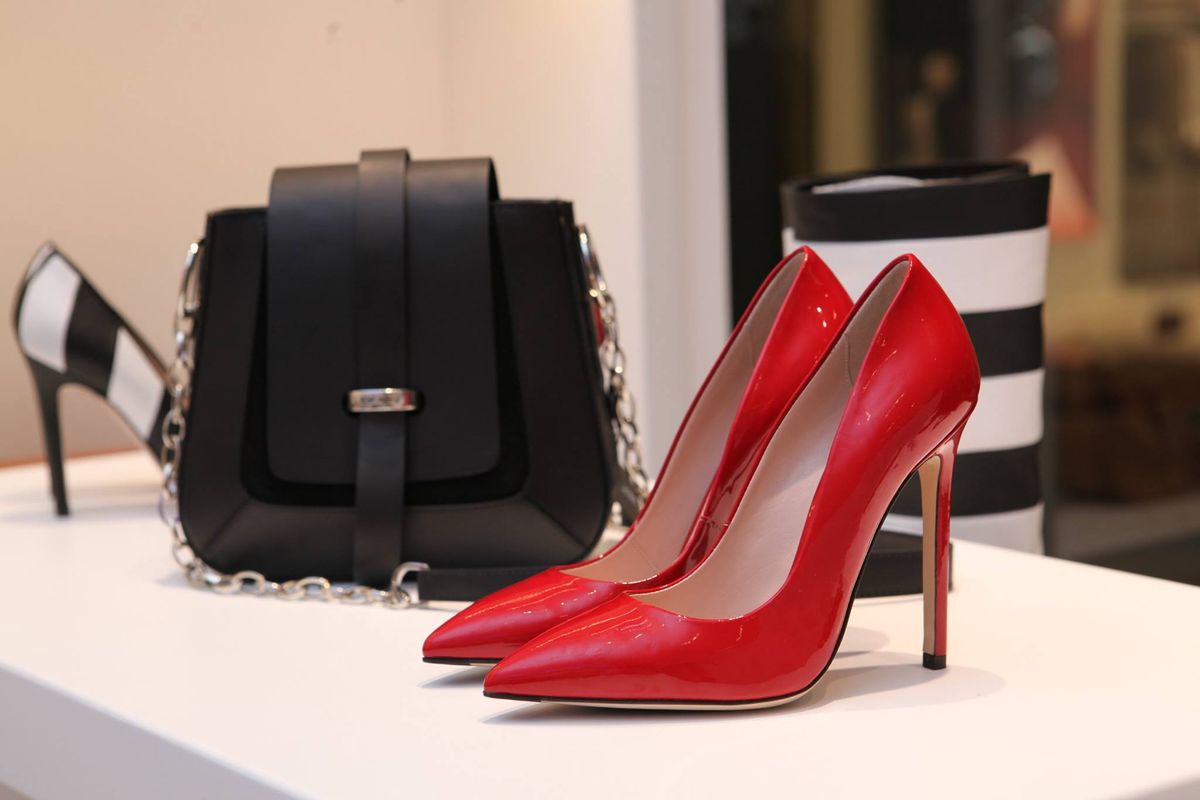
Seventy-five millimetres is where gold starts to look like jewellery. The ankle angle changes enough that the foot reads as arched, the strap sits at a height that lengthens the leg, and the whole shoe becomes an accessory rather than footwear.
For most people, this is the pair to buy first. It covers weddings, dinners, evening events, and any outfit where you want the shoe to be noticed without being the subject.
The trade-offs are worth stating clearly. At 75mm, you’ll feel the ball of your foot after about three hours of standing, and after five hours you’ll be sitting down whenever possible. That’s not a defect; it’s the geometry. You can extend the window with a small gel pad under the ball, but you can’t eliminate it.
What to check at this height:
- A strap that sits above the ankle bone, not across it. This is the single biggest comfort difference between two pairs at the same height.
- A heel base of at least 8mm. Thinner than that and the heel catches in paving joints.
- Padding under the ball, ideally built into the footbed rather than added.
- A buckle you can reach without sitting down. Sounds trivial; it isn’t, at the end of a long evening.
If the event runs past midnight, this is the height where you should plan to change into flats for the walk home. Gold strappy heels for women are usually bought for one specific event, and the useful question isn’t “can I wear these for eight hours” but “can I wear these for the four hours that matter”.
90mm and above: what you’re actually buying
At 90mm, the shoe stops being about walking and starts being about the line of the leg. The arch is pronounced, the calf is engaged, and the silhouette changes in a way that photographs well and feels like work after forty minutes.
The honest assessment: most people who buy a 90mm+ strappy heel wear it for two to four hours, twice a year, and keep it because it does something no other shoe does in photographs. That’s a legitimate reason to own a pair. It’s a bad reason to own three.
What changes at this height, physically:
- Weight moves to the ball of your foot almost entirely, which is why the toe area needs to be wide enough to spread the load.
- The ankle strap takes real tension. Any roughness on the inside edge will rub through skin in about an hour.
- Your stride shortens. You’ll walk slower, and stairs become a two-handed operation.
If you’re buying at this height, buy the pair with the widest toe box you can find and a strap with a soft lining. A pointed sandal on a slim heel is the classic version, and it’s also the one where the toe box decides whether the evening ends at 10pm or 1am.
One thing nobody mentions: gold at 90mm reflects the floor. On a dark floor the shoe brightens; on a pale floor it goes dull and slightly greenish. If the venue has a light-coloured floor, take a photo of the pair against something similar before you commit.
Four shoes, one dress, four different outfits
The same navy midi dress, four pairs. This is the fastest way to see how much the shoe decides.
With the 60mm block. The dress reads like something you wore to work and then to dinner. Practical, slightly under-dressed for a wedding, entirely right for a Friday. The shoe disappears into the outfit, which is the point.
The 75mm strappy heel. The dress reads like an occasion dress. The strap lengthens the ankle, the gold lifts the navy, and the outfit now has a focal point at the foot rather than at the neckline. This is the pairing most people are actually shopping for.
The 90mm stiletto. The dress becomes evening wear. The line of the leg changes, the posture changes, and the whole outfit starts to look like it was planned. It also looks like it requires a taxi.
A flat gold sandal. The dress reads casual, slightly Mediterranean, and about ten years younger in attitude. This pairing is the one people forget, and it’s the one that gets worn most in summer.
Four shoes, one dress, and no two of them say the same thing, which is why the wider heels selection is worth browsing by height rather than by colour. That’s the argument for owning two gold pairs rather than one expensive one: the height changes the outfit more than the shade does.
Buying online: the three numbers to ask for
Most gold strappy heels are bought without trying them on, and the product page rarely lists the three measurements that decide whether they’ll work. Asking for them takes one email, and any seller who can’t answer is telling you something useful.
Strap length, in millimetres, at the buckle hole you’d use. This is the number that matters more than the size. Two pairs in the same size can differ by 15mm of strap, which is the difference between a secure ankle and a shoe that slides. If the listing doesn’t say, ask what the strap measures from the buckle to the furthest hole.
Heel base width. A 90mm heel on a 6mm base behaves nothing like the same height on a 10mm base. The narrow one catches in paving, wobbles on grass, and marks wooden floors. The wide one walks properly. You can usually see this in a side-on photo, and it’s worth zooming rather than guessing.
Toe box width at the widest point. For a pointed strappy sandal, this decides whether your toes sit flat or curl. Under 75mm across at the ball is narrow; over 85mm is generous. If you have wide feet, this number matters more than the size on the box.
Then there’s the finish question, which no measurement answers. Metallic coatings vary enormously in how they age: a thin sprayed coating goes patchy at the strap edges within a season, while a foil-laminated leather holds its tone for years. Reviews that mention the colour “rubbing off at the toes” are describing the first kind. Footwear coverage in the fashion press tracks which metallic finishes are in circulation each season, and it’s a faster read than the reviews if you’re choosing between two similar pairs.
Colour is the other thing photos hide. A true gold, a champagne and a bright brass look similar on a screen and completely different in a room, so ask for a photograph in daylight if the pair is being bought at night. It’s a small request and it prevents the most common disappointment with metallic shoes: the colour that arrives is warmer than the one that was listed.
One last thing about storage. Gold-plated hardware tarnishes in humid air, and a pair left in a bathroom cupboard will go dull at the buckle within a year. Keep them in the box with the silica packet, and wipe the buckle with a dry cloth after wearing. It’s a two-minute habit that keeps the metal reading as gold rather than brass.
Where gold fails, and how to see it coming
Three situations where a gold strappy heel is the wrong shoe, and the signs are visible before you buy.
Daytime, outdoors, direct sun. Gold in full sun reads as a bright yellow-white, and it photographs as though it’s glowing. On a lawn at 1pm it looks like costume. If the event is a daytime garden party, a champagne or bronze tone behaves much better than a true gold.
With warm-toned outfits. Gold next to camel, rust, mustard or cream can go muddy, because the metals and the fabric are the same temperature and there’s nothing to separate them. This is where silver earns its place. The exception is a deep bronze, which has enough darkness to hold its own against warm neutrals.
When the strap is too thin. A 4mm strap in a metallic finish looks like a thread at two metres. Gold needs a bit of width to read as jewellery rather than wire. If you’re choosing between two similar pairs, take the wider strap every time, unless the event is indoors and short.
If the venue is outdoors on grass, add one more check before the event: press the heel into a cushion or a folded towel and see how far it sinks. A thin stiletto disappears completely, which is why outdoor weddings and 90mm heels don’t mix. The 75mm on a wider base is the version that stays upright on soft ground, and it’s also the one that doesn’t leave you standing on the balls of your feet for the photographs.
There’s one more failure worth naming, because it’s the most common: buying gold as a neutral. Gold is not a neutral. It’s a bright, warm accent that happens to go with a lot of things. If your wardrobe is mostly black and white, one gold pair will feel like a statement rather than a staple, and it will sit in the box. That’s not a flaw in the shoe; it’s a mismatch in expectation.
Ten minutes in the shop with a strappy heel
Strappy heels fail in specific places, and all of them can be checked standing up.
- Walk 15 metres, then stop and stand still for two minutes. The strap will tell you where it rubs before the skin does.
- Bend your knee and lift your heel. If the back strap slips off, the shoe is too long, and no insole will fix it.
- Press the strap edge with a thumb. If it feels like a hard edge under the finish, it will cut into skin. Soft lining or nothing.
- Stand on a hard floor and shift your weight forward. Any pressure under the toes means the pitch is too aggressive for daily wear.
- Look at the buckle position. You should be able to fasten it while standing, without looking down twice.
If a pair passes all five, buy it in the height you’ll actually wear rather than the height that looked best in the mirror. The mirror lies about the last ten millimetres, and your feet won’t. What four hours of sitting does to a gold strap covers the part the shop can’t show you, and the three decisions before you walk out the door applies to any pair with a strap and a heel.
There’s a simpler version of this test if you’re shopping alone and don’t want to walk the length of the shop. Put both shoes on, stand still, and lift each heel in turn as though you’re about to take a step. The shoe should stay on your foot without you gripping with your toes. If you have to curl your toes to keep it on, the strap is doing nothing and the evening will end early.
Gold strappy heels are not a single shoe. They’re four shoes that happen to share a colour, and the height you pick decides what you can wear them to. Pick the height by the events on your calendar, not by the pair that looks best under shop lights. Then the gold does its job, which is to make the outfit look finished at the exact point where most outfits stop.
