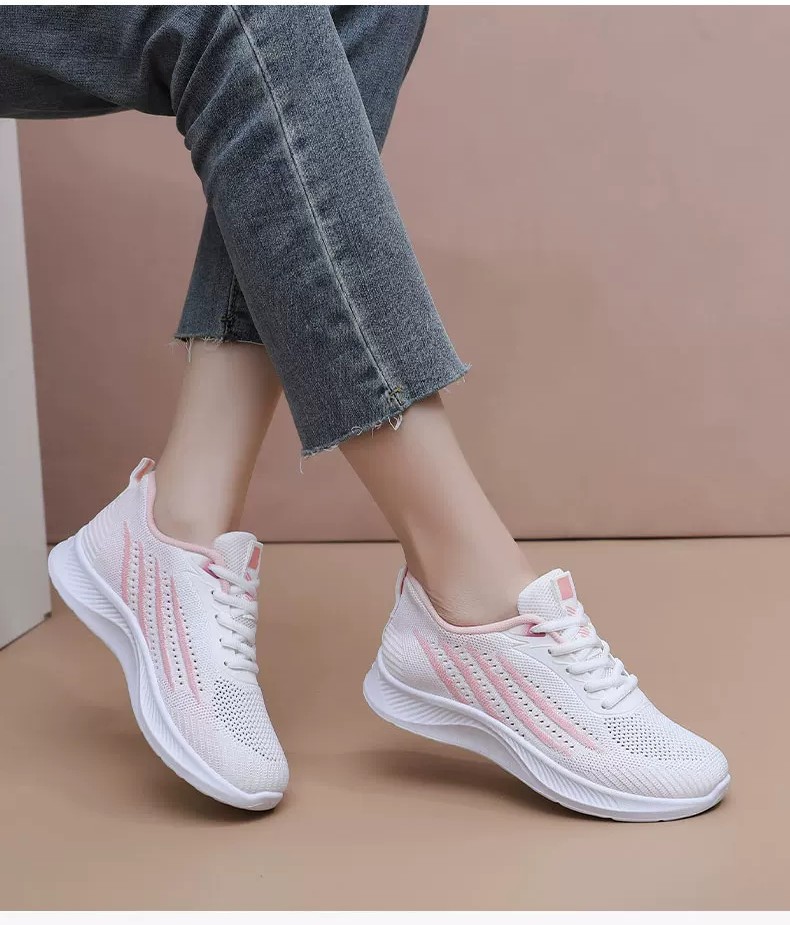
Your black sneakers are fine. That’s the problem. You’ve worn the same pair maybe 200 days this year, and somewhere around the third month they stopped being a choice and turned into a default. Last Tuesday you caught sight of your own feet under the dentist’s chair and felt absolutely nothing.
Hot pink is the cure for that specific numbness. One pair, worn twice a week, does more for jeans and a plain tee than three new tops. Not because pink is having a moment. Because it refuses to blend in, and it drags the rest of your outfit up with it.
There’s a catch, though. A lot of hot pink sneakers bought online go straight back within two weeks. The shade on your screen is rarely the shade on your foot, and a pink that leans too purple can make your legs look grey in daylight.
Here’s how to buy a pair you’ll still be wearing in March.
What hot pink does to an outfit that black can’t
Black sneakers disappear on purpose. They let your coat be the loudest thing in the frame and they never argue with a bag. Hot pink sneakers do the opposite: they grab the bottom third of your outfit and make everything above the ankle look more deliberate than it actually is.
Try it. Straight-leg blue jeans, a grey sweatshirt, hot pink sneakers. That sweatshirt now reads as a decision. Swap in black sneakers with the same clothes and you look like you’re running out for milk.
The reason is contrast placement. A bright shoe pulls the eye down, which lengthens the line of your leg and gives a plain outfit a focal point it didn’t have. If your wardrobe is mostly navy, grey, cream and denim, one pink pair covers more ground than a new jacket would, and it costs less.
Colour forecasters lean on this too. Pantone’s annual colour picks have landed on pink-adjacent shades more than once, which is why pink keeps reappearing on shop floors long after a trend report says it’s finished. And runway coverage at Vogue keeps showing pink trainers styled with tailoring rather than gym kit, which is the useful bit for anyone who doesn’t own gym kit.
One more thing in their favour. Pink sneakers photograph well in bad light, which matters if you’re the person who takes the group photo at every birthday dinner. Black shoes turn into two dark smudges under a restaurant table. Pink ones still look like shoes.
They also break up a monochrome habit. If you’ve been buying the same three colours for years, a bright shoe is a cheap way to test whether you actually like colour, without committing to a pink coat you’ll regret. Worst case, you wear them on weekends only. Best case, you start buying different clothes.
Pick your pink in daylight, not on a screen
There are four pinks sold as “hot pink” and they behave nothing alike. Look at the pair near a window, at noon, before you decide.
- Highlighter pink. Almost fluorescent, slightly orange underneath. Loudest option, best with denim and white, worst with anything beige.
- Bubblegum. Soft, milky, a bit sweet. Reads younger, matches pale skin easily, shows dirt within a week.
- Fuchsia. Blue-based and saturated. The most grown-up of the four and the easiest to wear to an office with a dress code.
- Magenta-leaning pink. Deeper, closer to raspberry. Looks expensive in suede, looks flat in cheap synthetic.
Hold the shoe next to the inside of your wrist. If the pink makes the skin there look sallow, it’s a blue-based pink fighting a warm undertone. If it makes your wrist look pinker and healthier, you’ve found your family. This takes ten seconds and saves you a return label.
The mistake people make is buying the pink from the product photo. Studio lighting is warm, screens are blue-shifted, and the same shoe can look like bubblegum on your phone and fuchsia on your laptop. Two people can order identical pairs and swear the shop sent different colours.
If you’re shopping in person, walk to the door with the shoe. Fluorescent shop light adds a yellow cast that makes every pink look softer than it is. Daylight is the only honest test.
And if you’re between two shades, go one step more saturated than feels comfortable. Pale pinks photograph beautifully and then look washed out against a winter coat. Saturated pink holds its own.
Texture changes the shade as well. The same dye on smooth leather looks flat and graphic, on suede it looks dusty and softer, on mesh it looks brighter because light passes through the weave. If you want a calmer pink, buy suede. If you want the colour to hit hard, buy leather.
The sole decides how loud they look
Same upper, three different soles, three completely different shoes. This is the detail that gets ignored in reviews and matters more than the colour name.
The white version makes hot pink sneakers look sporty and casual. It also draws a hard line at the bottom of the shoe, which visually shortens the leg. Fine with cropped jeans, bad with wide trousers that cover the ankle.
Match the sole to the upper and the shoe looks longer, closer to fashion than sportswear. That’s the more expensive-looking option, and it’s harder to keep clean, because scuffs show on pink rubber far more than on white.
A gum or tan sole cools the whole thing down. Pink against honey-coloured rubber looks less like a children’s shoe and more like something you’d wear with a trench coat. If you’re nervous about the colour, this is the safe pairing. There’s a longer explanation of why gum soles keep showing up on women’s sneakers if you want the detail.
Sole thickness matters too. A slim 20mm sole keeps pink sneakers looking neat and wearable to work. A chunky 40mm platform turns them into a statement, which is fun for about three months and then sits in the cupboard. Be honest with yourself about which one you’re buying.
There’s also the toe. Rounded toes soften bright colours. Pointed or square toes make hot pink look aggressive, which can be exactly what you want, and can also make a cheap upper look cheaper.
One trick worth knowing: if the sole and upper are the same pink, wear them with a cropped hem so the colour has room to breathe. If the sole is white or gum, you can get away with longer trousers, because the contrast already breaks the line. Either way, check the pairing in a full-length mirror before you leave the house. Shoes look different under a table.
What to wear with them, four outfits that work
Pink sneakers fail when people try to match them. You don’t need another pink item. You need one neutral that lets the shoe do the talking.
- Grey sweatshirt, blue jeans, pink sneakers. The default. Grey is the best neutral for hot pink because it never competes.
- Navy trousers, white shirt, pink sneakers. Works in offices where trainers are tolerated. Navy and pink is a classic pairing for a reason.
- All black, then pink shoes. One bright element, nothing else. Wears well at night and hides every stain on the clothes.
- Cream knit, camel coat, pink sneakers. Warmer and softer. Best in autumn, and the hardest to pull off if your coat is yellow-toned.
Skip the obvious move of pairing them with pink lipstick or a pink bag. Two pinks in one outfit rarely match and always look accidental. If you want a second colour, pick something that argues with pink on purpose, like olive or rust.
Socks are the sneaky detail. White ankle socks make pink sneakers look preppy and young. Nude no-show socks keep the look cleaner and slightly older. Black socks with pink shoes look like a mistake, unless you’re doing it deliberately, in which case it looks excellent.
Hem length matters more than people admit. Cropped or straight jeans that end above the ankle show the shoe off. Full-length bootcuts swallow it, and you’ve paid extra for a colour nobody can see. If your jeans are long, cuff them once.
Weather does its part too. In summer, pink sneakers work with linen and bare ankles and almost nothing else. In winter they need weight above them, which means wool, denim and a coat with some structure. A pink sneaker next to a thin summer dress in November looks like a packing mistake.
If you want more pairings to steal, the full sneakers section has colour combinations sorted by season, and the pink sneaker posts go deeper on shades that photograph well. There’s also a solid piece on green and white women’s sneakers if you’d rather go bright but not pink.
They run small more often than black pairs do
This sounds irrational and it isn’t. Bright uppers are usually made in smaller production runs, from patterns that get less wear-testing than the black version of the same shoe. The result: hot pink sneakers fit tighter than the identical model in black, more often than chance would allow.
Order your normal size first, but check two things before you commit. Ask for the internal length in millimetres, not the size number, and compare it with a pair you already own. Then check the toe box width. Bright colours exaggerate a narrow toe because there’s no dark shading to hide the squeeze.
If you have wide feet, look for a mesh upper rather than leather. Mesh gives about 4mm of stretch across the forefoot after a week, which is usually enough. Something like these mesh sports shoes with a soft sole will forgive a wide forefoot in a way that a stitched leather toe cap never will.
Leather and suede pink sneakers need a half size up if you plan to wear them with thicker socks in winter. Not a full size. A full size up in a bright colour looks like you borrowed them.
Flat-soled pairs are the safest bet for all-day wear, and they tend to run truer because there’s no foam midsole compressing under your weight. A pair of breathable flat-soled board shoes will feel the same in hour eight as in hour one, which is not true of anything with a soft EVA midsole.
There’s a cheap test for width before ordering. Trace your foot on paper while standing, measure the widest point across the ball, and add 8mm. If that number is over 100mm, you’re in wide-fit territory and most fashion sneakers will pinch, whatever the colour.
If you’re buying pink for actual walking rather than standing around, the shoe needs structure. A lightweight running pair with real shock absorption will hold up on a 40-minute walk. A fashion sneaker with a thin insole will not, and you’ll feel it in your arches by the second week.
Keeping pink out of the grey zone
Pink is the least forgiving colour in a sneaker rotation. It doesn’t fade evenly. The toe goes first, then the heel where your trousers rub, and then the whole shoe looks tired while the sole is still perfect.
Three habits keep them wearable for a year or more. Wipe the toe box with a damp cloth after every third wear, before dirt sets into the weave. Never put them in a washing machine, because the heat and agitation dull saturation faster than sunlight does. And dry them in shade, not on a radiator, since direct heat shifts pink towards orange.
For mesh uppers, a soft toothbrush and a drop of mild detergent works better than any spray. Work in circles, rinse with a cloth, let them air dry stuffed with newspaper. For leather, a pH-neutral leather cleaner and a colourless cream; coloured polish on pink leather almost always ends in a patchy finish.
Here’s the drawback nobody mentions. White soles on pink sneakers yellow within about four months, and once they go, the shoe looks old even if the upper is clean. If that bothers you, buy a pink-sole or gum-sole pair and skip white entirely.
Suede pink is a different commitment. It looks the best of any pink sneaker for the first month and needs a protector spray before you ever wear it outside. Skip the spray and one rainy Tuesday ends the relationship.
Storage matters more than most people expect. Keep them out of direct sun, because UV bleaches pink faster than washing does. A shelf inside a cupboard beats a windowsill, and a shoe bag beats both if you’re short on space.
If the colour does start to go, one option is to lean into it. Slightly faded pink reads as dusty rose, and dusty rose is a perfectly good colour. What looks like damage in month four looks intentional in month twelve.
The case against buying them
Hot pink sneakers are a bad purchase for about a third of the people considering them, and it’s worth saying so.
Don’t buy them if your wardrobe is built on warm earth tones. Pink next to rust, mustard and chocolate brown looks confused rather than bold. Don’t buy them if you need one pair of shoes to do everything, because there will be a wedding, a funeral and a client meeting where they’re wrong. And don’t buy them if you already own three pairs of statement shoes you wear twice a year.
Do buy them if your default is neutral and you’re bored of it. Do buy them if you travel with one bag and want the photos to look less grey. Do buy them if you’ve been wearing the same black pair since 2023 and want a reason to leave the house in something else.
There’s also a middle path worth considering. Buy one pink pair for the two or three outfits you already wear most, and keep a neutral pair for everything else. That way the pink gets worn hard enough to justify itself, and you never stand in front of the cupboard wondering whether today is a pink day.
One last practical note on cost. The expensive pink sneaker is not automatically the better one. Saturation is cheap to produce and expensive to keep. A mid-priced pair you replace every 18 months often looks better than a designer pair that’s been through two winters of scuffing.
Look at your feet right now. If the answer is “black, again”, pick the shade of pink you’d notice from across a room. Try it on near a window. Then wear it with the plainest outfit you own and see if the outfit finally looks finished. If it doesn’t, you’ve learned something cheaper than a coat.