

It’s 8:05 on a Tuesday. You’ve got one foot in a closed pump and the other in a sandal, and neither one is going to survive the walk to the station plus nine hours at a desk. That’s usually the moment people start searching for woven leather shoes for women, and usually without knowing what they’re actually buying.
Here’s the short version. A woven upper flexes where a solid leather upper can’t. It moves with the top of your foot instead of pressing down on it, and it lets heat out. The catch is that the same openness costs you structure, so fit and finishing matter more than they do on a plain court shoe. Get the right pair and you’ll forget you’re wearing them by lunch. Get a cheap one and the weave will sag into a shapeless sock within a month.
What a woven upper does that a solid one can’t
Start with the material itself, because “woven leather” gets used loosely. Leather is animal hide that has been tanned and finished, and a woven upper is made by cutting that hide into narrow strips, then interlacing them over a backing. Nothing about the tanning changes. What changes is the geometry. A solid vamp is one continuous sheet, so it bends in one direction and creases along a predictable line. Strips bend in several directions at once, which is why the top of the shoe feels soft the second you put weight on it.
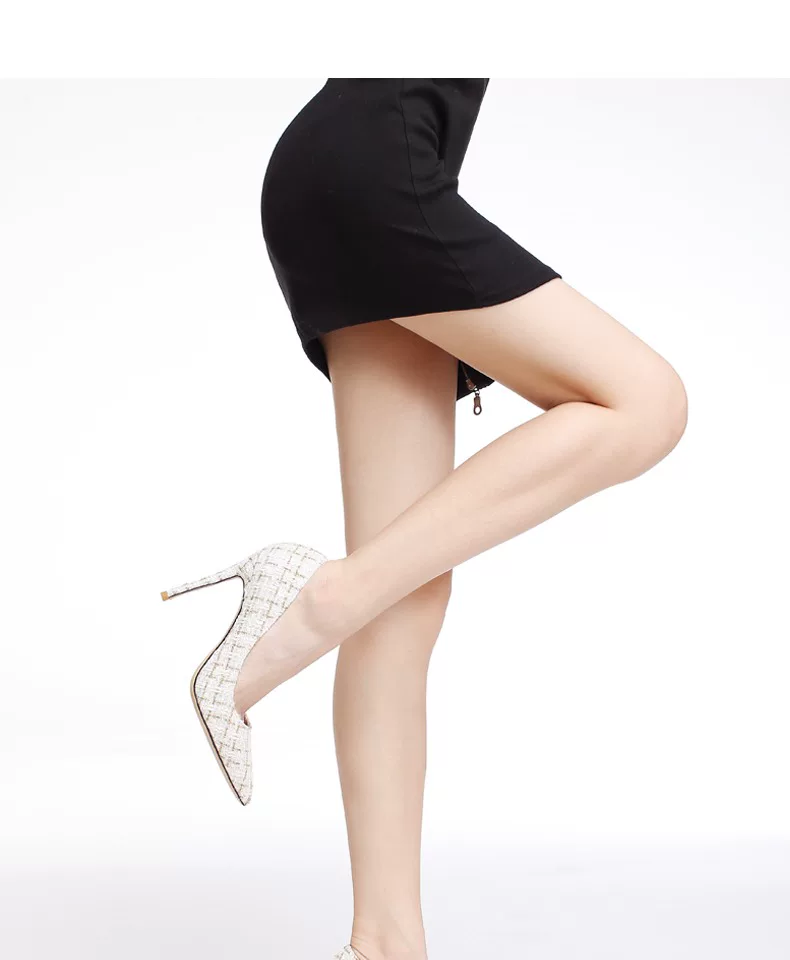
That structure has a second effect you’ll notice in July. Air moves between the strips. Not a lot, and not enough to replace a sandal, but enough that your foot stops feeling like it’s in a plastic bag by 3pm. I’ve worn woven white heels through a 31°C afternoon in Shanghai and had far less of the slip-and-slide feeling than with a smooth leather pump.
The trade is rigidity. A woven toe box collapses if you stand on the back of the shoe to take it off, and a woven heel counter gives less support to the ankle. If you pronate badly or need a firm heel hug, this isn’t your shoe. Fair enough. Most people who buy woven leather want the opposite of support: they want less shoe.
Weight is the quiet advantage. Strips plus a thin backing usually come in lighter than a comparable solid upper, and lighter shoes change how long you’re willing to stand. That’s a boring benefit until you’re on your feet at a trade show for six hours.
Three checks you can do in thirty seconds
Most woven shoes fail on finishing, not design. Before you hand over a card, do these three things in the shop or with the pair in your hallway.
Press the weave with your thumb. It should push in maybe 2mm and spring straight back. If it stays dented, the strips are too soft or the backing is foam that will flatten. If it feels like a brick, you’ve got a coated split leather pretending to be woven, and it will crack along the fold lines by winter.
Turn the shoe over and look at the cut edges. Good woven uppers fold the strip ends under and stitch them, so you see a clean seam. Cheap ones leave raw edges that fray, and once one strip lifts, the neighbours follow. This is the single best predictor of whether the pair lasts two summers or two months.
Check the lining and the seam under your arch. A leather or breathable textile lining is what makes the airflow claim true. A synthetic lining seals the inside and you’ve bought a woven-looking oven. Then run a finger along the inside seam near the ball of your foot. Any lump there will find your toe joint on the first long walk.
One more thing, and this one is about chemistry rather than construction. If you’re buying from a European brand, look for OEKO-TEX testing on the finished leather. Woven strips have a lot of surface area and a lot of cut edges, which is exactly where dyes and finishing agents can sit. A tested pair costs more. It’s also the difference between a shoe that smells like a shoe and one that smells like a factory for three weeks.
Sizing: where the weave gives, and where it won’t
This is where people get burned with woven leather shoes for women. The upper stretches across the vamp, not along the length. So the usual advice to “size down because it’ll give” is exactly backwards.
Take your normal size. If you’re between two sizes, take the larger one and add a thin insole. Strips don’t lengthen, and a short woven shoe will press your longest toe against a seam that has no give at all. I watched a friend buy half a size down in a woven ballet flat because the shop assistant said it would relax. It relaxed sideways. Her big toe still hit the end.
Width is where the weave earns its money. If you have a wide forefoot and normally squeeze into a D width, a woven upper over the ball of the foot will feel a full width kinder after a week. It won’t fix a genuinely narrow toe box, though, and it won’t fix a heel that slips. Those are last-shape problems, and no amount of flex hides them.
Wide feet and narrow feet both need a starting point. If your problem is the opposite of mine and you’re always swimming in shoes, this guide to narrow-fit walking shoes covers the measurement side properly. If you just want to see what shapes exist before you commit, the full shoes catalogue on ShoesNeed is organised by silhouette, which is a faster way to narrow things down than scrolling a search page.
Measure at the end of the day, not the morning. Feet swell by up to half a size over a normal day, and a woven shoe that fits at 9am can be a thumb-pincher at 6pm.
The first week, and the first wet day
Woven leather needs less breaking in than a stiff calf pump, but it does need a plan. Wear them indoors for twenty minutes on day one. Not because the shoe is brutal, but because you want to find the pressure points while you’re still near a plaster.
Day two, walk to the corner shop. Day three, your normal commute. By the end of week one the strips will have taken the shape of your foot and the shoe will stop feeling like a new object. Don’t rush this with heat. A hairdryer on a leather upper dries the fibres unevenly and leaves the weave brittle at the folds.
Now the wet day, because this is the real weakness. Water gets into woven leather at the cut edges and between the strips, and a soaked upper can stretch out permanently. If you get caught in the rain, don’t put them near a radiator. Stuff the toes with newspaper, leave them in a doorway with air moving past, and swap the paper after two hours. They’ll be dry in a day and roughly the same shape.
Skip the waterproofing spray on light-coloured woven shoes, by the way. Most of them darken the strips and leave a film in the gaps that collects dust. A neutral cream conditioner applied twice a season does more good and shows less.
What to wear them with
Woven leather reads casual even when the shape is formal, which is the useful part. A woven pump in white or bone works with cropped wide-leg trousers in a way that a patent leather pump never does, because the texture breaks up the flatness of the outfit. Pair it with a tan or camel bag and stop there. Two textures is enough.
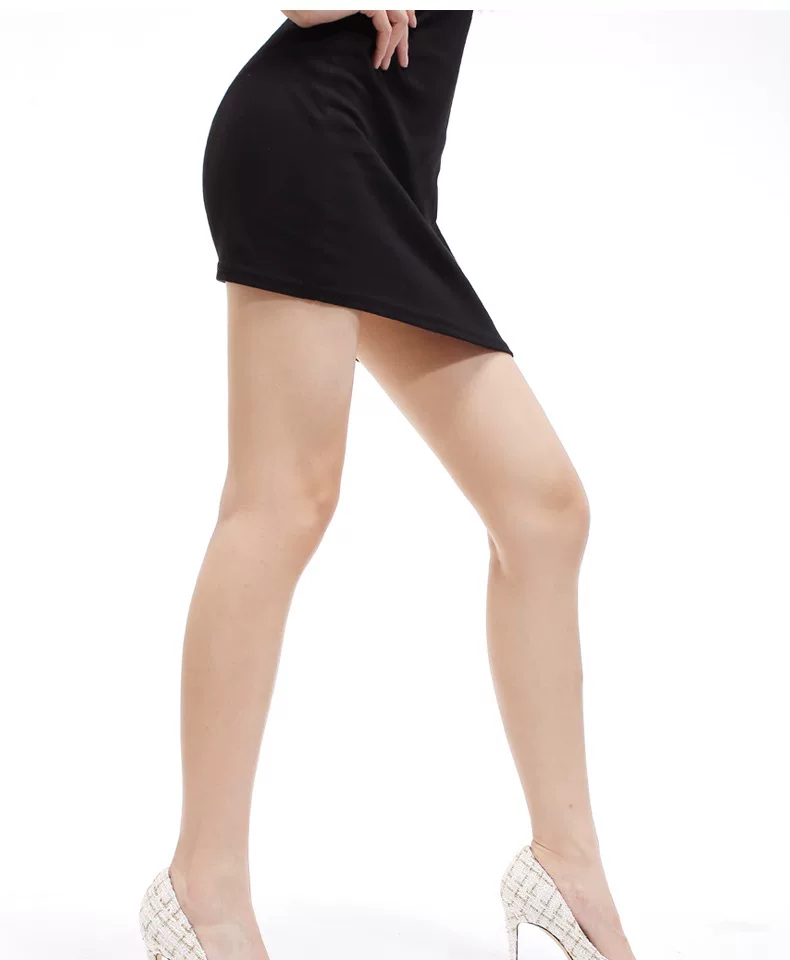
For something more evening-shaped, woven white leather heels with a closed toe handle a summer wedding better than satin, mainly because they don’t show every crease after the second hour of standing. The white is the risk. Keep a stain wipe in your bag and don’t wear them to anything involving grass.
If you want the look without the closed toe, woven white sheepskin heels for summer evenings sit in the same family but with a softer hand. Sheepskin strips are more forgiving against the skin and less forgiving against scuffs. Look at which part of a shoe you usually destroy first and pick accordingly.
Short paragraph, but it matters: texture does the work. Keep everything else plain.
Denim is the easy test, and it’s the one most woven leather shoes for women pass. Straight-leg jeans that hit just above the ankle, a woven flat or low block heel, and you’re done. Skinny jeans with a woven shoe can look a bit dated, mostly because the proportion is top-heavy. And a woven shoe with a heavy sock is a waste of the airflow you paid for. Wear a no-show liner and accept the 20 minutes of cold toes in October.
Mules are the other shape worth knowing about, since the open back suits a woven upper naturally. There’s a decent breakdown of how western mule shoes fit and wear through a full day if you’re leaning that way. If you’re still deciding on heel height, the heel styles women actually keep on is a more honest comparison than most size charts.
Where the price gap actually shows
Woven leather shoes for women range from about $40 to well over $300, and the difference isn’t the hide itself. It’s the labour in the weaving and the quality of what sits underneath.
At the low end, the strips are cut thin and glued to a synthetic backing. That’s fine for a season. The tells are a weave that looks printed from two feet away, edges that are folded with glue instead of stitched, and a footbed that’s a single flat pad with no shape. You’ll feel the last one at hour three, when the arch starts looking for support that isn’t there.
Mid-range is where most people should buy. You get real leather strips, a leather or textile lining, a stitched edge, and a footbed with some contour. Expect to pay somewhere between $90 and $160 depending on heel height. Above that you’re paying for brand, or for hand-weaving that genuinely looks different, or for a last shape that fits a specific foot better. All three are real. None of them make the shoe last longer.
That last point is the one I’d argue with most people about. Price buys you finish and fit, not durability. A $300 woven shoe and a $120 one both die at the same seam if you wear them in the rain and store them under a boot. The expensive pair just dies looking better.
Care, and the two things that wreck a weave
A woven upper takes about four minutes a week. Brush it with a soft shoe brush, dry, in one direction. That lifts dust out of the gaps before it turns into grit that saws at the strips from the inside. Then a barely damp cloth for marks, and a neutral conditioner once a month in summer, twice if you wear them daily.
Never soak them. Never put them in a washing machine, even on a cold cycle, even in a laundry bag. Water plus agitation is the fastest way to turn a structured weave into a collapsed one, and no cobbler can put the tension back.
The two things that actually wreck woven leather are heat and weight. Heat comes from radiators, car footwells in August and the boot of a car. Weight comes from how you store them: a woven shoe at the bottom of a stack spends the winter flattened under a boot, and by spring the vamp has a permanent dent. Store them on a shelf with tissue in the toe, or in a box where nothing sits on top.
And the honest part. Woven leather shoes for women are not a workhorse purchase. If you walk 8,000 steps a day on pavement, a solid leather sneaker or a proper walking shoe will outlast it by years and cost you less per wear. Buy woven for the days when you want to look like you didn’t try, and keep a sturdier pair for the days when you actually have to get somewhere. That’s not a compromise. It’s just how you get two summers out of a pair instead of one.
