

You know the feeling. You find a flat that looks right, you slide your foot in, and the outer edge of your little toe is already pressing against a wall. By lunch it’s a dull ache. By five you’re walking on the outside of your foot to avoid the pressure.
That’s not you having difficult feet. Most women’s flats are built on a last that runs narrow at the ball, and a size up doesn’t fix it because the extra length just puts the widest part of the shoe in the wrong place. Flat wide shoes for women exist, but you have to know what to look for, because the label rarely says “wide” and the photos never show the inside.

Why most flats run narrow
It comes down to the last, the foot-shaped form the shoe is built around. Ask any fitter about flat wide shoes for women and they’ll talk about the last before they talk about the brand. A lot of women’s flats are made on a last that’s essentially a scaled-down version of a dress shoe: narrow through the ball, tapered at the toe, shallow in the toe box. It photographs well and it fits maybe half of the people who try it.
Then the upper gets stiffer. A flat with a firm leather or a coated finish has almost no give across the ball, so any width you don’t have in the shoe becomes pressure on the fifth toe joint. That’s the spot where most “these flats hurt” complaints start, and it’s a construction problem, not a breaking-in problem.
There’s a second issue that’s less obvious. Flat shoes have no heel to hold the foot back, so the foot slides forward as you walk. By the end of a day your toes are jammed into a toe box that was already shallow. A wide shoe with a shallow toe box is still a bad shoe, which is why width alone doesn’t solve anything.
Once you know that, sizing gets simpler. You’re not looking for a bigger shoe. You’re looking for a different shape, and the shape is doing most of the work.
Measure once, properly, and write it down
Stand on a piece of paper against a wall in the afternoon, heel to the wall, and mark the tip of your longest toe. Measure both feet. Most people have one that’s 3mm to 6mm longer, and the longer one is the number that matters.
Then measure the widest part of the ball, across the joint where your big toe meets the foot. That second number is the one nobody knows, and it’s the one that predicts whether a shoe will hurt. Shoe widths are usually built in increments of about 5mm, so a difference of half a centimetre between your foot and the shoe’s inner width is a difference you’ll feel by 2pm.
If the numbers put you between sizes, go with the wider option and solve the length with a thin insole. Length is easy to adjust. Width isn’t. You can add a pad at the heel, but you can’t add room at the ball without stretching the upper, and stretching works on leather and fails on coated or synthetic materials.
There’s a useful reference on how shoe sizing systems are built and where they disagree, which explains why a 38 from one brand fits like a 39 from another. It’s not you. It’s the alphabet soup of standards.
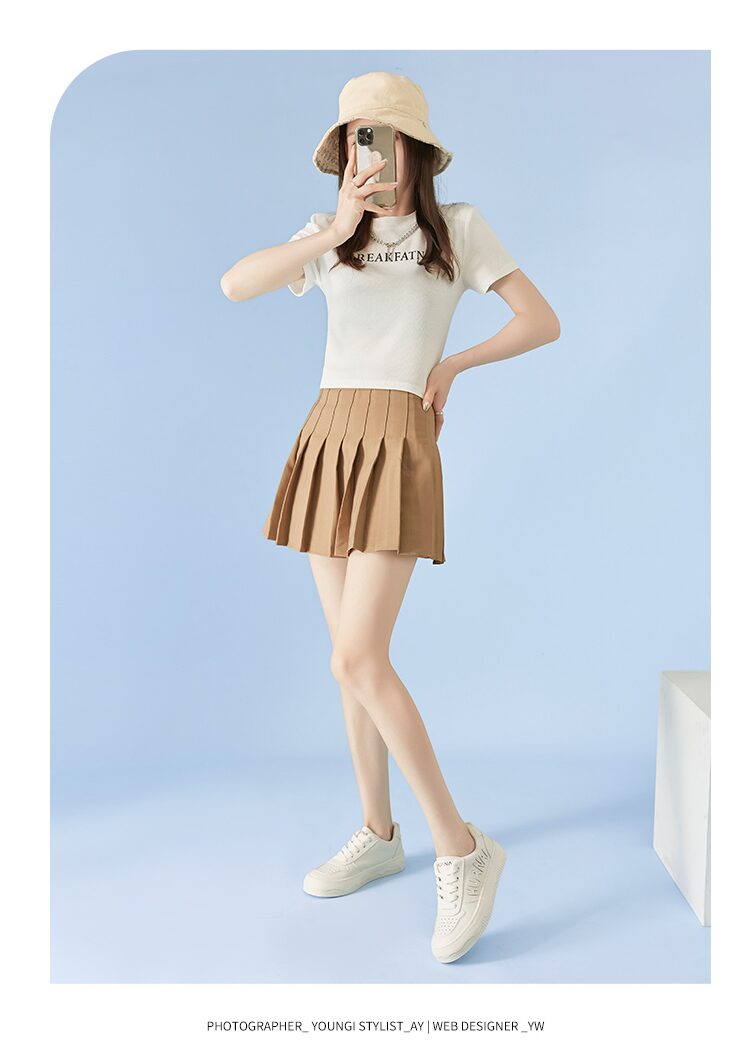
What to look for in the shoe itself
Four things decide whether a flat will be kind to a wide foot, and you can check all of them in the shop. This is the part of buying flat wide shoes for women that actually changes the outcome, so take your time with it.
A rounded or squared toe. Pointed toes cut the room at exactly the place your toes need it. A round, almond or soft square toe gives the same length with more usable space inside.
Depth over the toes. Press your thumb down on the top of the toe box. If it barely gives, your toes will rub the ceiling of the shoe every time you step. Deep toe boxes are the single most overlooked feature in flat shoes.
An adjustable upper. A strap, a laced front, an elastic gusset or a soft collar all let the shoe adapt to your foot rather than the other way round. A slip-on with a rigid topline has to fit perfectly on day one, and almost nothing does.
A sole that extends wider than the upper. Look at the shoe from above. If the sole edge is visible all the way around, your foot is standing on the sole rather than hanging over it, and that’s a much more stable walk. Shoes where the upper is wider than the sole roll your ankle inward on uneven ground.
None of these are premium features. They’re just signs that the last was designed for a real foot. If you can see the shape of the shoe working with your foot in the mirror, it usually will.
Materials that give, and materials that don’t
Softness is not the same as stretch, and the difference matters when you’re buying for width. It’s the reason two pairs of flat wide shoes for women in the same size can feel completely different on the same foot.
Nubuck, unlined suede and soft tumbled leather have some give across the ball. They’ll mould to the shape of your foot over two or three weeks and stay there. Smooth corrected-grain leather, patent and anything with a heavy coating will not move. They might feel soft in the hand and still refuse to widen where you need it.
Woven and knit uppers are the most forgiving option, because the structure itself flexes in more than one direction. If width is your main problem, a woven flat will feel a full size kinder than a leather one in the same labelled size, without looking like an orthopaedic shoe.
Elastic panels are the quiet hero of this category. A flat with a hidden gusset at the instep will open enough to take a wide foot and still hold the heel. The trade is longevity: elastic perishes, usually around the two-year mark, and once it goes the shoe is finished.
Linings matter too. A thin leather lining takes the shape of your foot and stays cool. A synthetic lining doesn’t stretch and traps heat, and a wide foot in a hot shoe is a blister waiting to happen. Check the inside with your fingers before you commit.
Insoles, half sizes and the honest limits
Insoles solve more problems than they cause, but they can’t add width. What they can do is lift your arch so your weight stops sitting on the outside edge of the foot, which takes pressure off the spot where a narrow shoe hurts. A 3mm to 5mm arch support is enough. Anything thicker changes the fit of the shoe and pushes your heel up out of it.
Half sizes are worth understanding. In most brands, a half size is about 4mm to 5mm of length and no width change at all. So sizing up half a size to solve a width problem adds length where you didn’t need it and leaves the pressure exactly where it was. That’s why people say sizing up didn’t help. It wasn’t going to.
If you have a bunion, the shape of the shoe matters more than the size. Bunion symptoms get worse with pressure on the joint, and a soft upper over the bunion with a wide toe box is the combination that stops the rubbing. Stretching a narrow leather shoe over the joint works for a week and then the leather springs back.
And the honest limit: some feet need a shoe that isn’t fashionable. If your width difference is more than about 8mm over the standard last, a proper wide-fit brand will beat any styling trick. Buy one pair that fits properly and build the rest of the drawer around it.
Breaking in a pair that’s nearly right
Sometimes the fit is 90% there and you want to close the gap. That’s a reasonable goal with the right materials and a waste of time with the wrong ones.
Start with a test. Put the shoe on and press the upper over your little toe. If it moves 2mm or more, the leather has some give and a break-in period will help. If it doesn’t move at all, no amount of wearing will widen it, and you should return the pair while you still can. Sellers count on people keeping shoes that almost fit, so check this on day one, indoors, on carpet.
For leather that does give, wear the shoes for 30 minutes indoors with a thick sock. Then take them off. Repeat for three days. That’s it. This is boring on purpose, because the aggressive methods people recommend mostly damage the shoe. Warming the upper with a hairdryer softens the finish and leaves it prone to cracking at the crease. Wetting the leather and walking until dry works, and it also compresses the insole and shortens the shoe’s life by about a year.
Stretching is not a substitute for correct sizing. It buys millimetres, not sizes.
A shoe stretcher is the one tool that genuinely helps, if you use it correctly. Insert it, widen it a quarter turn, and leave it for 24 hours. Then a second quarter turn. You’re aiming for 2mm to 3mm across the ball, not a size. More than that and the upper distorts around the toe, which looks worse than the original problem and can’t be undone.
Skip stretching entirely on woven, knit, patent or coated uppers. Woven and knit don’t need it. Patent and coated leathers crack along the stretch marks, usually within a month, and there’s no repair for that.
What to wear them with, and where they still fail
Most flat wide shoes for women look wider from above than they do from the side, which is why the hem matters more than the shoe. Keep the trouser hem off the widest part of the foot, with one adjustment: keep the trouser hem off the widest part of the foot. A cropped wide-leg trouser that ends at the ankle lets the shoe look intentional. A full-length trouser that pools over a wide flat makes the whole outfit look heavy at the bottom.
Straight-leg denim, a midi skirt with a defined waistline, and a long coat all work. Avoid a slim tapered trouser with a very round toe, because the combination makes the foot look short and wide from the front. An almond toe fixes it without changing comfort.
Where they still fail is anything with a lot of walking on hard ground. A flat, by definition, has no cushioning under the heel and no rocker to help you roll through the step. If your day involves 10,000 steps, a wide flat with a 15mm sole is a better bet than a thin one, and a wide-fit sneaker is better again. There’s a comparison of walking shoes that don’t look like gym gear if that’s your week.
For the office, wide flats with a slightly thicker sole and a closed toe handle a full day better than a ballet flat. These flat-bottomed casual shoes with a thick sole are the type that works: room at the ball, a sole wider than the upper, and enough depth to stop the toe rub. If you need something with height, a large-size thick-heel option gives width and stability without a thin heel to balance on.
One last thing worth reading before you buy: the fit notes in this fit-first guide for narrow feet are the mirror image of your problem, and they explain how to read a last shape from a product photo. Same skill, opposite direction. If you’d rather start from silhouette, the full shoes catalogue is sorted by shape rather than brand, which saves time when width is the thing you’re shopping for.
