

Before you look at colour, price, or brand, there are three measurements that decide whether a pair of low sneakers will work on your foot. Most shoppers never see them on the listing. Two of them you can measure yourself in under a minute.
I’m going to give you the criteria first, then the trade-offs, then the cases where you should walk away. That order matters, because low sneakers for women are the easiest category to buy badly. They look simple, so people buy them casually, and then wonder why a shoe with almost no material in it manages to hurt by lunchtime.
Here’s the short version. Stack height decides how your foot meets the ground. Internal length and toe box width decide whether you can walk in them for an hour. The collar cut decides nothing about comfort and everything about how they look with a hem. Get the first two right and the third is a styling choice.
The Three Numbers to Check First
Stack height is the thickness of the sole under the heel, measured in millimetres. Low sneakers usually land between 16mm and 32mm. Under 20mm and you feel the pavement through the shoe, which is either the point or a problem depending on what you want. Over 30mm and the shoe stops being low in any meaningful sense, even if the collar is short.
Heel-to-toe drop is the difference between the heel stack and the forefoot stack. A 6mm drop means the heel sits 6mm higher than the front. Most low sneakers run 4mm to 10mm. Zero drop is flat, which changes how your calf works whether you intend it to or not.
Internal length is the one number almost nobody publishes. It’s not the same as your foot length. You want roughly 8mm to 10mm of clearance in front of your longest toe while standing, which is about a thumb’s width. Measures shorter than that and your toes will hit the front on every downhill step. Measures longer and your heel will slide, which is worse than it sounds on a shoe with a low collar.
Those three numbers cover about 80% of fit complaints. The other 20% is width and arch shape, and no listing will tell you either.
One practical note on how these numbers get published. Stack height is usually listed as a single figure for the heel, with the forefoot height hidden. If you can only find one number, assume it’s the heel and treat the drop as unknown. That’s a gap worth asking about directly, because a 30mm heel with a 12mm forefoot behaves very differently from a 30mm heel with a 22mm forefoot.
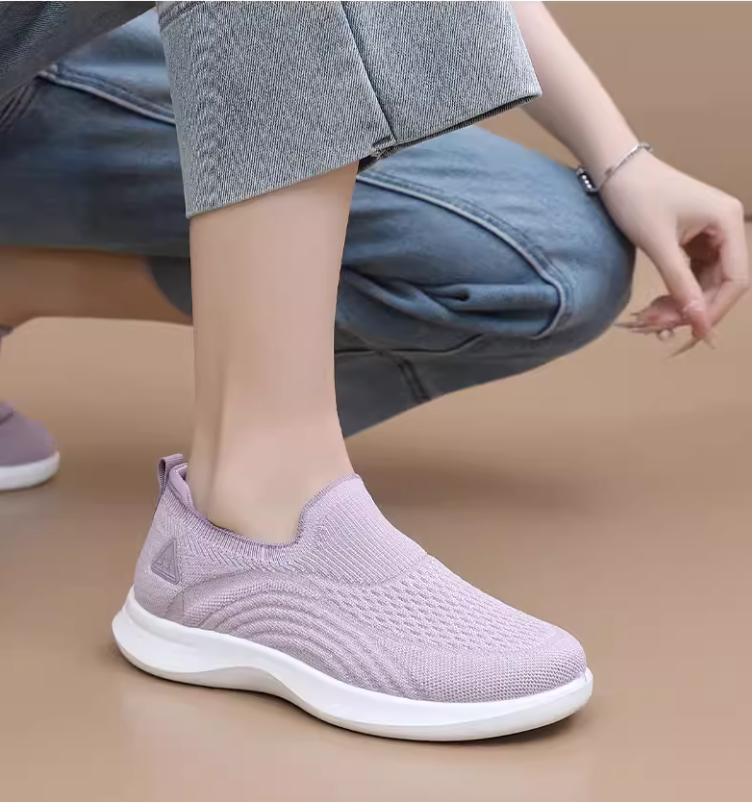
Stack Height: What 18mm, 25mm, and 32mm Feel Like
At 18mm you get ground feel. You can tell whether the ground is tile, concrete, or gravel, and your foot does more stabilising work. For most people this is fine for a two mile walk and tiring beyond five miles. It’s also the height that looks most like a classic canvas plimsoll, which is the aesthetic most people are chasing.
Twenty-five millimetres gives you cushioning without a platform look. This is the sweet spot for daily wear: enough foam to take the edge off pavement, little enough that you still feel stable on stairs. If you’re choosing one pair and you walk between three and eight thousand steps a day, this is the range to aim for.
The 32mm version starts to behave like a platform. It’s comfortable standing still and slightly awkward on uneven ground, because the base is wider than your foot and the ankle has to correct for it. Good for concrete, bad for cobblestones. Also the height where a low collar and a thick sole start to look mismatched.
One rule worth applying: as stack height goes up, midsole firmness should go up with it. A soft 32mm sole is unstable. A firm 32mm sole is fine. If the listing doesn’t mention firmness, press the midsole with your thumb. If it compresses more than a few millimetres, it will collapse under your weight within a few months.
Weigh the pair if you can. Under 250g per shoe is light for this category and suits warm weather. Around 300g is normal. Above 350g and the shoe starts to feel like a trainer rather than a plimsoll, which matters if you bought it for the clean look.
One more caveat on stack height: it wears down. A 25mm EVA midsole loses around 2mm of effective height over 500km of walking, and the loss is uneven, more at the heel than the forefoot. That’s why a beloved pair starts to feel thin at the back after a year. It isn’t your imagination.
The Collar Cut Changes More Than the Look
A low collar leaves your ankle free, which is good for range of motion and less good for lateral stability. On flat ground the difference is negligible. On a cambered pavement, a low shoe asks more of your ankle, and if you’ve sprained one before you’ll notice that within the first week.
The cut also changes the sock decision. A low collar shows the sock, so the sock becomes part of the outfit. That’s a styling constraint, not a fit issue, but it’s the reason some people feel a low sneaker looks unfinished with a cropped trouser and fine with a full-length one.
Heel height at the back matters too. A low sneaker with a 65mm heel counter holds your heel better than one with a 50mm counter, even though both are technically low. If you have narrow heels, look for the taller counter and a padded collar lining. That combination reduces slip more than lacing does.
Tongue thickness is the last detail. A thin, unlined tongue saves weight and lets the laces press into your instep. A padded tongue adds 20g and removes that pressure. If you have a high instep, padded is the better choice.
There’s also a heel-slip fix worth knowing before you return a pair. Lace the top eyelets in a heel lock pattern, which pulls the material tight around the ankle without crushing the instep. It works on low shoes too, and it solves most slip complaints in about two minutes.
The collar edge itself deserves a look. A bound edge with a soft binding sits comfortably against bare skin. A raw, folded edge rubs, especially on the inside of the ankle bone. If you plan to wear them without socks, that detail matters more than anything else on this page.
A Five-Minute Sizing Protocol
Measure your foot in the afternoon, standing, with the socks you’ll wear. Put a sheet of paper against a wall, heel to the wall, and mark the tip of your longest toe. Do both feet, because almost everyone has one foot 3mm to 6mm longer, and you size to the longer one.
Add 8mm to 10mm to that number and compare it to the brand’s internal length, not their stated size. If they only publish EU sizes, ask for the last length in millimetres. A brand that can’t answer that question is telling you something about their quality control.
Then check width. Measure across the widest part of your foot while standing. Most women’s sneakers are built on a last around 88mm to 92mm wide in a size 38. If your foot measures wider than that, size up half a size rather than hoping the material gives. Canvas stretches about 3mm across the width. Leather stretches less.
Finally, walk on an incline if you can. Ten steps up and ten down tells you more than ten minutes on a flat shop floor. Downhill is where a short internal length announces itself.
If you’re ordering online and the brand publishes a printable size guide, use it rather than your usual size. Low sneakers from different makers vary by up to 8mm in internal length at the same stated size, which is enough to turn a comfortable fit into a tight one.
Break them in indoors for two days before committing. Twenty minutes on carpet, then an hour, then a short walk outside. If a seam is going to rub, it will show up in that window, while the pair is still returnable.
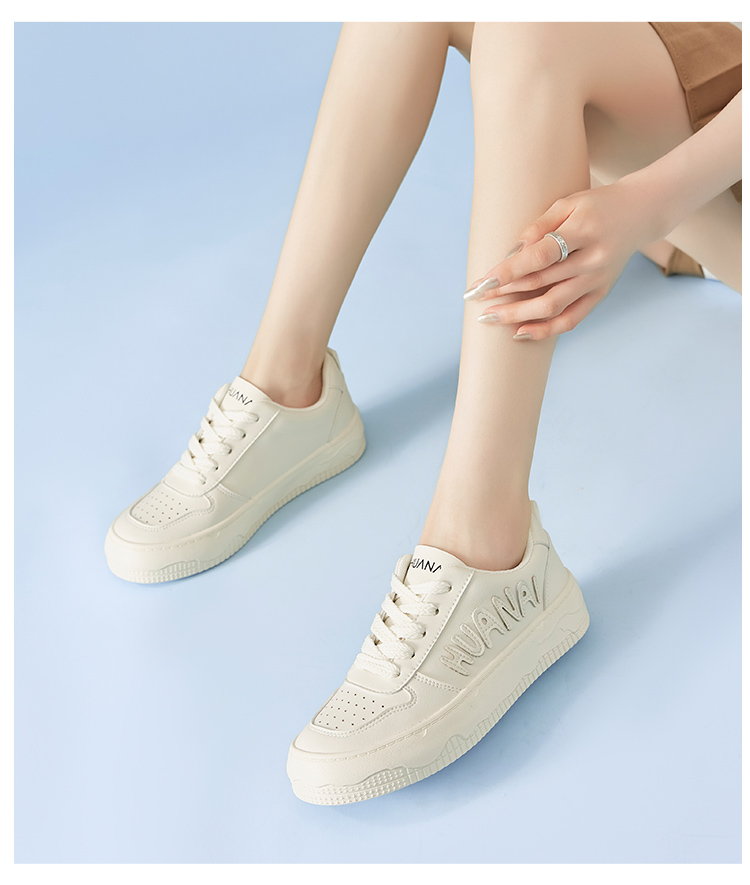
Where Low Sneakers Fail
Rain. A low shoe has no defence against a puddle, and a wet foot in a thin sock is uncomfortable within minutes. If your commute involves walking through standing water, this category is the wrong tool.
Long days on hard floors. Under 20mm of stack height, eight hours on concrete will find every weakness in your arch. If your job is standing, choose 25mm or more and add an insole with actual arch support.
Uneven ground. Gravel, cobblestones, and badly maintained pavements all ask for ankle stability that a low collar doesn’t provide. You can still wear them, you’ll just feel more of the ground and correct more often.
Long periods of standing still are their own problem. Cushioning helps when you move, because the foam compresses and rebounds with each step. Standing on a thin sole for two hours means constant pressure on the same few points, which is why retail staff tend to prefer a thicker midsole than their walk to work would suggest.
Cold weather. Low cut means a cold ankle, and thin canvas means a cold foot. Wool socks help, but the shoe itself has no insulation. Below about 5°C, most people switch to something with more coverage.
Airport security and long flights are a different kind of fail. A low sneaker is easy to slip off, which is good, but a thin sole on a cold cabin floor for six hours is not. If you fly often, pack a pair of thick socks and treat the shoe as an indoor slipper.
None of these are reasons to avoid the category. They’re the boundaries. A low sneaker is excellent for dry city walking, indoor days, driving, and anything where you want a clean line at the ankle.
When to Skip Them Entirely
Arch support is a dealbreaker. Most low sneakers have a flat, removable insole and a flexible midsole, which is the opposite of what a fallen arch needs. You can add an orthotic, but a shoe with a flexible sole will fight it.
A history of ankle sprains changes the calculation too. A low collar gives you nothing laterally, and the trade-off isn’t worth it for daily wear unless the ground is flat and the walk is short.
Anyone walking more than 10,000 steps a day should skip the flat ones. Choose 25mm to 28mm with a firmer midsole and a rocker shape at the toe, which reduces the work your forefoot does at push-off.
Finally, don’t buy blind if you’re between sizes. Low sneakers have less material to accommodate a sizing error, and returns are a hassle. Buy from a seller with free returns or wait until you can try a pair.
For the middle ground, the notes on how gold and white trim holds up over six weeks cover a similar low silhouette, and the fit test in four months with white and pink sneakers is worth reading before you commit to a light colour.
Two pairs that fit the low profile brief: these breathable mesh walking shoes sit around the 22mm mark with a flexible sole, and the flat-soled board shoes are the sturdier option if you want more structure under the arch. Browse the full women’s shoe range if you’re comparing across categories.
Background worth ten minutes: Wikipedia’s entry on shoes covers how last shapes developed and why sizing varies between makers, and Britannica’s overview explains the relationship between sole construction and flexibility. Both explain why two shoes in the same size can fit completely differently.
So the checklist is short. Confirm stack height, confirm internal length, measure your wider foot in the afternoon, and then decide whether the collar height suits the ground you actually walk on. The look is the easy part. The numbers are what you’ll feel at 6pm.
