

There’s a stall at most weekend markets with a plastic crate of old trainers, and somewhere in the middle of it sits a pair of red, white and blue sneakers with a slightly yellowed sole. Eighteen euros, sometimes twelve. Fifty metres away, a shop sells a near-identical pair for a hundred and ten.
Both are legitimate purchases. The gap between them is where most of the interesting decisions are, and it’s a gap that women’s red white and blue sneakers sit in more often than almost any other colourway, because the style has been in near-continuous production since the late seventies.
What follows is a comparison of the two routes, with the specific things that decide whether the cheap pair is a steal or a mistake.
Why this colourway holds value better than plain black
Solid black sneakers are a commodity. Every brand makes them, every season, and a used pair competes with a new pair at a similar price. Red, white and blue is narrower. Fewer brands produce it, several of them only do it in limited runs, and the resale market prices it on scarcity rather than on condition alone.
The practical effect is that a good used pair of this colourway can be resold for close to what it cost, which is almost never true of black. It also means sellers ask more, and it means the cheap pair on the market stall is usually cheap for a reason.
There’s a design explanation too. Three colours split across panels force the manufacturer to commit to a layout: which panel is red, where the white sits, how much blue shows at the heel. Those proportions change between decades, and collectors notice. A pair from 1998 and a pair from 2019 are the same idea executed differently, and that’s what keeps the second-hand market moving.
None of this makes the vintage pair better. It makes it more distinctive, which is a different thing and occasionally a worse one.
If you look at the broader history of how this type of shoe moved from sports equipment to everyday wear, the colour blocking did most of the work. The sneaker’s shift into casual dress happened fastest in colourways that already had a strong graphic identity, because they read clearly from a distance. That’s still why a red, white and blue pair gets noticed across a room and a black one doesn’t.
What “vintage” means in an actual listing
The word gets used for anything older than about three years, which is useless. Three markers do most of the work in dating a pair.
- The midsole colour. New foam is white or cream. Foam that has spent a decade in a box goes amber, then brown, and the change is not reversible. A slight ivory is normal on a five-year-old pair. A deep tea stain means fifteen years or a lot of sunlight.
- The size tag. Fonts, layouts and country codes changed on a fairly regular schedule. A tag with a two-letter country code and no UK size is a different era from one with a full conversion grid.
- The insole print. Logos rub off with wear, but the printing style is a good dating clue. Crisp, high-contrast print on an otherwise worn shoe usually means a replacement insole, which is worth asking about.
Ask the seller for a photo of the tag before anything else. It’s the cheapest way to find out whether “vintage” means 1994 or 2022, and the difference matters for both price and fit.
One caution about the language. In a listing, “deadstock” should mean never worn, with the original box. It often means “worn twice and cleaned”. If the price is high and the photos don’t show the insole and the outsole wear pattern, the description isn’t doing its job.
Four inspection points that decide the price
A used sneaker fails in a predictable order, and each failure has a visible signature. Check these four and the pair’s real condition is fairly clear.
Midsole compression. Press a thumb into the side of the midsole, halfway between heel and toe. New foam pushes back within a second. Foam that stays dented has lost its structure, and no insole will restore the cushioning underneath. This is the most common reason a cheap pair feels flat within a week.
Toe spring. Sit the shoe on a flat table and look from the side. A healthy pair curves up gently at the toe, maybe 10 to 15mm. A collapsed toe spring means the sole has taken a set, usually from being stored under something heavy, and the shoe will feel like it’s dragging.
Collar padding. Squeeze the top edge of the heel collar. Soft, even padding is fine. Lumpy or hollow means the foam has broken down, and that’s where blisters start.
Outsole wear pattern. Look at the heel and the ball of the foot. Even wear across both shoes is normal. Wear on the outer heel of one shoe only suggests a gait issue the seller may not have mentioned, and it will feel odd under your own foot.
- Press the midsole. Dent that stays = walk away.
- Check toe spring on a flat surface. Flat or drooping = structural set.
- Squeeze the collar. Lumpy = blisters ahead.
- Check outsole wear. Asymmetric = someone else’s gait baked in.
A pair can pass all four and still be a bad buy, but it can’t fail one and be a good one.
Do the inspection in that order, because each step takes less time than the last and the first one eliminates the most pairs. Most sellers are relaxed about it if you explain what you’re doing. Pressing a thumb into a midsole takes a second and saves an argument later.
What sunlight does to red, and why it matters second-hand
Red dyes are the least stable of the primaries under ultraviolet light. That’s not an opinion about quality; it’s a property of the pigment chemistry. Reds fade towards pink, then towards a dusty coral, and the change happens fastest on the panels most exposed to sun.
On a red, white and blue sneaker, that means the red panels and the white panels age at different rates, so a sun-faded pair develops a mismatch that can’t be corrected by cleaning. The red goes soft and the white goes yellow and the contrast that made the shoe work disappears.
When you’re inspecting a used pair, hold it next to a window and look for uneven fading between the two shoes. One faded and one not usually means the pair lived by a window, with one shoe in shadow. That’s not a defect exactly, but it’s a permanent look.
The white is worth a separate mention. Yellowed white rubber can be partly reversed with an oxidising gel and a few hours of sunlight, but the treatment works on flat surfaces and not on textured ones. On a midsole with a fine grain, expect a partial result at best.
If you want the longer version of how UV affects textile and leather colour, the testing standards for colourfastness are a surprisingly readable place to start, and they explain why a test result quoted as “4 out of 5” is about fading, not about quality.
One practical consequence for storage: keep the pair out of direct sun when it’s not being worn. A windowsill is the worst place in most homes, because the light is strong, the exposure is daily, and nobody thinks of it as damage until the red has gone soft. A cupboard is fine. A shelf facing a south window is not.
Fit changed between decades, not just between brands
A 1990s last and a 2020s last are not the same shape, even on the same nominal size. Uppers got slimmer through the midfoot, toe boxes got rounder, and the amount of internal padding at the collar roughly doubled.
The result is that a vintage pair in your usual size will often feel half a size small, and a modern pair in the same size can feel roomy. Buying second-hand without trying means measuring, not guessing.
Ask the seller for the internal length in millimetres, measured heel to toe with the insole in place. Compare it to a pair you already own that fits. A 5mm difference is enough to change the feel, and it’s the only number that transfers reliably across eras.
Width is harder. Some sellers will give you the internal width across the ball of the foot, and if they will, take it. If they won’t, assume the vintage pair runs narrower and size accordingly.
The other fit variable is the insole. Many older pairs have a glued-in insole that has compressed and hardened. Replacing it is possible but fiddly, and on some constructions the original insole is structural. Ask before you buy whether the footbed lifts out.
Here’s a practical shortcut if you can’t get measurements. Take a pair you already own that fits well, stand on a piece of paper, and trace around your foot with a pencil held vertically. Measure heel to longest toe. Add 8 to 10mm for toe room. That number is your target, and it travels across brands, decades, and continents far better than a size label does.
Try the pair on in the afternoon if you possibly can. Feet swell by roughly 5% over a day, and a pair that fits at 9am can pinch at 6pm. Second-hand sellers who offer a try-on window, even fifteen minutes on the pavement outside, are worth the extra ten pounds.
Where used pairs actually turn up
Most people look in one place and give up. There are four, and they price differently for the same shoe.
General second-hand apps are the widest market and the worst for detail. Sellers list a size and a photo, and the photo is usually taken on a bed. You’ll find the cheapest pairs here and the most surprises. Ask for the tag, the insole and the outsole before you commit, and expect half of them not to reply.
Specialist sneaker resale platforms grade condition explicitly and photograph the flaws. Prices run 20-40% higher than the same pair on a general app, and you get a returns window. If you don’t want to learn the inspection routine, this is where the premium buys you someone else’s eyes.
Charity shops in wealthy areas are the outlier. Stock turns over fast, prices are low, and staff rarely know what they have. The odds are poor, but the payoff is a pair at a fifth of market price. Check the midsole before you get excited, because donated pairs are often donated for a reason.
And then there’s the back of your own wardrobe, which sounds like a joke and isn’t. A pair that was retired for a compressed insole two years ago is often structurally fine. That’s a free pair of shoes for the price of a £12 insole, and it’s the same maths that applies to everything else in this piece.
What each grade is actually worth
Prices vary by city and by model, but the bands are reasonably consistent for a mainstream red, white and blue pair with no collector status.
- Worn, visible fading, compressed midsole: £15-25. Buy only for the shape, and expect to replace the insole immediately.
- Light wear, sole intact, slight ivory midsole: £40-60. The best value band. Most of the life is still there.
- Excellent, boxed, minimal creasing: £80-110. Close enough to new pricing that the new pair often wins.
- Deadstock, original box, tags attached: £130+. A collector price. Not a shoe you’d wear in the rain.
The middle band is where the maths works. Below it, you’re buying a project. Above it, you’re buying a story about the shoe’s history rather than the shoe.
If you’re selling rather than buying, the same bands tell you what to expect. Clean the pair, photograph the tag and the outsole, mention the midsole colour honestly, and price in the middle of the band. Buyers who know what they’re looking at will pay it, and the ones who don’t were never going to.
There’s an argument for the top band if the model has been discontinued, because the alternative isn’t available at any price. That’s a legitimate reason. It’s just not the same as value.
Cleaning a used pair without wrecking the colours
The instinct is to soak it and scrub it. Both are wrong on a multi-colour upper.
Bleach on white rubber works and bleach on red panels removes colour permanently. Enzyme cleaners break down organic stains and are safe on most synthetics. A pH-neutral soap with a soft brush is the compromise that gets 80% of the result with none of the risk.
Work in sections: white first, then blue, then red, rinsing the brush between each. Colour bleed happens when a wet brush carries pigment from one panel to the next, and it’s most likely on the red-to-white boundary.
For the midsole, a melamine sponge handles scuffs on smooth sections and destroys texture on grained ones. Use a fingertip and a cloth on anything with a grain.
Dry at room temperature, stuffed with paper, away from radiators. Never in a tumble dryer, and never on a radiator, because heat sets the yellowing you were trying to remove.
One habit worth copying from people who buy a lot of second-hand pairs: clean them the day they arrive, before wearing them once. Dirt that’s been walked on for a week is bonded in by pressure, and the cleaning job roughly triples.
You’ll also want to deal with the inside before the outside. Sprinkle bicarbonate soda in both shoes, leave it overnight, shake it out in the morning. That handles most of the smell that no amount of exterior cleaning touches. If the smell survives that, the pair has been stored damp and the foam is probably holding moisture, which is a reason to return rather than clean.
Dry the pair with the laces out and the tongue pulled forward. Air needs to move through the shoe, not around it, and a pair left laced up takes two days to dry instead of one.
One last thing about white laces. They’re the cheapest part to replace and the biggest visual upgrade on an older pair. A fresh set costs very little and makes a tired upper look two years younger, which is useful if you’re the one selling.
When buying new is the smarter move
Second-hand works when the pair is structurally sound and the colourway is the point. It stops working in three situations.
First, daily wear. A pair worn five days a week for two years needs a midsole with a full life ahead of it, and a used pair rarely has one. The saving of £50 disappears when the shoe is dead in eight months.
Second, anything involving rain. Older adhesives and older coatings are less water-resistant, and a vintage pair that gets soaked will often start to separate at the toe within a season.
Third, when the sizing is uncertain and returns are impossible. A market stall has no returns policy. If the internal length is unknown and the pair can’t be tried on, the risk sits entirely with you.
There’s a fourth case that gets overlooked. If you only wear the pair a handful of times a year, a cheap second-hand buy is fine and a new pair is waste. If you wear it constantly, the new pair is the cheaper option even at three times the price. The decision is about frequency, not about the shoe.
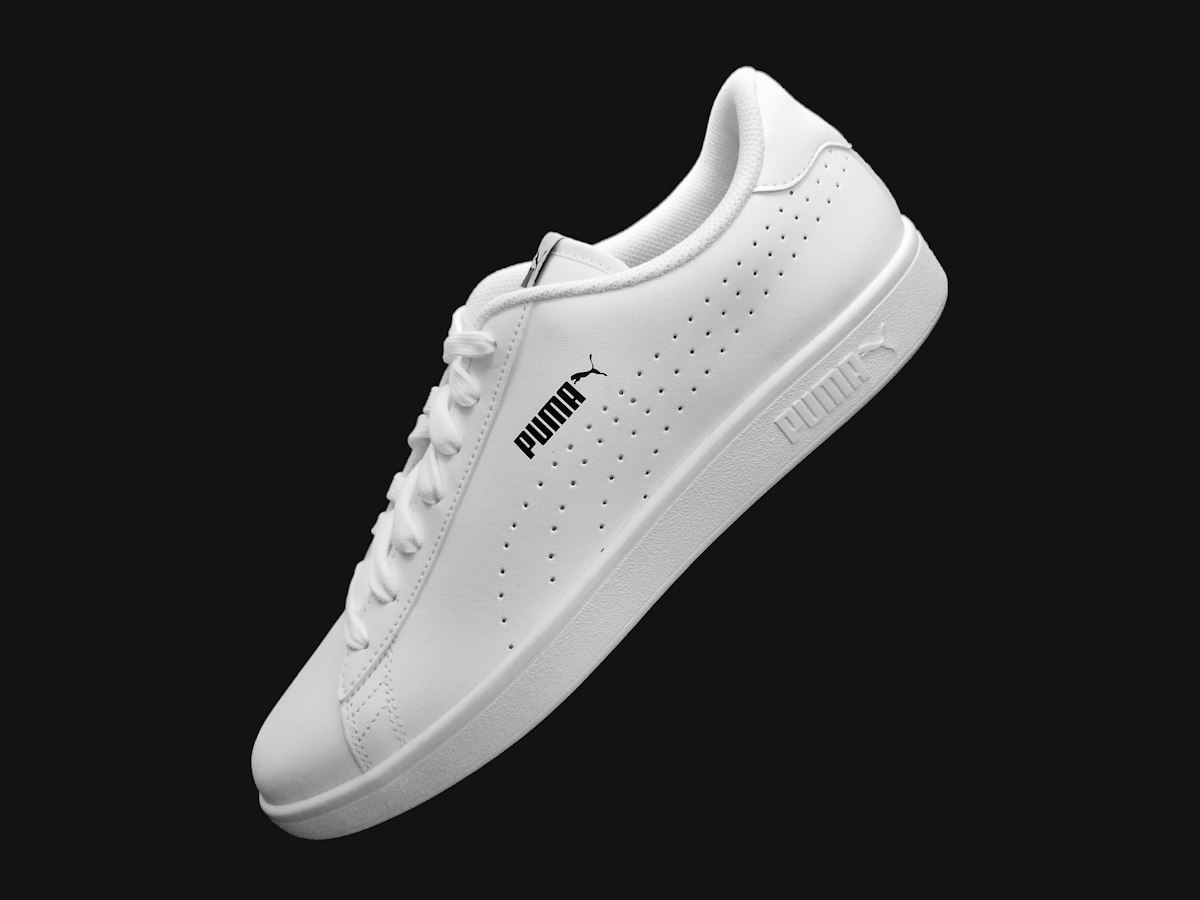
If any of those apply, the new pair is cheaper in practice. The breathable flat-soled board shoes cover a similar casual shape at a lower price point than a boutique pair, and the 6cm-soled white pair shows how much a chunkier sole changes the proportions. Both sit inside the wider sneaker range.
Two more pieces worth reading if you’re weighing this up: the red flag that shows a sneaker isn’t really a dress shoe, and how two pairs compare once you price them per wear.
A last observation from watching this market for a while. The pair that gets worn is almost never the rarest one. It’s the one whose midsole still has life in it, whose colours still match, and whose size was measured rather than assumed. Red, white and blue gets people’s attention at the stall. The four inspection points are what keep the pair out of the back of the wardrobe by spring.
