

You’ve got wide-leg trousers that stop just above the ankle, and every pair of sneakers you own disappears underneath them. That’s the small, specific problem low cut sneakers solve. They sit below the ankle bone, so the shoe and the hem are both visible, and the whole outfit reads as though someone thought about it.
They also let in gravel, offer nothing in the way of ankle support, and make sock choice a visible decision rather than a private one. Whether that trade is worth it depends on how you walk and what you wear, so it’s worth ten minutes before you buy.
The short version: low cut is a summer and tailoring shoe. If you want one pair for everything, this isn’t the shape.
What “low cut” actually means in a shoe listing
It’s a description of the collar height, not the sole. A low cut sneaker stops below the malleolus, the bony bump on the outside of your ankle. A mid cut covers it. A high top goes well above and usually laces higher up the shin.
Listings are loose about this. Some brands call anything below the ankle “low top” and anything at the ankle “mid”, and the measurements aren’t standardised. If the exact height matters to you, look for a number in the spec, or measure the collar on a pair you already own and compare with the product photo proportions.
There’s a practical reason to care. The collar height decides which trousers work, which socks are visible, and whether the shoe rubs the ankle bone on the inside. That last one is the most common complaint and the easiest to avoid.
If you’ve ever had a pair that left a red mark just below the ankle bone after a long walk, that wasn’t a sizing problem. It’s a collar that sits exactly on the bone instead of below it.

The ankle bone is the whole fit question
Put the shoe on and press where the collar meets your ankle. If it sits right on the bone, it will rub. If there’s a finger’s width of clearance, you’re fine. That clearance is why some low cut sneakers feel invisible and others feel like they’re grinding.
It’s also why a shoe that fits perfectly in the shop can hurt by the afternoon. Feet swell and the ankle position shifts slightly, so a collar that just clears the bone at 9am can be sitting on it by 4pm.
The structure of the ankle matters too. The joint itself is a hinge with very little lateral stability of its own, which is why shoe collars exist at all. A low cut shoe gives you nothing on that front, so the muscles do the work. Fine for pavements. Less fine for uneven ground.
If you’ve sprained an ankle before, a low cut pair is a fair-weather choice. Not forbidden, just not the pair to wear on a cobbled street after rain.
Which trousers work, and which look wrong
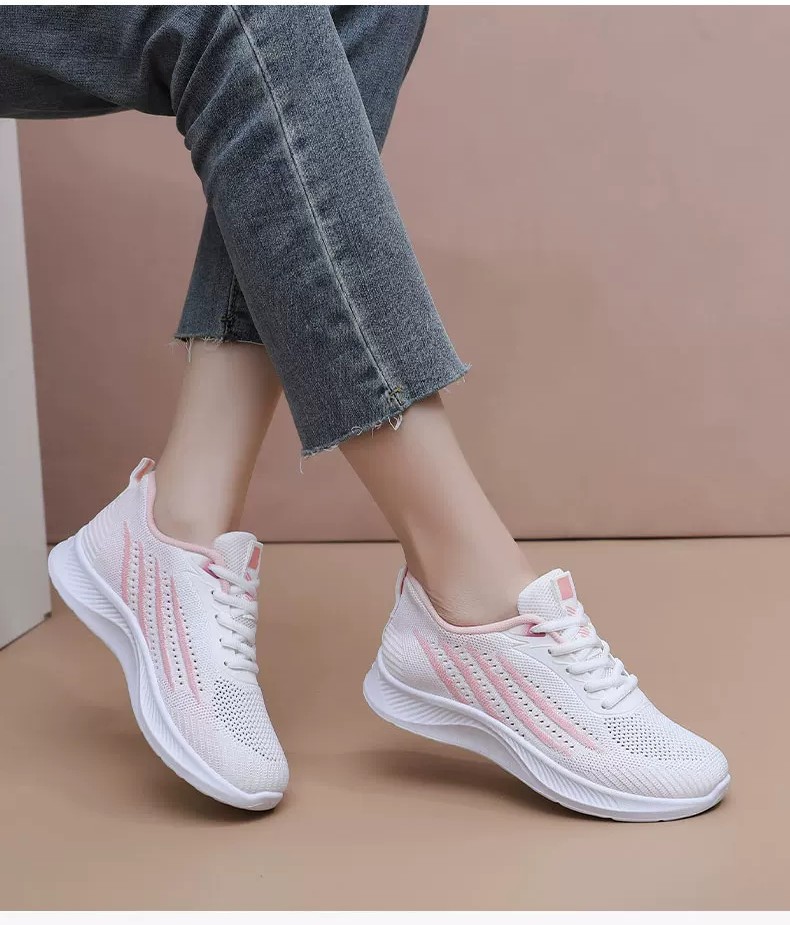
Low cut sneakers pair best with a hem that ends above the ankle. Cropped wide-leg trousers, straight jeans with a raw hem, midi skirts with a slit. The point is to show a strip of ankle or sock, because that’s what the shoe was designed to frame.
Full-length bootcut trousers are the mismatch. They cover the shoe almost entirely and you lose all the visual benefit, plus the hem drags on the collar. If that’s your usual silhouette, a slightly higher cut or a chunkier sole works better.
There’s also a colour rule worth knowing. A low cut shoe in the same tone as your trousers makes your legs look longer, because the eye reads one continuous line. A contrasting shoe cuts that line at the ankle. Both look fine. They just do different things.
If you want the leg-lengthening effect without thinking about it, buy the shoe within a shade or two of your most-worn trousers. It’s the cheapest styling trick there is.
Socks are visible, so decide the look first
With a low cut collar, whatever you put on your feet is on show. That’s either the best thing about the shoe or the most annoying, depending on your patience in the morning.
- No-show socks: the cleanest option, and the one that makes the shoe look intentional.
- White ankle socks: sporty and youthful, works with shorts and pleated skirts.
- Coloured or striped socks: a statement, and it needs the rest of the outfit to be quiet.
- Bare feet: fine for an hour, unpleasant by the end of a warm day.
No-show socks are the default for a reason, but they slip. Look for a pair with a silicone heel grip, and buy a few pairs at once because they disappear in the wash at an alarming rate.
One caveat about ankle socks: on a very low collar, the sock can look like a separate object rather than part of the outfit. That’s fine if it’s deliberate. It looks like an accident if the sock is grey and the shoe is white.
The gravel problem, and other small annoyances
Low cut shoes scoop up debris. A stone inside the shoe is annoying in any trainer, but with a low collar it gets in over the top rather than through the laces, which means it happens more often and is harder to shake out while walking.
The fix is either higher socks or a shoe with a slightly higher collar at the back. Some low cut designs have a scooped front and a raised heel, which is the best of both worlds for walking on anything unpaved.
The other annoyance is water. A low collar means puddles reach the sock faster, and a wet sock ruins a day faster than a wet shoe. If you walk through a city with bad drainage, this is the pair to leave at home when it rains.
None of these are deal-breakers. They’re the sort of thing you notice in week two and then adapt to without thinking.
Where low cut beats every other shape
Summer. A low cut canvas or mesh shoe is the coolest option that still looks like a shoe, and the airflow around the ankle makes a real difference on a hot day. High tops trap heat exactly where you don’t want it.
Travel is the second case. They pack smaller, they’re lighter, and they come off faster at security. A pair of low cut sneakers plus one pair of sandals covers most trips.
The third is any outfit built around the ankle. Cropped trousers, a midi skirt, a jumpsuit with a tapered leg. In those outfits a high top crowds the silhouette and a low cut finishes it.
I’ve been wearing a mesh pair for exactly this and the difference over a high top is obvious in July. For the cushioned version of the same idea, these soft-soled mesh sports shoes are the pair I’d take on a city break. And if you want something with more structure for longer walks, these shock-absorbing running shoes hold up better over 10,000 steps.
Sizing a low collar, and why half sizes matter here
The collar sits lower, so there’s less material to hold your foot in place. That makes length more critical than it is on a high top. A pair that’s half a size too long will let your heel slide up and down against the collar every step, and the collar is exactly where the rubbing happens.
Try low cut sneakers in the afternoon, with the socks you plan to wear. Check that your heel stays put when you walk, and that the collar clears the ankle bone by a finger’s width rather than sitting on it. Those two checks catch most of the problems.
Width is the other variable. A low collar with a narrow toe box will squeeze the forefoot, and because there’s no lacing high up to spread the pressure, the squeeze shows up as a hot spot under the ball of your foot rather than across the top. Most people blame the sole. It’s usually the width.
If you’re between sizes, go up rather than down. The extra length costs you nothing in a low cut shoe because there’s no collar height to fight, and you can take up the slack with a slightly thicker sock.
One thing not to do: size down to get a tighter collar. It doesn’t work. The collar isn’t what holds the shoe on, and a shorter shoe just puts your toes against the front.
If you wear an insole, take it to the shop. A low cut sneaker has less vertical room than a high top, so an insert lifts your heel up towards the collar edge and can turn a comfortable pair into a rubbing one. It’s a five-minute test that saves a return.
What I’d skip
Very flat low cut shoes with no cushioning. The shape already gives you no support, and a hard sole on top of that makes a pavement walk feel like a chore after twenty minutes.
Low cut high-contrast colourways with a white sole and a dark upper. The proportion looks odd, because the collar is low and the sole is thick, and the contrast exaggerates both.
Any pair where the collar edge is raw and unlined. That edge rubs the ankle bone, and it’s the first thing to wear through.
And platform low cuts. The whole point of the shape is a light, close-to-the-ground look, and a platform fights it. You end up with the disadvantages of both.
Care, and how to stop the collar collapsing
The collar is the part that fails first on a low cut shoe. It’s soft, it flexes every time you put the shoe on, and it eventually folds inward and stops springing back. Once that happens the shoe rubs.
You can slow it down by using a shoe horn and by not crushing the pair in a bag. Stuffing them with newspaper when they’re not being worn keeps the collar upright. That’s about all the maintenance the shape needs.
Cleaning depends on the upper, but the principle is the same as any sneaker: cold water, a soft brush, air dry away from heat. The collar edge is the one place to be gentle, because the padding inside can compress if it gets soaked and dried too fast.
If the insole starts to smell, take it out and wash it separately. Low cut shoes get more airflow but also more direct contact with skin, and the insole takes the brunt of it.
Low cut or high top, honestly
If you own one pair of sneakers and wear them for everything, buy a mid cut. It’s the compromise that doesn’t look wrong with anything.
Owning two changes the answer. Make the second pair low cut. That’s where the shape earns its place: summer, cropped hems, travel, and any outfit where the ankle is part of the design.
The comparison is worth making explicitly. The case for high tops is mostly about ankle coverage and a different silhouette, and that piece covers where they still make sense. For the opposite problem, the guide to open-back sneakers and all-day wear deals with a similar trade-off at the heel.
And if you want the boring technical background, the structure of the foot explains why ankle coverage matters more on uneven ground than most people assume.
One more scenario worth naming. If you’re on your feet for a job, low cut sneakers are a reasonable pick for a shift that stays indoors, and a poor one for a shift that crosses a car park twice. The collar height that keeps you cool is the same collar height that lets cold air and water in.
My advice, after all of this: buy the low cut pair for the outfits you already own, not for the ones you’re planning to buy. The shoes you reach for are the ones that work with what’s in the wardrobe today, and that’s usually the pair with the lower collar and the quieter colour.
