I bought a pair of tan suede sneakers in 2023 because they looked warm under the shop lights. Two weeks later I wore them to a farmers’ market in light drizzle and watched the toes turn the colour of wet cardboard. Nobody warned me. So here’s the warning.
Tan suede sneakers are the most forgiving colour in the suede family and the least forgiving material overall. They hide dust, show water, soften with age, and stain in patterns that look intentional right up until they don’t.
Get the care routine right and a pair will look better in year two than year one. Get it wrong and you’ll be that person with the patchy shoes, wondering why everyone else’s look clean.
Tan looks softer in the shop than in your hallway
Retail lighting is warm by design. It makes tan read as honey or camel, which is the version everyone wants. Take the same shoe into a hallway with a white LED bulb and it goes flat, slightly grey, closer to sand than to anything warm.
Neither version is wrong. It’s the same shoe. The problem is that you bought it based on the warm one, and most of your life happens under the cool one.
This matters because tan suede sneakers sit close to your skin tone, and skin tone changes under different light too. If the shoe is a half shade darker than your leg, it looks deliberate. If it matches almost exactly, it disappears, and your ankles look thick.
The test is simple. Hold the shoe next to your bare ankle in daylight, then in the room where you’ll actually get dressed. If it looks good in both, buy it. If it only works under shop lights, you’ve found the reason it’ll sit in the cupboard.
There’s also the question of what tan means to the rest of your wardrobe. Tan suede works with navy, olive, cream, denim and grey. It fights with black, and it looks confused next to most reds. If your winter coat is black, don’t buy tan. Buy chocolate brown or stone grey instead, both of which behave better against dark outerwear.
One more light-dependent thing. Suede reflects almost nothing, so a tan pair absorbs light rather than bouncing it back. That’s why they look expensive in daylight and slightly dead at night. For evening, wear something with a bit of sheen. These are daytime shoes, and pretending otherwise ends in a pair you only wear to brunch.
Which is worth knowing before you pay full price. If you’re only getting two wears a week out of them, a cheaper pair in the same shade makes more sense than a premium one you’re afraid to scuff.
Five brands, five different tans
Tan isn’t a colour, it’s a range. Two pairs labelled the same thing can be four shades apart, and if you’re buying a second pair to match a bag, this is where it goes wrong.
- Camel tan. Yellow-leaning, warm, the classic. Best with denim and cream, worst next to grey.
- Sand tan. Pale and slightly cool. Looks expensive in photos, shows every mark, suits summer only.
- Cookie tan. Rich and orange-tinged. The most flattering on warm skin, the hardest to keep clean.
- Stone tan. Grey mixed in. Reads neutral, works year-round, looks dull if the suede is low grade.
- Mushroom tan. Brown with a green undertone. The easiest to wear with olive and charcoal.
Ask for the colour code if you’re buying online, and compare it with a photo of the shoe in natural light. Reviews with customer photos are more useful than the studio shots, every time.
Grade matters as much as shade. Good suede has a dense, short nap that feels like velvet when you brush it one way and slightly rougher the other. Cheap suede feels papery and the nap looks patchy at the toe. That patchiness never improves; it just spreads.
If the price seems low for suede, check the label for “split” or “bonded”. Bonded suede is leather fibres glued onto a backing, and it delaminates at the flex point within a season. Split suede is real but lower grade, thinner and less durable than full-grain. Neither is a disaster at the right price. Both are a disaster at a premium price.
There are voluntary certification schemes for leather and suede production, and OEKO-TEX testing standards cover the chemical side of what’s in the material. A label with a certification isn’t a guarantee of quality, but an unbranded pair with no information at all is usually hiding something.
The nap has a direction, and it changes the colour
Run your finger down the toe of a suede shoe. It feels smooth one way and slightly resistant the other. That’s the nap, and it’s why suede looks lighter or darker depending on which way you’re looking at it.
This is not a defect. It’s the material doing what suede does. But it explains two things people complain about.
First, one shoe can look a shade darker than the other. Usually it’s because the two halves were cut from different directions of the same hide. Rotate the pair in your hands at the shop and check. If the mismatch is obvious from arm’s length, it won’t stop bothering you.
Second, marks appear and disappear as you brush. A scuff that looks permanent is often just flattened nap. A suede brush with brass bristles lifts it back up in about 20 seconds.
Brush in one direction, always the same direction, usually from heel to toe. Brushing back and forth makes the nap uneven and the colour blotchy. This single habit is the difference between suede that ages well and suede that looks tired.
Steam helps with deeper dents. Hold the shoe over a kettle for ten seconds, then brush. Don’t touch the suede to the spout and don’t hold it there long enough to soak. Ten seconds, brush, repeat once if needed.
Watch the flex point, the crease across the ball of your foot. That’s where the nap wears flat first, and where tan suede sneakers start to look old. Brush that area every couple of weeks even if the rest of the shoe looks fine. It’s the one spot that decides whether the pair has another year in it.
Store them with a shoe tree or rolled socks inside. Suede that collapses at the heel overnight creases permanently, and no amount of brushing brings the shape back.
Water is the real enemy, not dirt
Dust brushes off. Water soaks in, carries dye with it, and dries in a tide line. That’s the mark you can’t fix, only fade.
Protect before you wear them outside. A fluorocarbon-free protector spray, two thin coats, 20 minutes apart, on a dry day. Respray every six to eight weeks if you wear them regularly. It doesn’t make them waterproof. It buys you about 30 seconds to blot a spill instead of watching it sink.
If they do get wet, the mistake is drying them near heat. A radiator or a hairdryer drives the moisture out too fast and stiffens the leather, and stiff suede cracks at the flex point. Stuff them with newspaper, put them somewhere airy, and leave them alone for 24 hours.
Rain is not a dealbreaker, by the way. Light rain on protected suede beads up and wipes off. It’s the soakings that cause damage, and those are avoidable if you check the forecast before you leave.
Blot, don’t rub. Rubbing a wet mark pushes the dye sideways and turns a small splash into a large pale patch. Press a dry cloth down, hold it for ten seconds, move to a clean section, repeat. It’s slow and boring and it works.
Carry a spare pair of socks and a plastic bag in the car if you’re wearing suede somewhere unpredictable. Sounds daft until the first time you get caught out, and then it’s the smartest thing in the glovebox. Ten minutes of planning beats an hour of scrubbing every single time.
Salt is the other seasonal problem. Winter grit leaves a white bloom around the sole and along the toe. A mix of one part white vinegar to four parts water, applied with a cloth and blotted rather than rubbed, lifts it. Then let them dry away from heat and brush the nap back up.
Cleaning takes 15 minutes, twice a season
You need three things: a suede brush, a suede eraser, and a cloth. Total cost is about the price of a coffee, and it’s the whole kit.
- Brush off dry dirt when the shoe is dry. Never brush a wet shoe, because you’ll push dirt into the nap.
- Rub the eraser over scuffs and dark marks with light pressure. It works like an eraser on paper, lifting rather than scrubbing.
- Brush the nap back into line, heel to toe, one direction, 20 strokes.
- Deal with stains within 24 hours. Old stains set, and set stains are permanent.
For oil or grease, dab cornflour on and leave it overnight. It pulls oil out of the nap. Brush off in the morning. Repeat if the mark is still visible, and don’t rub, because rubbing spreads it.
Fine grit gets stuck in the nap and then cuts the fibres as you walk. Vacuum the shoe with a brush attachment every couple of weeks in summer, when dust is worst, and you’ll avoid most of the damage that gets blamed on age.
Skip the washing machine, obviously, and skip the specialist cleaners unless the stain is serious. Most products sold for suede are overkill for the marks you’ll actually get, which are dust, a bit of rain, and the occasional coffee splash.
Independent testing of fabric and shoe protectors tends to find the cheap ones perform about as well as the expensive ones on water repellency. Which? product testing has made this point repeatedly across categories. Buy on ingredients, not on the picture of a duck on the tin.
One thing worth knowing. Tan suede darkens slightly with each cleaning cycle. After a year of proper care, a pair will be half a shade deeper than when you bought them. That’s normal and usually flattering. What isn’t normal is patchy darkening, which means you cleaned unevenly or let a stain sit.
Sizing: suede gives about 2mm, then stops
Suede stretches less than people expect and more than leather uppers allow. In practice, a suede sneaker gives about 2mm across the forefoot in the first fortnight, then holds its shape.
So don’t buy tight and hope. If the toe box presses on your little toe in the shop, that pressure stays. Buy your normal size, or a half size up if you plan to wear thick socks through winter.
The other fit variable is the lining. Unlined suede feels softer and stretches more; lined suede holds its shape better and runs slightly smaller. Check which one you’re buying, because the same size label means different things.
Try tan suede sneakers late in the day if you can. Feet swell by up to 5% between morning and evening, and a pair that fits at 9am will pinch by 6pm. Shopping in the afternoon is the single easiest way to get sizing right, and almost nobody does it.
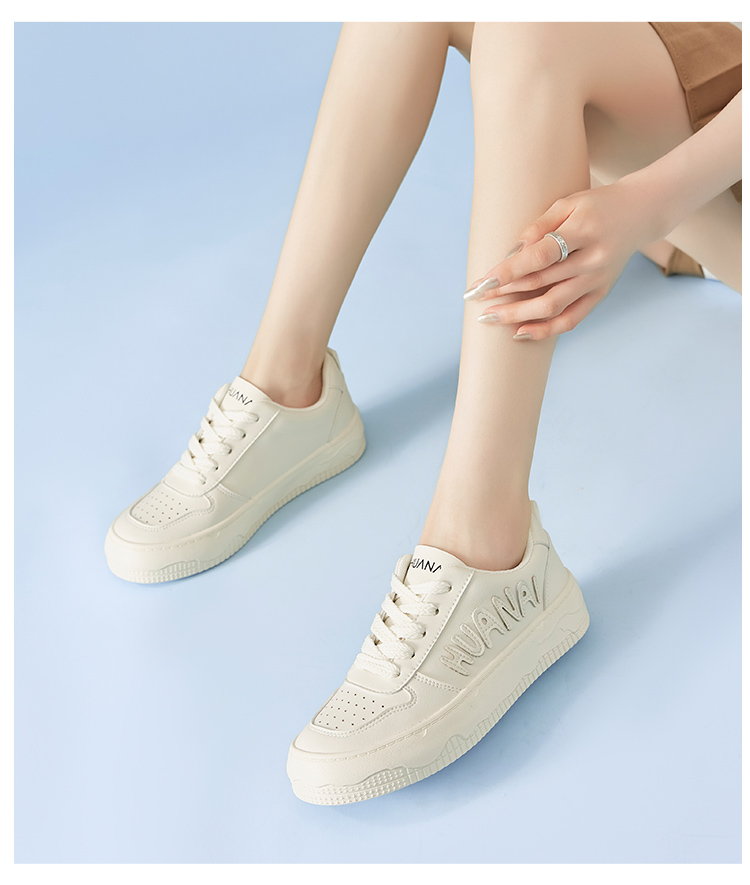
Flat-soled suede pairs are the most predictable fit, since there’s no foam midsole compressing under your weight after a month. Something like these breathable flat-soled board shoes for women will fit the same in month six as in week one. A pair with a thick cushioned midsole will feel roomier by spring, which is a nice surprise but makes sizing unpredictable.
Heel slip is the common complaint with suede sneakers, because the lining is smooth and there’s no padding to grip. Try a heel lock lacing pattern before you decide the size is wrong. It fixes the problem in most cases and costs nothing.
If you’re between sizes, go up rather than down. A slightly roomy suede shoe can be fixed with a thicker sock or an insole. A tight one cannot be fixed at all, because the material won’t give more than a couple of millimetres.
When leather is the better buy
Suede is not the right choice for everyone, and a shop assistant won’t tell you that.
If you walk to work through a park, or you live somewhere with 120 rainy days a year, buy leather. Smooth leather wipes clean, sheds water, and needs nothing more than a damp cloth. It’s less interesting to look at and dramatically easier to own.
If you have small children or a dog, buy leather. Suede and muddy paws are not compatible.
Wind is fine, oddly. It dries surface damp without driving moisture into the material the way heat does. It’s rain that soaks, sun that fades, and radiators that ruin. Park them by an open window and forget about them.
If you want one pair of tan sneakers to do everything, including a wet autumn and a snowy week, buy leather.
Buy suede if you’re willing to spend 15 minutes twice a season and you like the way the material softens. The reward is real: suede moulds to your foot in a way leather doesn’t, and a well-kept tan pair looks more expensive than it cost.
There’s a middle option too. Suede panels on a leather shoe give you the texture without the exposure, and the toe stays wipeable where it matters most. If you love the look and hate the maintenance, that’s the compromise worth hunting for.
As for the pair I ruined at the farmers’ market, they recovered. Vinegar, blotting, two days of air drying, and a brush. The tide line is still faintly visible on the left toe if you know where to look. I’ve decided it’s character.
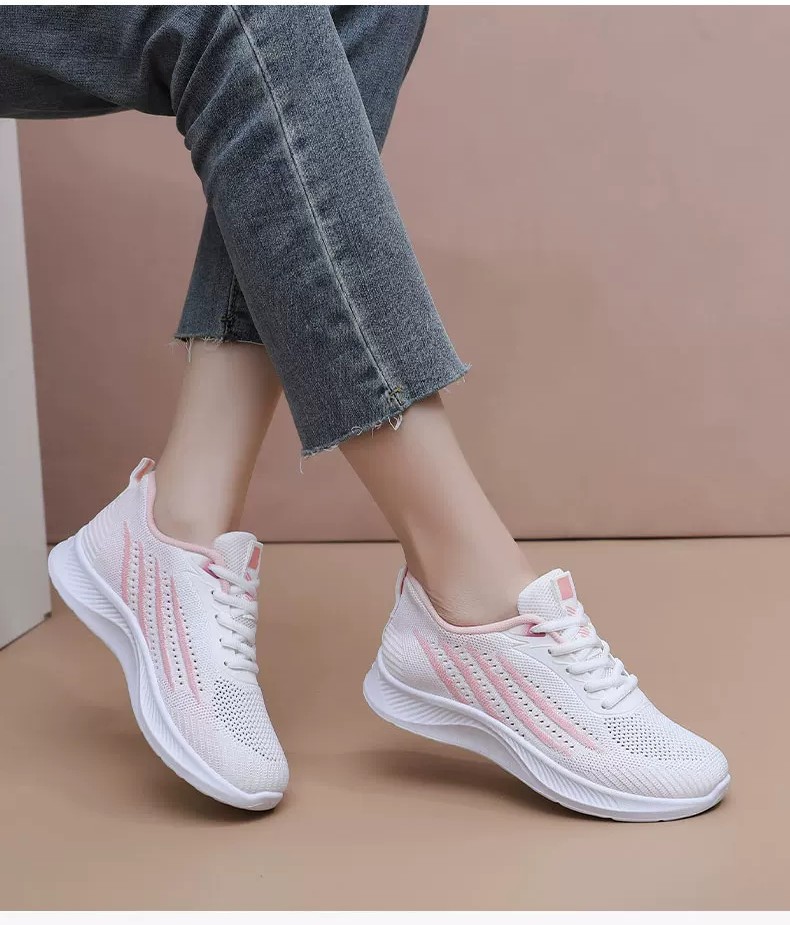
If you want the same shape in a material you can hose down, the full range of women’s sneakers by material covers leather and mesh options. For a neutral palette to go with tan, this piece on women’s neutral sneakers and building a small rotation is the practical companion, and the breathable mesh walking shoes are the summer equivalent if you’d rather not think about suede care at all. If your taste runs darker, the guide to black sneakers that actually last past a year uses the same care logic on a tougher material.