

For years the backless sneaker sat in an awkward corner of the shoe shop. It was too casual for the office, too strange for the gym, and rarely as comfortable as the price tag suggested. Something has shifted. Laceless, open-heel silhouettes have quietly become a normal part of the women’s sneakers wall, sold by everyone from high-street labels to designer houses, and worn with everything from wide-leg trousers to summer dresses. The reason is not complicated: most people put their shoes on and take them off several times a day, and a pair you can step into without bending over solves a small problem that turns out to matter a great deal.
What makes the category worth a careful look, though, is that backless sneakers are not all built the same way. Some are essentially slippers with a rubber outsole. Others use a structured footbed, a stiffened toe box and an elasticised upper that genuinely holds the foot while walking. The difference shows up around the fortieth minute of wear, not in the shop mirror. This guide covers the construction details worth checking, the fit problems that cause most returns, the materials that survive real weather, and the way to style a pair so it reads deliberate rather than thrown on.
Why Ladies Backless Sneakers Stopped Being a Compromise
The first generation of backless sneakers was a compromise product. Brands took a trainer upper, cut the heel away, and hoped the result would pass as casual footwear. It did not, mostly because a shoe without a heel counter has nothing to grip the back of the foot, so the wearer’s heel slid sideways with every step and the whole thing flopped like a mule with laces glued on.
The current generation starts from the other direction. Designers build the shoe around the heel first, then work forward. A moulded cup sits under the heel bone, the midsole is shaped with a slight rise at the back so the foot settles into a pocket rather than resting on a flat plank, and the upper is cut with elastic gussets or a knit collar that closes around the instep. The result behaves much more like a shoe and much less like a house slipper. That single change is why ladies backless sneakers moved from a novelty listing to a category with real repeat buyers.
There is also a cultural reason. Footwear has been drifting toward casual for more than a decade, and the pandemic accelerated it by about five years. Circana, the research firm whose Retail Tracking Service most U.S. footwear brands rely on to measure sell-through, has built much of its recent footwear reporting around exactly this move toward comfort-led, casual styles rather than dress shoes. Meanwhile *Statista’s worldwide footwear outlook* tracks a global market measured in the hundreds of billions of dollars annually, and the casual segment is where most of the volume sits. When the bulk of the market is casual, a shoe that is both casual and effortless to put on stops looking like a niche idea.
The last piece is practical. Anyone who has stood in a security line, walked into a home where shoes come off at the door, or juggled a toddler and a coffee while trying to tie a lace understands the appeal. Backless sneakers remove a small daily friction. That is a modest promise, but it is one the category actually keeps, which is more than can be said for most footwear trends.
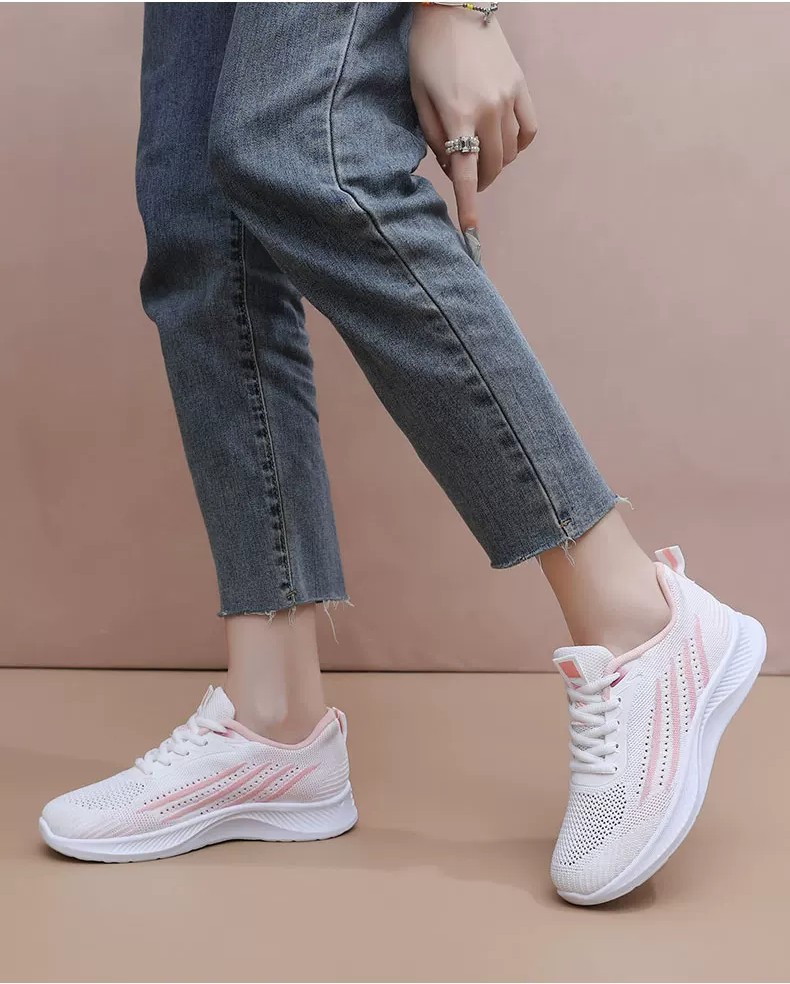
What Backless Really Means in Sneaker Construction
The word backless covers at least four different constructions, and shops rarely explain which one you are looking at. The first is the true open-heel shoe: the upper ends just behind the arch, leaving the entire heel exposed. The second is a collapsed heel, where the back of the shoe is soft and designed to be folded flat under the foot, so it can be worn either way. The third is a strap or sling-back arrangement, where a thin band crosses the heel to keep the shoe from sliding off. The fourth is a half-back, sometimes called a step-in, where a low padded collar rises just high enough to cup the heel bone without covering the Achilles.
Each has consequences. True open-heel styles are the easiest to slide into and the least secure; they work best for short errands, driving and desk wear, and they demand a slightly shorter stride. Collapsed-heel designs are the most versatile but wear out fastest at the fold line, because the same few square centimetres of material bend thousands of times. Sling-back versions hold the foot far better and are the closest thing in the category to a shoe you can walk a mile in, though the strap needs to sit exactly on the heel bone or it will rub. Half-back step-ins are the quiet winners for most people: enough structure to walk normally, still no bending to put them on.
Construction underneath matters just as much as the shape on top. A backless shoe puts unusual stress on the shank, the stiff plate running through the midsole, because the foot is not locked in and the load shifts forward. Cheap versions skip the shank entirely and feel like they are folding in the middle after a month. Look for a midsole that resists twisting when you hold the toe and heel and wring it gently. A small amount of flex is right; a shoe that folds in half has no shank worth mentioning.
Finally, check the insole. Removable insoles are a good sign, not because you will necessarily replace them, but because a brand that expects you to have the option usually builds a deeper footbed. A deep heel cup is the single most useful feature in a backless sneaker: it does the job the missing heel counter cannot do, keeping the foot from sliding sideways as you walk.
Fit Rules for a Shoe With No Heel Counter
Fit is where backless sneakers fail most often, and almost every failure is predictable. Without a heel counter, nothing pushes the foot forward into the toe box, so the shoe either grips through the instep or it does not grip at all. That means the measurement that matters most is not length but the circumference across the top of the foot.
Start with your normal sneaker size, then check three things before you commit. First, the instep: the upper should press gently across the top of your foot when you stand, with no gap under the elastic panel. If you can slide a finger under the gusset, the shoe is too loose and will slap against your heel with each step. Second, the heel position: your heel bone should sit inside the cup, not on the back edge of it. If the back edge cuts across the middle of your heel, the shoe is too short, even if the toes feel fine. Third, the toe: there should be roughly a thumb’s width of space ahead of the longest toe when you stand, because feet spread under load.
| Check | What good looks like | Warning sign |
| Instep pressure | Firm, even contact across the top of the foot | Gap under the elastic panel; shoe slips when you walk |
| Heel placement | Heel bone fully inside the moulded cup | Heel resting on or over the back edge |
| Toe space | About a thumb’s width ahead of the longest toe | Toes touching the front when standing |
| Twist test | Midsole resists twisting, flexes at the ball | Shoe folds in half at the arch |
Width is the other trap. A backless sneaker that is slightly too wide will not stay on, no matter how well the length fits, and no insole will fix it. If you are between widths, size down rather than up in this category, then use a thin sock rather than a thick one. Narrow feet usually do better in knit uppers with a high elastic content, because the knit wraps the instep instead of standing away from it.
One more note on socks. Backless sneakers worn with no-show socks feel different from the same pair worn bare, because the sock changes how much friction the footbed offers. Decide which way you will actually wear them and test the fit that way. A pair that feels secure bare can feel loose over a cotton sock, and the reverse is true of smooth synthetic linings.
Materials That Decide Whether a Pair Lasts a Season or Three
The upper on a backless sneaker takes more abuse than on a laced shoe, because it is the only thing holding the foot. Stretch knit is the most common choice and the most forgiving: it adapts to the instep, breathes well in heat and needs almost no breaking in. The trade-off is support. A single-layer knit stretches permanently over months, so look for a denser knit with reinforced zones around the elastic gusset and a structured toe bumper. Two-layer knits with a firmer inner mesh hold their shape noticeably longer.
Engineered mesh behaves similarly but with less give, which suits people whose feet slide in softer uppers. Leather and suede versions look smarter and hold structure better, but they crease across the instep where the shoe flexes to let the foot in, and that crease is where cracks begin if the leather is corrected-grain rather than full-grain. If you want a pair that reads as smart-casual rather than sporty, a smooth leather backless sneaker in a neutral colour is the most versatile option in the category, provided the leather is soft enough to fold without pressure across the top of the foot.
Textile canvas is cheap, breathable and machine-washable in theory, though most canvas backless shoes lose their shape after two washes. They are a reasonable choice for a summer pair you expect to replace. Avoid anything with a stiff, heavily coated synthetic upper: it will not stretch to let the foot in, so you end up forcing the shoe on and tearing the gusset seam within weeks.
Underfoot, the hierarchy is simpler. A compressed EVA midsole is light and adequate for desk-to-lunch wear but packs down within a season for anyone walking daily. Rubber outsoles last longer but add weight. The best compromise for everyday use is an EVA midsole with a rubber pod at the heel and forefoot, where abrasion actually happens. Check the outsole pattern too: a shallow, smooth tread is fine on dry pavement and genuinely unsafe on wet tile, which matters if you wear these shoes into kitchens, stations or grocery stores with polished floors.
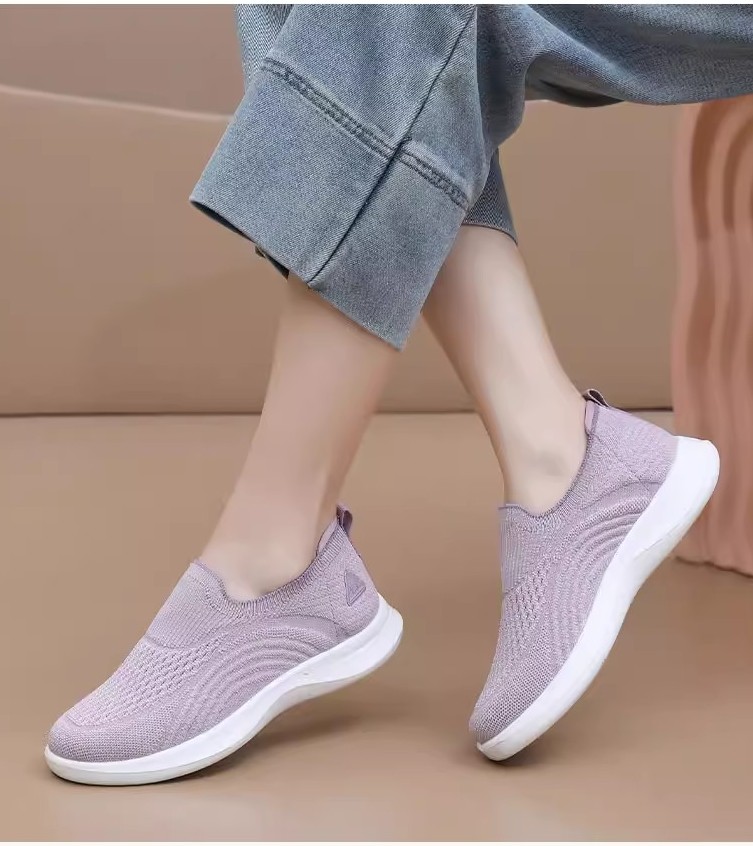
Styling Ladies Backless Sneakers Without Looking Sloppy
The reason backless sneakers get a bad reputation stylistically is that they are usually paired with the wrong things. Worn with sweatpants and a hoodie, they look like indoor shoes that escaped. Worn with tailored trousers and a knit, the same pair looks considered. The shoe is neutral; the outfit sets the register.
The most reliable combination is a wide-leg trouser with a clean hem that breaks just above the shoe. Because the shoe is low at the back, the hem does not catch on a heel counter, and the line from waist to floor stays uninterrupted. Keep the trouser fabric substantial, cotton twill or a wool blend rather than a thin jersey, so the casual shoe reads as a deliberate contrast rather than an accident. A cropped straight-leg jean works on the same principle, with a visible ankle and a shoe that sits low on the foot.
For warm weather, midi skirts and dresses are the natural partner, especially in linen or cotton poplin. The trick is proportion: a full skirt needs a shoe with a bit of visual weight, so choose a chunkier sole rather than a slim, flat one. A slip dress in satin or bias-cut viscose takes a smooth leather backless sneaker surprisingly well, and the mix of dressy fabric with a flat, laceless shape is the least fussy way to wear the trend in the evening.
Colour decisions matter more than usual because there are no laces to break up the upper. White and bone go with nearly everything and show dirt fastest. Black is the safest for city wear and reads sharper with tailoring. A single accent pair in red, olive or metallic is worth owning if the rest of your wardrobe is neutral, but avoid prints: a printed backless sneaker competes with the outfit and rarely wins. Socks are the last variable. Invisible socks keep the line clean; a fine ribbed sock in a matching tone is a legitimate styling choice and adds grip inside the shoe, which helps if the fit is a touch generous.
Travel, Commutes, and Eight-Hour Days on Your Feet
Airport shoes are a specific subcategory of misery, and backless sneakers solve most of it. They come off at security without untying anything, they do not set off metal detectors, and they slide back on while you are hopping on one foot with a bag over your shoulder. For long-haul flights, the compression and swelling that comes with cabin pressure makes a soft, adjustable upper genuinely useful, and a backless design does not press on the top of a swollen foot the way a laced shoe can.
For commuting, the calculus is different. A backless sneaker is fine for a walk to the station and a day at a desk. It is not the right shoe for a forty-minute walk each way, because without a heel counter the foot works harder to stay in place and the small muscles along the arch tire sooner. If your commute involves real distance, keep a pair of lace-ups at the office or choose a half-back step-in with a firmer heel cup for the walk.
Anyone standing for eight hours should think carefully. Retail, hospitality and clinical work all involve polished floors, sudden direction changes and long stretches on hard surfaces. Backless sneakers with a deep heel cup and a rubber outsole can handle a shift in a shop, but a slipper-soft version will leave your feet aching by mid-afternoon. Look for a removable, cushioned insole you can swap for a proper orthotic insert, and check that the outsole has enough tread depth to grip a wet floor. Trade coverage in Footwear News regularly returns to laceless and slip-on shapes when it rounds up seasonal sneaker trends, but trend coverage and workplace suitability are different questions, and it is worth answering the second one honestly. A simple test helps: wear the pair for a two-hour errand before trusting them for a shift. If your calves feel tight or your toes have been curling to keep the shoe on, they will not survive eight hours, and a slightly more structured style is the better buy.
Packing is the last practical point. Backless pairs flatten, so they take up less room in a case than a laced trainer and can be slipped into the gap beside a folded jacket. Wear them on the plane rather than packing them, keep a pair of socks in the bag for cold cabins, and give them a day to air out at the hotel before wearing them again on the return leg.
Care, Odour, and Holding the Shape
Backless shoes are worn bare more often than laced ones, which means they collect moisture faster and develop odour sooner. The fix is unglamorous and effective: let them air for twenty-four hours between wears rather than putting the same pair on two days running, pull the insoles out to dry, and keep a small sachet of silica or cedar in each shoe when they are stored. Never put a knit sneaker in a tumble dryer; the heat sets odour and shrinks the elastic.
For cleaning, start dry. Brush off dust with a soft brush, then use a mild soap solution on a cloth for stains rather than soaking the whole upper. Knit uppers can be hand-washed in cool water and air-dried stuffed with paper, which holds the shape while the fabric dries. Leather needs a damp cloth and a conditioner afterwards; skip the conditioner and the leather will crack across the instep crease within a season. Suede should never get wet at all, so treat it with a protector spray before the first wear.
Structure is the part people neglect. A backless sneaker collapses at the heel when stored in a pile, and once the foam cup flattens it does not spring back. Keep them on a shelf rather than in a basket, and use shoe trees if the upper is leather. If the elastic gusset starts to feel slack, a cobbler can usually replace it for far less than a new pair; that one repair typically adds a year of wear.
Rotation is the habit that makes the biggest difference, and it costs nothing. Two pairs worn on alternate days last far longer than one pair worn daily, because the foam midsole needs roughly a day to recover its thickness after a full day under load. If you only own one pair of ladies backless sneakers, at least give them a full night and morning to breathe before the next wear, and keep them out of a closed cupboard where damp air sits. A cheap cedar insert, replaced every few months, handles both moisture and smell without any spray or powder.
Buying Online Without Trying Them On
Most ladies backless sneakers are bought online, and the category has an unusually high return rate because fit is invisible in a product photo. A few checks in the listing reduce the guesswork. Read the material composition, not just the description: a “mesh upper” that turns out to be 100 percent polyester with a stiff coating will not stretch enough to let the foot in. Look for a stated heel-cup depth or, failing that, a side-profile photo where you can see how far the upper rises behind the ankle. A shoe that ends below the heel bone will not stay on during a normal walk.
Then read reviews for a specific phrase rather than a star rating. Search the reviews for “slips off”, “too wide”, “runs small” and “no support”. Any of those repeated three or four times is a pattern worth believing. Reviews that mention the shoe being worn with socks, or being worn for a full day, carry more weight than reviews written after a try-on. Sizing advice in reviews is only useful if the reviewer mentions their usual size and foot width.
If you are choosing between two sizes, take the smaller one in a knit upper and the larger one in leather, and plan to wear the leather pair with a thin sock during the first week while it softens. Check the return window before ordering, and if you are buying a first pair in this category, start with a neutral colour and a mid-weight sole rather than an extreme shape. Once you know how the construction suits your foot, the second pair is a much easier decision. Our women’s mesh soft-soled sports shoes are a good reference point for what a well-built step-in upper feels like in practice.
A good pair of ladies backless sneakers should disappear into your day. You notice them when you slide them on in the dark without looking, not while you are walking. If a pair needs breaking in, pinches across the instep, or makes you shorten your stride, the construction is wrong for your foot and no amount of styling will fix it. Get the heel cup and the instep right, choose an upper that holds rather than stretches out, and the shoe will earn its place by the door for years rather than a season.
