

Are Burberry Heels Worth It in Winter Weather?
I bought my first pair of Burberry heels on a wet Tuesday in February, which is either the worst time to buy shoes or the smartest. The shop was empty. Nobody hovered. I tried on four pairs and walked out with the one I’d been avoiding all afternoon: a 75mm block heel in dark beige, mostly because it was the only pair that didn’t make my ankles look strange in the mirror by the door.
Six years and maybe 400 wears later, they’re still in the rotation. That’s my whole argument.
What you’re actually paying for
Burberry began with coats, and it shows in the shoes. Thomas Burberry came up with gabardine in 1879, the trench followed during the First World War, and the house has been selling weather protection ever since. That history is why the leather on a Burberry pump feels thicker than what most fashion labels use at the same price. It creases. It doesn’t crack along the vamp after two winters.
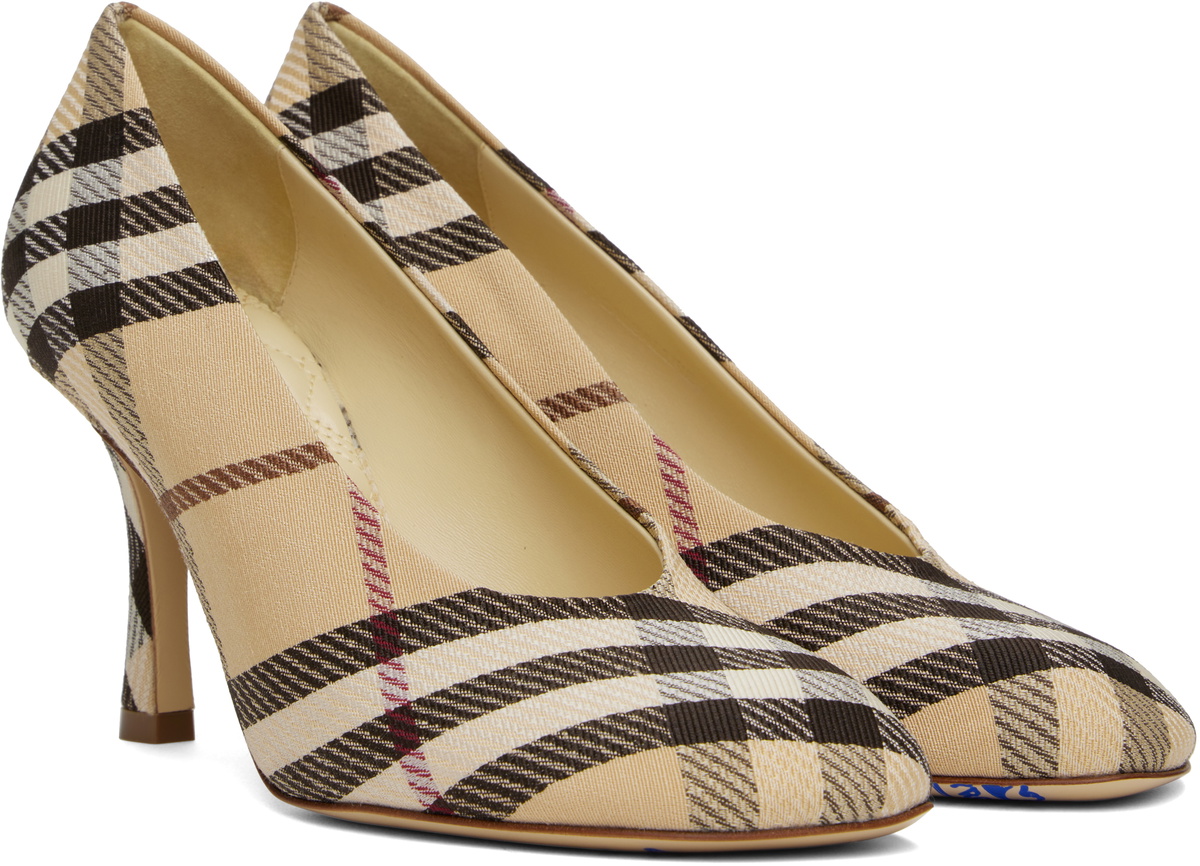
The check lining got registered as a trademark in 1920, and it’s the detail that gives these shoes away from across a room. I have mixed feelings about it. On a boot shaft it earns its place. Inside a closed pump nobody sees it but you, and paying extra for something only your own foot knows about is a bit of a faff, though I’ve done it twice anyway.
Proportions are the other thing. Burberry rarely chases extreme shapes, so the toe box stays wearable and the heel sits under the middle of your body weight instead of behind it. I don’t need a theory to explain why that works. I just know I can stand through a two-hour dinner and forget I’m wearing heels at all, which almost never happens with a 90mm stiletto.

Spring: light colours, muddy ground
Spring is when a nude or pale pink block heel earns its keep. Mine is the shade of milky coffee, close enough to my skin that it visually disappears, which makes legs look longer without anyone working out why. Pair it with a floral midi and let the shoe do the boring, grounding job. I wore that combination to a garden party in May, on grass that had been rained on all morning. The block heel sank in twice. I wiped it with a napkin and it was fine. A stiletto would have left a hole in the lawn and possibly a twisted ankle.
If you want the check to do the talking, keep everything else quiet: crisp white shirt, cream trousers and heels where the check only shows at the heel counter. That reads as a wardrobe rather than a logo. It’s also the version I’d wear to a meeting, which is more than I can say for most of what gets photographed at fashion week.
Summer: the sandals are the weak link
Here’s where I’ll disagree with the brand. The strappy heeled sandals are the least convincing thing Burberry makes. Woven leather straps look lovely on a shelf and rub after an hour in real heat, and the sole is thin enough that you feel every paving slab through it. I bought a pair in 2021 and sold them within a year. That’s the only Burberry shoe I regret.
What does work is a closed-toe pump in one loud colour, worn with a plain silk slip dress. Cobalt does a lot of heavy lifting for very little effort. Keep the dress short enough that the shoe is visible, and skip the matching bag. Matching is what makes an outfit look bought rather than worn.
One more thing: cobblestones. I took heeled sandals to Lisbon in July and spent four days walking like a penguin. Wear flats or a wedge there, or accept that you’ll be holding onto whoever’s next to you.
Autumn: suede, and one mistake I made
Autumn is suede season, and a rust or olive pump pairs with wool trousers in a way black never quite manages. Suede absorbs light instead of bouncing it back, so the colour reads deeper and slightly dusty, which suits the month. I sprayed mine with protector twice before the first wear and still picked up a water mark at the ankle in October rain. Suede is a gamble. Go in knowing that.
Knee-high boots with a slim heel are the real autumn purchase though. They go over opaque tights, under a wool mini dress, and they rescue an oversized blazer you’d otherwise struggle to style. Mine have been resoled once. The shaft has held its shape for five seasons, which is more than I can say for a cheaper pair I replaced after one winter. Price isn’t always the answer, but with boots it usually is.
Winter: the honest test
Winter separates shoes that look good from shoes that work. A leather pump with a covered toe is fine indoors and fine for the ten metres between a car and a restaurant door. It is not fine for a twenty-minute walk in sleet. I’ve tried. My toes went numb somewhere around the second block.
A Chelsea boot with a low block heel is the answer, and it’s the pair I’d buy first if I were starting over. Grippy sole, warm lining, easy to pull on with cold hands. Look for a rubber sole or have one added, because smooth leather on wet stone is genuinely dangerous. Mine cost €45 to resole at the cobbler on my street, and that bought another three winters.
Salt is the enemy. Rinse the soles when you get home in January, or the leather dries into white cracks by March and no conditioner undoes it.
Storage is the part nobody mentions. Mine sit in cotton dust bags with cedar trees inside, and after six years the insoles still don’t smell like anything. The one pair I left loose in a box for a summer came back slightly musty and took a fortnight to air out.

Sizing, cost per wear, and what to skip
Burberry heels run narrow. If you have wide feet, go up half a size or ask about the wider fittings, which do exist. My usual 39 fits in a pump and pinches in a pointed-toe boot, so try before you commit if there’s a store anywhere near you.
On price, the maths is simple. A pair at €550 worn 80 times a year for five years comes out under €1.40 a wear, which is less than the €60 pair I used to replace every spring. That said, the resale market is full of barely-worn pairs at half price, and a good cobbler can fix almost anything except a snapped shank. I’ve bought two pairs secondhand and both were fine.
If you’re buying used, ask for photos of the sole edge and the inside heel. That’s where the wear hides, and sellers who won’t send them usually have a reason. Anything under 2mm of tread left means a resole in your first month.
Skip the trend shapes. Buy the block heel, buy the boot, and stop there. Four pairs is a collection. Two is a wardrobe.
And if you take one thing from this, take the boring one. The pair that survives six winters is almost never the pair that looked best under shop lighting. It’s the pair you nearly didn’t try on.
