

All-Black Sneakers for Women: Outfits That Actually Work
I bought my first proper pair of black sneakers for a work trip where I knew I’d be on my feet from a 7am flight to a 9pm dinner. They were leather, low-top, and completely unremarkable, which turned out to be the whole point. Three years later they’re still the pair I reach for when I can’t be bothered to think.
That’s the honest case for black sneakers. They don’t make an outfit. They stop an outfit from being a problem.
Why one pair covers so much ground
Black shoes disappear against black trousers, black tights, and dark denim, so the eye doesn’t stop at your feet. That sounds like a small thing until you compare it with a white sneaker, which cuts a bright line across the bottom of every outfit you own and demands that the rest of the look hold up to it.
I wore the same pair with a silk midi dress to a gallery opening, with a wool blazer and trousers to a meeting, and with jeans and a jumper to the supermarket on the way home. Nobody clocked that they were the same shoes. That range is why a pair of all black sneakers women can wear to work, dinner, and the school gate ends up being the most-used thing in the wardrobe, even if it’s also the least exciting.

What comfort actually means in a sneaker
Not all of it is marketing. A decent women’s sneaker has a sock liner that compresses under the arch and a midsole that spreads impact instead of passing it straight up your leg. Cheap ones use a flat slab of foam that packs out in about six weeks, and you’ll feel the difference on a hard pavement, not in the shop.
The test I use: stand on one foot and try to roll your ankle sideways. A good pair resists. A wobbly pair lets your ankle drift and that’s the pair that will roll on a kerb in the rain.
Size, width, and the half-size question
Most black sneakers run true, but leather uppers stretch about half a size over the first month while knit uppers don’t stretch at all. If you’re between sizes, go up in knit, stay put in leather, and always try them with the socks you’ll actually wear. I ignored that once and now own a pair that only works with tights.
Give yourself a thumb’s width at the toe. It sounds obvious. Almost nobody does it, and then wonders why their toes go numb on a long walk.
Leather, suede, or knit?
Polished leather looks the most formal and wipes clean with a damp cloth, which matters if you commute. It also creases across the toe box, and in black those creases catch the light and look greyer than the rest of the shoe after a few months.
Suede and nubuck are softer against the foot and read more casual. They also hate rain, and a black suede sneaker that gets soaked once will dry with a watermark you can’t shift. Knit is the most breathable and the least forgiving of a wide foot. Pick based on your weather, not your Pinterest board.
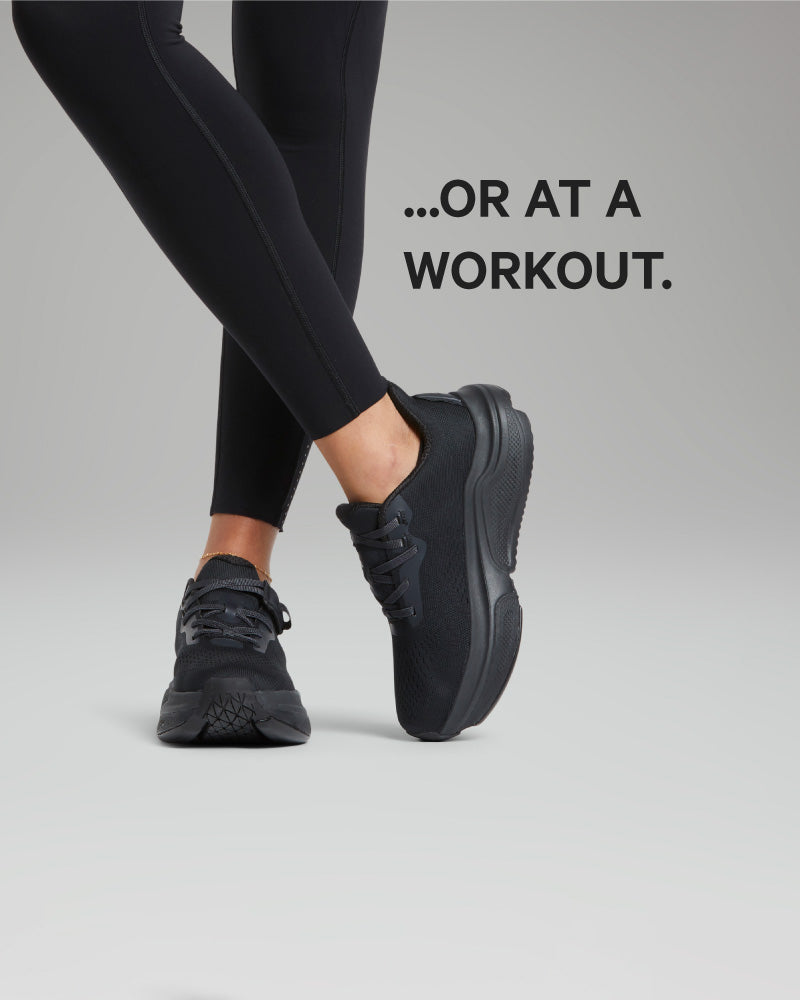
Silhouette decides the outfit more than the colour does. A slim low-top court shoe works with tailored trousers and dresses. A chunky sole pulls everything casual and adds height, though it can make a short skirt look bottom-heavy. A sock-fit knit looks modern with wide trousers and slightly odd with anything cropped.
Winter is the awkward season for them. Knit and canvas versions let water straight through in about four minutes, so a smooth leather pair with a rubber sole is the only kind that survives a wet January. Watch your step on the smooth tiles in a station concourse, too, because a worn rubber sole on a wet floor is genuinely dangerous. I’ve gone down once, in front of a lot of commuters, and I still think about it.
Where these shoes came from, briefly
Black canvas sneakers were cheap gym shoes before anyone thought about them as fashion. Then musicians and art students started wearing them because they were cheap, and the cheapness turned into a signal. By the nineties they were standard issue in hip-hop styling, and after that the luxury houses caught up and put their own versions out at ten times the price.

None of that history changes how you should wear them. It just explains why a plain black sneaker doesn’t look like you gave up.
Three outfits that hold up
Floral midi dress, leather jacket, black sneakers. The dress does the soft work, the jacket keeps it from looking precious, the shoes keep the whole thing walkable. This is the outfit I wear most in spring.
Black wide-leg trousers, grey jumper, black sneakers. Everything in one tonal range, so you look taller and more put together than the effort involved. Swap the jumper for a white shirt and it’s office-ready in most places that don’t require a suit.
Dark straight jeans, white button-down, blazer, black sneakers. The sneakers pull the formality down just enough that you don’t look like you’re presenting something. If your blazer is oversized, keep the sneaker slim. If the blazer is cropped, a chunkier sole balances it.
Buying without wasting money
You can spend £40 or £400 and both are defensible. The £400 pairs use full-grain leather that ages instead of peeling, and stitched soles that can be repaired. The £40 pairs last a season or two of hard wear and then go in the bin, which is fine if you treat them as disposable.
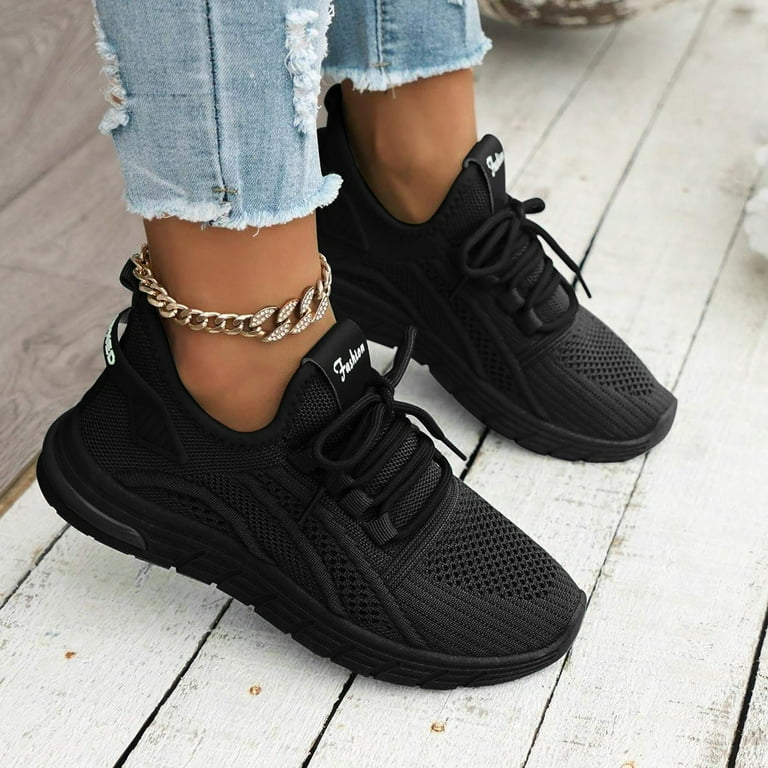
Mid-range is where most people should sit. Look at the stitching along the sole: if it’s glue only and already uneven, walk away. Press the insole with your thumb, and if it doesn’t spring back, it won’t cushion anything. Check that the tongue doesn’t slide sideways when you walk, because that’s the thing that ruins an otherwise good shoe.
Cleaning them is less fuss than people assume. Canvas pairs go in the machine at 30 degrees inside a pillowcase, laces out, and then air dry. Leather needs a damp cloth and a bit of conditioner twice a year. Keep both away from a radiator, because direct heat cracks the midsole and the shoe never sits straight again.
Sales are worth waiting for on this category. Black sneakers don’t go out of style, so buying last season’s version in November at 40% off is the same shoe with a smaller bill. Outlet sites and end-of-season drops are where the deals actually are, not the brand’s own homepage.
One genuine complaint: black sneakers show dust and scuffs more than you’d expect, and a scuffed black toe looks scruffier than a scuffed white one. Keep a cloth by the door. Mine get wiped maybe twice a week and it takes ten seconds, but skip it for a month and they look like gardening shoes.
So don’t buy them hoping they’ll be interesting. Buy them because they’ll be the pair you don’t have to think about, and put the interesting money into the one coat or the one bag you actually want to be noticed in.
