

The Ultimate Booties Heels Guide: Effortless Style for Every Season
Footwear is more than a practical necessity; it’s a foundational element of personal expression and style architecture. Among the vast array of choices, one category consistently proves its versatility and enduring appeal: booties heels. This guide isn’t about fleeting trends but about understanding a wardrobe staple that bridges seasons, occasions, and aesthetics with unparalleled grace. We’ll dissect their anatomy, explore their scientific and cultural footprint, and demonstrate how a single pair can unlock a year of effortless style.
The Architectural Marvel: Deconstructing the Booties Heels
To appreciate the booties heels is to understand its design synthesis. It occupies a unique space between the coverage of a boot and the elegance of a pump. Typically, a bootie cuts off at or just above the ankle, a deliberate design choice with profound stylistic implications. From a biomechanical and ergonomic perspective, this ankle-cut design offers a distinct advantage. According to research into footwear biomechanics, the ankle is a complex joint requiring both support and mobility. A well-constructed bootie provides a stabilizing collar around the ankle, which can offer more support than a classic pump, potentially reducing the strain on the Achilles tendon and the plantar fascia during movement. This isn’t mere conjecture; podiatric literature often discusses how enclosed heel counters and firm heel collars contribute to foot stability. The heel itself, whether a sturdy block, a sleek stiletto, or a contemporary kitten, elevates the posture, literally and figuratively. As noted by fashion historian Dr. Rebecca Shawcross in her work “Shoes: An Illustrated History,” the heel has perpetually signified status and power, a concept dating back to Persian cavalry and European aristocracy. The modern booties heels democratizes this symbolism, merging historical authority with contemporary practicality.

Spring & Summer: The Art of Contrast and Airiness
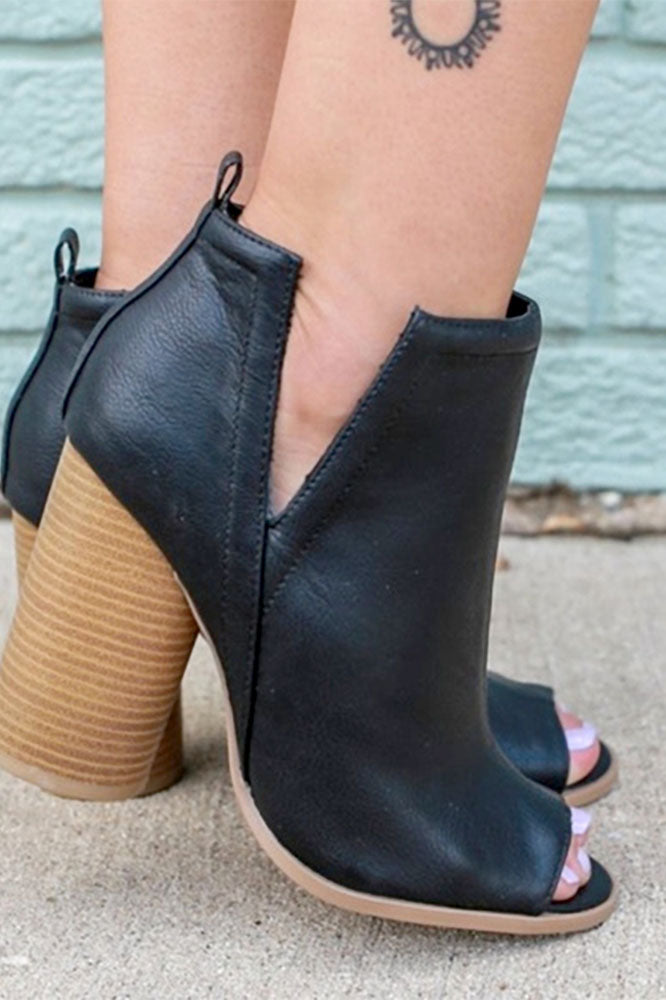
Conventional wisdom might relegate enclosed footwear to cooler months, but that underestimates the strategic utility of the summer bootie. The key lies in material and silhouette. Opt for booties crafted from breathable textiles, suede, or those featuring cut-out details and open toes. The visual contrast they create is a principle rooted in classic design theory—the interplay of weight and lightness. Pairing a delicate floral sundress or airy linen trousers with structured ankle boots creates a dynamic tension that is far more interesting than predictable sandals. This approach is championed by stylists like Allison Bornstein, who frequently discusses the “third piece” rule and using footwear as a counterpoint to an outfit. From a practical standpoint, a low-block heel bootie provides secure footing for summer evenings or city exploration where flip-flops fail. They protect your feet while maintaining a polished look. Consider a nude or tan pair to elongate the leg line seamlessly, or a bold color to anchor a neutral ensemble. The summer booties heels is a statement of sartorial intelligence, proving that style need not be sacrificed for seasonality.
Autumn & Winter: The Synergy of Form and Function
This is the natural habitat of the bootie, where its design truly sings in harmony with the environment. Here, the bootie transitions from a style accent to a critical component of a functional wardrobe. Insulated materials, weather-resistant leathers, and treaded soles become paramount. The scientific principle at play is basic thermodynamics—insulation reduces heat loss, keeping you warm. But beyond pure physics, the winter bootie excels in layering, a core concept in both fashion and survival. It perfectly accommodates thicker socks, skinny jeans, and leggings, creating a sleek silhouette that bulkier snow boots cannot achieve. The heel, particularly a chunky or wedge style, provides elevation from slush and wet ground, a practical benefit noted in countless outdoor apparel reviews. Stylistically, the bootie anchors heavier fabrics like wool coats, cashmere sweaters, and denim. As Tim Gunn famously emphasized on Project Runway, “Make it work.” The winter bootie does exactly that, synthesizing aesthetics with environmental adaptation. It’s the footwear equivalent of a perfectly tailored coat—protective without compromising on line or proportion.

The Psychological Footprint: Why We Are Drawn to the Heel
The allure of heels, including booties, transcends mere fashion. It is embedded in social psychology and nonverbal communication. Studies, such as those referenced in the journal Archives of Sexual Behavior, have indicated that heels can influence perceptions of attractiveness, often linked to the alteration of lumbar curvature and gait—a phenomenon sometimes referred to as the “heel effect.” This isn’t about objectification but about acknowledging the conscious use of attire as a tool for communication. A pair of booties heels can instill a sense of confidence and authority. In her book The Psychology of Fashion, Professor Carolyn Mair explains how clothing affects our cognitive processes through “enclothed cognition.” What we wear influences how we think and feel about ourselves. The solid grounding of a bootie combined with the lift of a heel can create a powerful psychological cocktail of stability and elevation. It’s a non-verbal cue of readiness and capability. As filmmaker Sophia Coppola’s cinematic heroines often demonstrate through their meticulous costuming, shoes can silently narrate a character’s journey from vulnerability to agency.
Curating Your Collection: A Strategic Investment
Building a functional rotation of booties is an exercise in strategic wardrobe planning. You don’t need a dozen pairs; you need three to four meticulously chosen ones that cover the spectrum of your life. First, the Neutral Workhorse: A black leather bootie with a mid-height block heel (around 2-3 inches). This is your foundation, compatible with office attire, dresses, and denim. Brands like Sam Edelman or Franco Sarto often offer excellent quality at accessible price points, especially during seasonal sales where discounts can reach 30-50%. Second, the Statement Piece: This could be a bold color (oxblood, forest green), an animal print, or a unique material like velvet. This pair exists to transform simple outfits. Third, the Ultra-Comfort Champion: A low kitten heel or flat bootie in a soft material like suede or stretch fabric. Perfect for days demanding miles of walking without sacrificing style. Remember, cost-per-wear is the ultimate metric for value. A $150 pair worn 100 times is a wiser investment than a $50 pair worn twice. Look for features like cushioned insoles, flexible outsoles, and quality stitching—these are the hallmarks of footwear that will last seasons, not just weeks.

Beyond the Shoe: The Holistic Styling Philosophy
The true magic of the bootie is realized in its integration with your entire silhouette. It’s about understanding proportions. With skinny or straight-leg pants, let the bootie sit atop the hem or tuck the pants in slightly to create a clean line. With wider-leg or flare jeans, the bootie should peek out subtly, maintaining the integrity of the pant’s shape—a technique often showcased in styles from brands like Madewell or in the pages of Vogue. With skirts and dresses, consider the leg exposure. A bootie with a higher shaft pairs well with midi lengths, while a lower-cut bootie is versatile with anything from mini to maxi. This isn’t arbitrary; it’s based on the visual division of the body and the golden ratio, principles used by artists and designers for centuries. The bootie acts as an anchor, a solid base from which the rest of your outfit flows. It provides a finishing point that can feel more modern and resolved than a traditional pump or sandal, especially in transitional weather.
The journey through the world of booties heels reveals them not as a mere accessory, but as a cornerstone of adaptable, intelligent dressing. They are a testament to design that honors both form and function, psychology and aesthetics, history and modernity. From the scientific support they offer to the confidence they instill, a well-chosen pair is a dialogue between you and the world—a statement that you are grounded, elevated, and effortlessly prepared for whatever the season, or the day, may bring.

