

You’re in a shop holding a dark brown flat that looks right and feels wrong, and you can’t say why. Nine times out of ten the answer is in the light coming through the front window. Before you pay for dark brown flat shoes for women, walk them to the window and look at the surface at a low angle.
Three things decide whether a flat gets worn 60 times or 6: the surface finish, the structure behind the heel, and the sole under the ball of your foot. Everything else, including the shape of the toe, is secondary. Here’s what to check and where each check fails.
Check the finish in daylight, not shop light
Shop lighting is designed to make leather look uniform. Warm bulbs at 3,000K flatten out the difference between a corrected-grain surface and a full-grain one, and that difference is exactly what you’re paying for.
Take the shoe to the window and tilt it so the light rakes across the vamp at about 15 degrees. A full-grain or top-grain surface shows visible pore structure and slight variation in tone. A corrected-grain surface looks like a flat sheet of plastic with a stamped pattern, and the pattern repeats. Look at 10cm of it and you’ll see the repeat.
This matters for dark brown more than for black. Brown is a transparent finish, so what you see is partly the hide. Black is opaque and hides almost everything, which is why cheap black flats often look fine and cheap brown flats rarely do.
While the shoe is in daylight, check the creases. Bend the vamp where your toes flex, then look at the fold. A good leather creases in fine lines. A coated or bonded leather creases in one thick fold with a pale line at the top of it, and that pale line is where the coating will crack in about four months of daily wear.
If the surface is suede rather than smooth, the test changes. Rub the nap with your thumb in one direction, then the other. It should shift tone evenly. Patches that stay flat and shiny are pressure marks from storage, and they don’t lift. The difference between full-grain and corrected-grain leather is worth ten minutes of reading before you spend anything above $80.
The structure behind the heel decides the fit
Flats fail at the heel more often than anywhere else, and the cause is the counter, the stiffened piece behind your heel. Press it with your thumb from the inside. It should resist and then give slightly, returning to shape.
If it collapses flat with no resistance, the shoe will not hold your foot. You’ll walk with a slight grip from your toes, the back of the shoe will fold under your heel, and within a month the lining will tear at exactly that point. No amount of heel grips fixes a counter with nothing in it.
If it’s rigid as a board, the opposite problem. The shoe will hold your foot and rub the Achilles tendon for the first two weeks. That can break in, but only if the counter is leather. Synthetic counters that are too stiff stay too stiff, and the rubbing becomes a blister cycle.
There’s a simple ranking, and it holds across price points:
- Leather-covered, medium-firm counter: breaks in within a week, holds shape for years.
- Padded synthetic counter: comfortable on day one, compresses by month four.
- Unlined, soft counter: feels like a slipper, walks like one too, and the heel slips.
- Hard plastic counter: holds the foot well, rubs badly, breaks in only if lined with leather.
For a flat you plan to wear to work, the first option is the only one that survives a year. The second is acceptable if the pair costs under $60 and you expect to replace it.
One more thing in the same area: check the seam where the lining meets the counter. If the stitching is visible and coarse, it’ll rub. If the lining is one continuous piece there, that’s a sign of a shoe built by someone who has worn one.
While you’re looking at the lining, think about what’s in it. Chrome-tanned leather is the default in this price range and is fine for most people, but if your skin reacts to cheap shoes, the tannery matters more than the brand. OEKO-TEX certifies leather and lining materials against a limits list for substances that irritate skin, and a tagged pair takes one variable out of the decision.
You can’t test for that in a shop. What you can do is notice the smell. Sharp chemical smell means solvent-based adhesive and low-grade lining, and it usually fades in a week. A smell that lingers after two weeks means the shoe is off-gassing something you’ll be breathing beside your desk all day.
Under the ball of your foot, 3mm is the line
Turn the shoe over and look at the forepart. Squeeze the sole between thumb and finger at the widest point of the ball. Under 3mm and you’ll feel every grain of gravel through it, and the sole will wear through in a single season of city walking.
Between 4mm and 6mm of rubber or leather over a footbed is the practical range for a flat worn outdoors. Below that, the shoe is furniture: fine indoors, wrong for a commute. Above 8mm it starts to look like a crepe-soled shoe and reads casual, which may or may not be what you want.
Flexibility matters as much as thickness, and it’s measured in the wrong place. Bend the shoe where your toes bend, about a third of the way back from the tip. It should fold there easily. Then bend it in the middle of the arch, and it should resist. A shoe that folds in the middle has no shank, and a flat without a shank makes your arch do the work. You’ll feel it as a dull ache behind the ball after two hours, not as pain in the sole.
This is where cheap flats lose most of their value. A steel shank costs the factory under a dollar. Its absence is invisible in the box and obvious by 4pm.
Test it in the shop: hold the shoe at the heel and the toe and twist. A shoe with a shank resists the twist and returns to shape. One without folds like a soft taco. That single test tells you more than the price tag.
If you’re replacing a pair that already failed this way, check what your old ones did. Look at the insole where your arch sat: a deep hollow means the footbed compressed and the shoe gave up under load. A crack running across the ball means the sole was too thin from the start. That tells you which number to fix when you shop, and it’s a better guide than any review.
Toe shape at the same length is not the same shoe
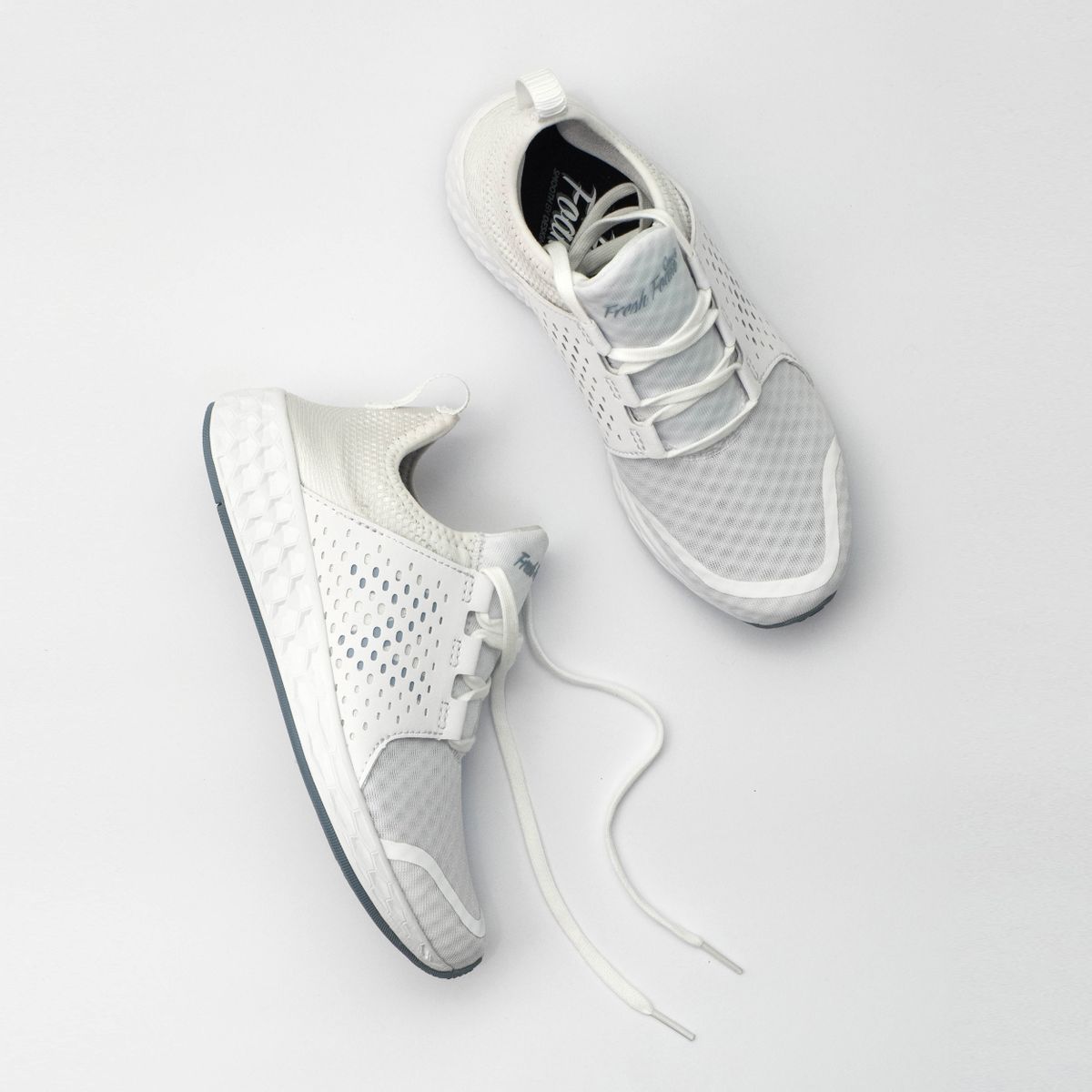
A round toe, an almond toe and a softly squared toe in the same size give your toes three different amounts of room. The almond shape is the one that most often causes problems, because it looks generous and isn’t.
Measure the inside width across the ball of the foot, not the outside of the shoe. You want at least the width of your own foot plus 4mm, measured while standing. A flat that matches your foot exactly will pinch at hour three, because feet spread through the day.
Then check depth. Put your hand inside and press where the top of your toes would sit. Dark brown flats with a low vamp and a shallow toe box will press on the big toenail, and that pressure is what makes people think a shoe is too small when it’s actually too shallow. Sizing up fixes the symptom and creates heel slip.
Three toe shapes, ranked for a work flat:
- Softly squared or rounded: most room, reads slightly casual, best for long days.
- Almond: the default look, needs a half size up more often than people admit.
- Pointed: elegant, minimal room, and the least tolerant of a long walk.
If your second toe is longer than your first, skip pointed flats entirely unless the pair is soft unlined leather. There’s no break-in that creates room in front of a seam.
One practical note on length, because it’s the mistake that shows up in returns most often. Dark brown flat shoes for women are usually bought at the size of a heel from the same brand, and flats almost always run smaller. The last is flatter, the toe box is shallower under the instep, and the same number squeezes. Start a half size up from your heel size, then go down only if the heel slips, not if the shop assistant thinks it will stretch.
Dark brown against the hem, and where it beats black
Dark brown flat shoes for women do something black can’t: they warm the bottom of an outfit without adding a colour. With navy, grey, olive, cream, and most denim, brown is the softer choice, and the outfit reads less corporate as a result.
With a black trouser or a black skirt, brown looks like a mistake unless the shoe is very dark, close to espresso. That’s the practical cut-off. If the brown is lighter than a coffee bean, it wants to be worn with something that isn’t black.
The other variable is the hem. A flat sits low, so the trouser hem needs to be short enough to show the shoe. Cropped at the ankle, brown flats work with almost anything. Full length, and the shoe becomes a 2cm strip at the bottom of a column, which is where brown starts to look muddy rather than warm.
If you want to confirm the colour under real light, use a window, not a mirror. Shop mirrors are lit from the front and warm up browns by a full shade. A pair that looks chocolate in the shop can look reddish at home. The way pale colours shift under daylight is covered in this piece on cream heels and what shows in daylight, and the same logic applies to brown.
One more colour note that saves returns: check the pair against your own skin tone in daylight, not against the mannequin. Dark brown flats that read as warm and rich on a display foot can look flat and greyish next to a cooler skin tone, and the reverse is also true. Hold the shoe next to your forearm by the window. If the brown makes your skin look sallow, it’s the wrong brown for you, whatever the outfit math says.
Break-in, and how long it actually takes
Leather flats break in over 8 to 14 hours of wear, spread over a week. That’s the honest number for a lined pair with a proper counter. Anyone who tells you a leather flat is comfortable from the first minute is describing a shoe with a soft synthetic counter, which is a different product with a shorter life.
Speed it up with heat and pressure, not with water. Wear them for two hours at home on the first day, an hour at a time. On days two and three, wear them for a walk of about 1km. By day five the leather has taken the shape of your foot and the counter has softened at the tendon. That’s it.
Don’t soak them. The old trick of wetting leather to stretch it works on some boots and ruins most flats, because the insole board warps and the toe box collapses. Don’t put them in a tumble dryer either, whatever the internet says.
If a specific spot rubs, treat the spot: a small piece of moleskin inside the counter for three days. If the rub is at the top of the heel and it’s still there after a week, the shoe is the wrong shape for your foot. Return it if you still can.
Expect the leather to darken slightly where it creases. Most brown flats lose about half a shade across the vamp in the first month, and that’s normal. It looks like wear, and it’s the thing that makes a brown flat look better at month six than at week one. Water spots are the exception: a single rain mark on a light brown flat is permanent, so treat the pair before the first wet day rather than after.
Two references if you want to see what a well-built flat looks like in person: this woven leather pair with a lined counter, and the soft-soled commuter shoe built on a proper last. Neither is a brown flat. Both show the construction you’re looking for.
When to walk away from a brown flat
There are four situations where the answer is no, and it’s worth knowing them before you fall for a pair in a window display.
Your feet are wider than a D width. Brown flats in a standard width will press at the fifth toe, and the fix is a wide fitting, not a bigger size. If the maker doesn’t offer one, the pair isn’t for you.
You need arch support. A flat with a 4mm insole gives nothing. You can add an orthotic, but only if the shoe has a removable footbed and enough depth. Check that before buying, because most slim flats don’t.
You walk more than 6,000 steps a day. That’s a decent pair of walking shoes, not a flat. The 3mm sole and the missing shank will show up as heel pain by the second week.
The pair is unlined and under $50. It will last one season, smell like a gym bag by month three, and the lining will tear at the counter. That’s not snobbery, it’s the same 60 cents of shank and 40 cents of lining talking.
If you want a middle option, look for a brown flat with a removable footbed. Those accept an insole, which extends the life of a cheap pair by six months and makes a $70 shoe behave like a $120 one for the first year. For a reference, the suede single-shoe pair with a low block heel has the same low profile and a better counter than most flats at that price.
If none of those apply, buy the dark pair, wear it 60 times, and see whether the cost per wear lands where you expected. Most people find the brown flat is the shoe they reach for on the days they can’t decide, which is worth more than the ones they bought for an occasion. Dark brown flat shoes for women earn their place by being the neutral nobody notices, and that’s a compliment. Have a look at the full flat and low-heel selection with the three checks in mind, and skip anything that fails the window test.
One question worth asking yourself in the shop, before the card comes out: could you walk 1km in these right now, without thinking about your feet? If the answer is no, it won’t get better than maybe.
