

It’s 7:40 on a Tuesday. You’re in the hallway with one shoe on, and the white pair you’ve worn since March has gone the colour of weak tea. That’s usually the moment light blue sneakers start to look sensible. Not because pale blue is having a season, but because it hides the two things that ruin white canvas fastest: the dust line along the toe and that grey wash that shows up after the third hand wash.
Short answer first. Go one or two shades lighter than the blue in your head, buy the pair that fits at 4pm instead of 9am, and keep suede for dry days only. That covers most of it.
The rest is detail, and the detail is where people lose money. Pale blue is a fussy colour on a shoe. It photographs beautifully and then arrives looking like a completely different object under your kitchen light. So the useful question isn’t “which blue is nicest” but “which blue will still look deliberate in six weeks, with a scuff on the toe and a slightly dirty sole”.
What pale blue does that white can’t
Light blue sneakers hide what white sneakers advertise. White is a lighting test. Every mark shows, and a small grey smudge near the toe reads as “old” rather than “worn in”. Light blue absorbs that. A pale blue upper has enough pigment to blur the difference between clean and nearly clean, so a pair that’s been through a wet commute still passes at arm’s length. That’s the practical case for the colour, and it has nothing to do with trends.
The second thing blue does is flatter skin tone in a way white sometimes doesn’t. Bright optic white can make legs look pink or slightly grey in daylight, especially in summer photographs. A blue with a bit of grey in it sits back and lets your legs do the talking. If you’ve ever taken a photo in white trainers and thought your ankles looked oddly red, that’s the effect I mean.
There’s a catch. Pale blue reads casual. It’s a weekend colour. Put it under a tailored wool trouser and the whole outfit starts to look like you got dressed in a hurry and grabbed the wrong shoe. That’s not a rule anyone will tell you at the till, but you’ll feel it the first time you try it.
Where blue wins outright is the middle ground: jeans, chinos, a cotton midi skirt, anything with texture and a bit of slouch. It looks intentional with those. It looks like a mistake with a suit.
Three blues and the outfits that work with each
Not all light blue sneakers are the same colour, and the difference matters more on a shoe than on a shirt. Here’s how I’d split it, based on what actually lands on the shelf.
- Powder blue. Soft, slightly milky, almost a tinted white. The safest of the three. Works with cream, camel, navy, and washed denim.
- Sky blue. Clearer and a touch cooler. Reads more sporty. Good with grey jersey and white socks, bad with anything beige.
- Dusty blue. Grey mixed in, slightly muted. The most grown-up option and the easiest to wear to an office that allows trainers.
Powder blue is the one to buy if you only buy one pair. It behaves like a neutral, which means it survives a wardrobe change. When your jeans get wider or your trousers get shorter, powder blue still works. Sky blue is more fun and more limited: it wants a sporty outfit and it punishes anything soft or drapey.
Dusty blue is the sleeper. It looks almost grey in artificial light, which makes it the easiest of the three to wear with black. That’s rare for a pastel. Most pale shoes look terrible next to black trousers because the contrast is too harsh. Dusty blue has just enough depth to hold its own.
If you’re shopping online and can’t tell which of the three you’re looking at, zoom into the shoelaces. Laces are usually a shade off the upper, and they show the true temperature of the colour better than the main photo does. A blue lace with a green undertone will look minty in person. That’s the giveaway.
Suede, mesh, or smooth leather: pick by weather
The upper matters more than the shade on a pale shoe, because pale plus the wrong material is a two-week shoe. Suede in light blue is genuinely lovely and genuinely fragile. One damp morning and the toe goes dark and stays dark. If you live somewhere with actual rain, suede is a summer-only purchase and you should price it that way.
Mesh is the opposite problem. It’s light, it breathes, and it’s the easiest thing to wear in a humid city. But pale mesh collects fine dust in the weave, and once grit is in there you can’t brush it out. You can wash it. You can’t really clean it.
Smooth leather and good synthetic leather are the sensible middle. A wipedown with a damp cloth handles most of it, and a light blue coated leather keeps its colour far longer than a dyed textile. That’s the pair I’d buy for a commute.
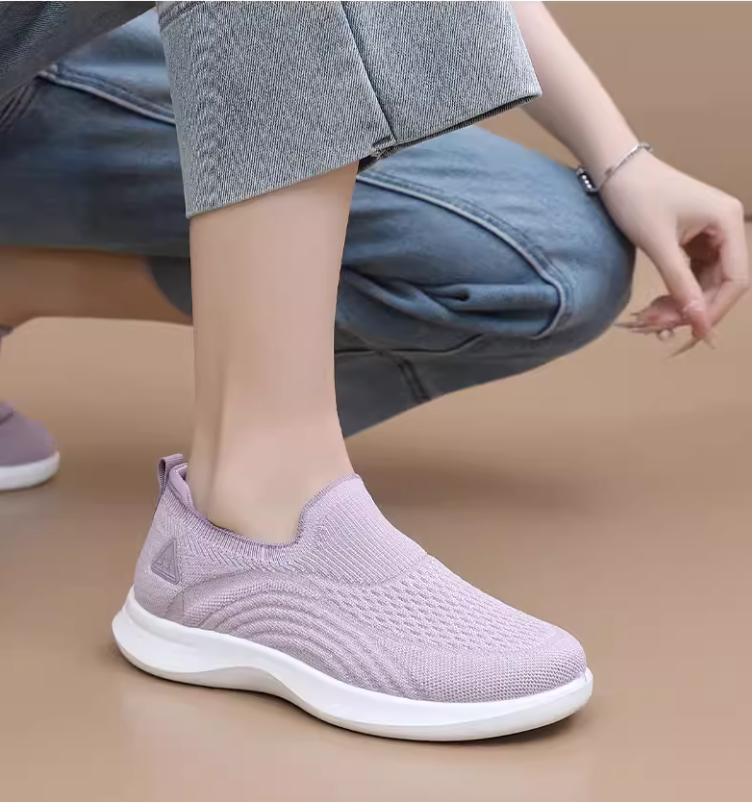
There’s a decent option in the cheap-and-cheerful bracket too. These pale flat-soled board shoes with a thick rubber base handle wet pavements better than the price suggests, mostly because the sole is deep enough to keep the upper off the ground. The trade-off is weight. They’re not a light shoe, and you’ll notice it on a long walk.
The other material question is lining. Pale uppers with a dark lining will bleed at the ankle after a few sweaty wears, and the stain shows up as a grey ring exactly where everyone looks. Ask before you buy, or check the customer photos for a dark collar. This is the single most common reason a light pair gets retired early.
The 4pm rule, and why your size changes by lunchtime
Feet swell. By late afternoon most people are half a size wider than they were at breakfast, and a pale sneaker with a snug toe box will show the damage as a crease right across the vamp. Buy in the afternoon, or at least try the pair on then.
You want roughly a thumb’s width at the toe, and no pressure on the outside of your little toe when you stand up. Walk on a hard floor for two minutes, not carpet. Carpet hides everything.
Two more checks that save a return. First, press the heel counter: if it collapses with one finger, the shoe will slip. Second, look at the pair from the side with your weight on it. Pale uppers stretch visibly in the first month, so a pair that’s already bulging in the shop will look shapeless by August.
If you’re between sizes, size up in mesh and stay true to size in leather. Leather gives where it needs to and mesh just gets sloppy. That one sentence would save most people a return postage.
And if the pair runs narrow, don’t talk yourself into it because the colour is right. A pale shoe that pinches gets worn twice and then lives by the door. I’ve done this. Twice.
Keeping pale blue from turning grey
Most of the colour loss isn’t dirt. It’s washing. Hot water and strong detergent strip dye out of textile uppers, and pale blue is the colour where you notice it first, because it goes flat and slightly green. Cold water, a soft brush, and a small amount of gentle detergent is the whole method.
For smooth leather, skip water entirely for the first pass. A damp microfibre cloth takes off surface dust, and a proper cleaner handles the rest. The mistake is scrubbing at a scuff with a wet cloth, which lifts the finish and leaves a dull patch that never matches again.
Suede needs a brush and nothing else, plus a protector spray before the first wear. Reapply every few weeks if you wear them often. It won’t make suede waterproof, but it buys you time to get out of the rain.
Drying matters as much as cleaning. Stuff the shoes with newspaper and leave them in a doorway, away from radiators. Heat sets stains and shrinks uppers, and a radiator-dried pale sneaker will never sit the same way again.
One last thing: rotate. Two pairs worn alternately last roughly three times as long as one pair worn daily, because the foam in the midsole needs a day to recover. That’s true for any shoe, and it’s the cheapest upgrade you can make.
What I’d skip
Light blue sneakers in a high-top. The shape already draws the eye, and the colour makes it louder. Together they’re a lot of shoe, and most people wear them four times and then stop.
Anything with a bright white sole and a very pale upper. The contrast makes both parts look cheaper, and the sole is the first thing to yellow. A slightly off-white or gum sole blends better and ages more gracefully.
Chunky platform versions, unless you genuinely want the height. On a pale colour the sole becomes the visual subject, and platform soles scuff at the corners in a way you can’t hide.
And metallic trim. Silver eyelets on a light blue shoe look sharp in the product shot and slightly cheap in daylight, especially once the plating dulls. Plain tonal hardware is the safer call.
None of this is a hard rule. If the high-top makes you happy, buy the high-top. Just know what you’re signing up for.
Morning outfits that take ten seconds
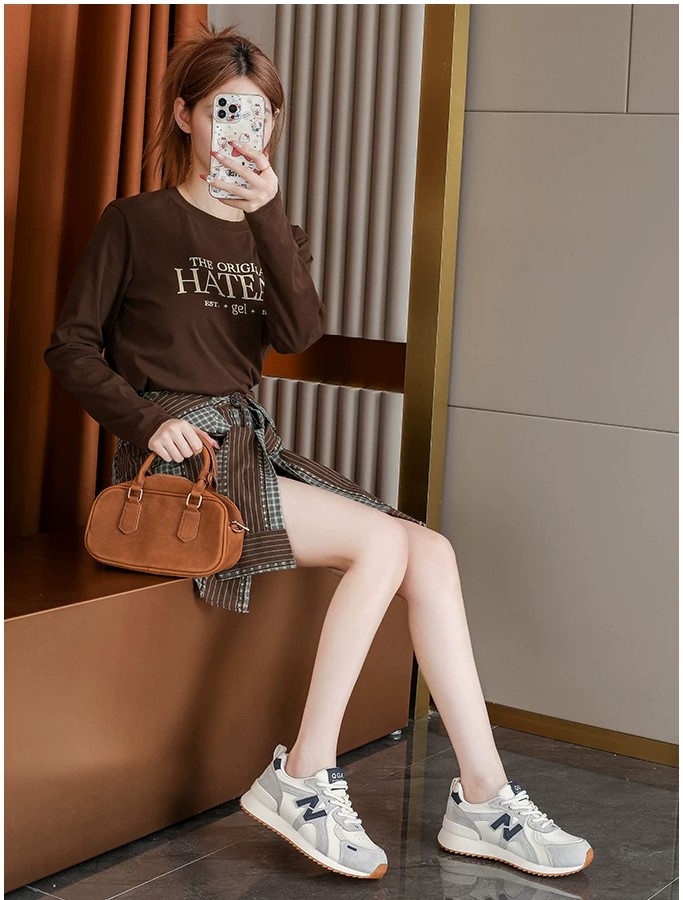
Light blue sneakers work best when something else in the outfit repeats the colour at a smaller scale. A stripe, a shirt, a scarf, even a phone case. It reads as deliberate without any effort, and it stops the shoes looking like the only blue thing you own.
With denim, go lighter on top. Washed blue jeans plus a pale blue shoe can look washed out together, so break it with a white tee or a navy knit. The middle value does the work.
With tailoring, treat them as a weekend shoe and stop there. Grey flannel trousers and pale blue trainers can work if the trouser is cropped and the sock is invisible, and it falls apart if either of those things isn’t right. Too much risk for a Tuesday.
Dresses are a different story. The trick is weight. A cotton midi and a pale sneaker look easy. A silk slip dress and the same shoe looks like you forgot your sandals. Fabric weight decides it, not colour.
If you want a second pair for the days when blue feels like too much, these soft-soled mesh sports shoes for everyday walking do the same job in a quieter tone. For wetter months, a pair of breathable mesh walking shoes with a grippier outsole is the more practical second buy.
If you liked the weight argument in this piece, the 220-gram sneaker test goes deeper on why light isn’t automatically better. And if you’re weighing colours against each other, the piece on green and white colour blocking covers the same cleaning problems from a different angle.
Where the colour sits in the wider market
Pastel footwear has been a steady seller rather than a spike, which is why you can still find pale blue in most ranges three seasons after it first appeared. Blue pigment itself has a long history: indigo dyeing is thousands of years old, and the pale washes we now call powder blue come from the same chemistry that gives denim its depth.
That history is why blue fades the way it does. Indigo sits on the surface of the fibre rather than soaking all the way through, so it wears off in layers and leaves a lighter, slightly uneven tone. On a shoe, that reads as character. On a cheap dye, it reads as damage.
The industry side is worth a look too. Footwear News tracks colour direction across seasons, and pale blues keep appearing in spring lines because they photograph well and sell across age groups. That’s a commercial fact, not a style verdict.
So buy the shade you’ll actually wear, not the one that looked best on a screen. Comparing tones side by side in daylight is the whole game with a colour this sensitive, and that’s worth an extra ten minutes of scrolling.
One last suggestion. Before you commit, hold the shoe next to the three pairs of trousers you wear most. If it works with two of them, buy it. If it only works with the one you save for weekends, you already know how this ends.
