

Every spring the same scene plays out on the shoe wall at my local mall. A woman picks up a pale pink trainer, turns it over, squeezes the heel, and puts it back. Then she buys the grey pair she already owns. I get it. Cute comfortable walking shoes for women are genuinely hard to find, and the ones that look nice under shop lighting often feel like cardboard by the second block.
This is the guide I wish someone had handed me five years ago, back when I was logging 12,000 steps a day in a pair that photographed well and left me with two raw heels and a limp. No brand worship here. Just the things that decide whether a pair survives a real week: the sole, the width, the upper, and how the shoe behaves after 25 miles. If you’d rather browse than read, the walking shoes category is a reasonable place to start.
Fair warning: none of this costs extra.
Start with the sole, because that’s what your foot actually feels
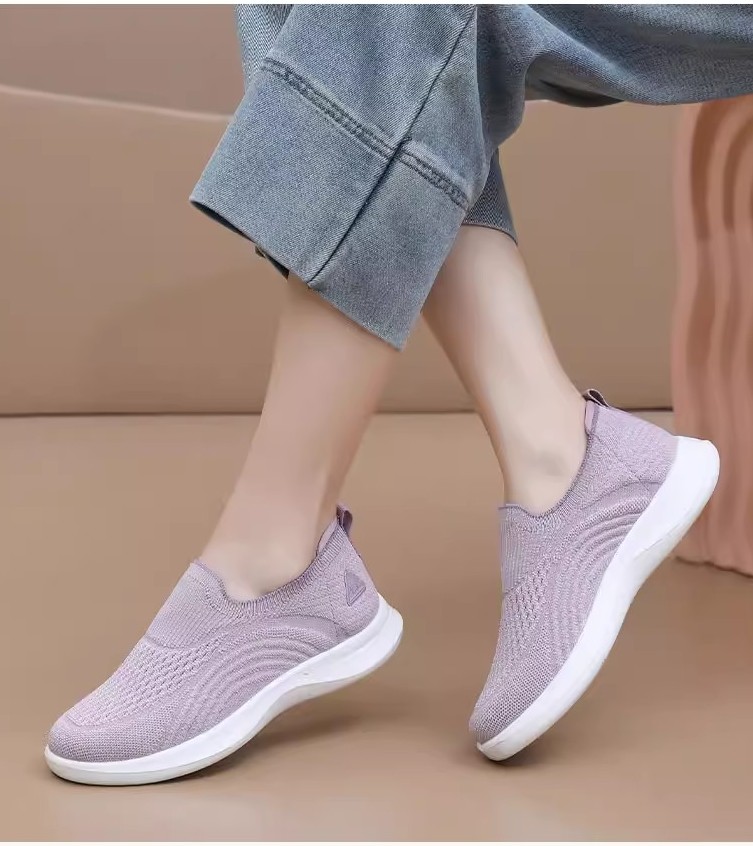
Most people shop with their eyes and their hands. They squeeze the upper, nod at how soft it is, and never turn the shoe over. Flip it upside down instead. You want real rubber where your heel strikes and where your toes push off, not a printed film of it sitting on bare foam. A pair with no heel rubber will grind through in roughly three months of daily wear. I’ve killed two that way, both of them good-looking.
Then check the drop, which is the height difference between heel and toe. Anything from 6mm to 10mm feels natural for walking. A 12mm drop starts to feel like you’re walking downhill all day, and a zero-drop shoe asks your calves to do work they haven’t done since you were a kid. Neither is wrong. They just suit different bodies, and the only way to know is to walk a lap.
Do the taco test in the aisle. Hold the heel in one hand and the toe in the other and try to fold the shoe in half. If it collapses easily, the midsole has no structure and it’ll pancake under you by summer. If it won’t budge at all, it’s a brick. The sweet spot bends at the ball of the foot and nowhere else, the way your own foot does.
Squish the heel counter too, that stiff cup at the back. It should hold its shape when you press a thumb into it. Soft, floppy heel counters are why so many cheap walking shoes feel fine in the shop and awful on a hill. They let the heel roll inward, and after an hour your ankle is doing overtime to compensate.
One last thing on soles: weight. Pick the shoe up in one hand. Under about 280g for a women’s size 38 is light enough to forget, and anything past 340g starts to feel like a shift by the end of a long day. Scales in the shop are rare, so use your arm as the scale and compare two pairs side by side.
The 20-minute store test I run before paying
Shop late in the day. Feet swell by half a size between breakfast and dinner, and a shoe that fits at 10am will pinch at 6pm. If you can only go in the morning, bring the thickest socks you’d ever wear with that pair and try them on with those.
Walk on tile or concrete, never on the carpet. Carpet hides everything: the squeak, the slip, the way the sole grabs. I do four laps of the aisle, one of them fast enough to feel ridiculous. That’s where you learn whether the heel slips. A little movement is normal. Your heel lifting out of the shoe on every step is not, and no amount of breaking in will fix it.
Then stand still and wiggle your toes. If you can’t, the toe box is too shallow or too narrow, and cute comfortable walking shoes for women fail at this exact point more often than anywhere else. Try the same size in a wide fitting before you try a bigger size. Going up a half size buys length you don’t need and adds heel slip you’ll regret.
Two more checks, both quick. Press a thumb into the insole under the ball of your foot. If it’s a sheet of flat foam with no shape, budget for a replacement insole. And listen. A squeak in the shop is a squeak in a quiet office at 9am, and it never goes away.
If the shop has a sloped ramp, use it. Walking uphill tells you whether the toe box has room to bend, and walking down tells you whether your foot slides forward into the front of the shoe. That slide is the reason so many people lose toenails after long walks. It’s also the easiest problem to spot before you pay.
Where cute comfortable walking shoes for women usually go wrong
The classic failure is a pretty upper stapled to a soft, tall, squishy sole. It feels like a cloud for two weeks. Then the foam packs down, the shoe loses the shape that made it look good, and your arches start filing complaints. Cushion without structure is a short-term loan.
You can spot it before you pay. Press a thumb into the midsole near the arch. If it dents like a marshmallow and stays dented, that’s the foam you’ll be walking on in August, which is about four months earlier than the shop assistant implied.
The second failure is the pointed toe. A narrow toe box looks sharp with tailored trousers and squashes your toes into a wedge, which is exactly the shape toes don’t want after mile four. I bought a pair in 2023 that looked fantastic with wide-leg jeans. By the end of a 40-minute walk to the station I had a blister the size of a dime on my right little toe, and I gave them away within a month.
Third, and this one stings, white mesh that yellows. It’s not dirt. UV and detergent turn the coating, and by August the shoes look five years old. If you want a light pair, bone or off-white leather holds up far better than bright white knit.
There’s a fourth trap that doesn’t get mentioned enough: the shoe that’s comfortable standing still. Plenty of pairs feel wonderful in a two-minute try-on because the foam is soft and the fit is snug. Walking is a different motion. Your foot rolls, your arch loads, your toes bend. Ask to wear them around the shop for a full ten minutes before you commit, even if the assistant is hovering.
Cute and comfortable aren’t enemies. They’re just rarely introduced.
None of this means you have to dress like a physiotherapist. It means the order matters. Find the last and the sole first, then pick the colourway. Doing it the other way round is how people end up with six pairs and one that actually gets worn.
Knit or leather? Pick by climate, not by trend
Knit uppers breathe. On a humid day they’re the difference between a pleasant walk and a sauna for your feet. They also let water in within seconds, and once wet they stay wet for hours because there’s no structure to shed it. If you walk to work in a city that rains sideways, knit is a gamble.
Leather takes about two weeks to mould to your foot and then holds that shape for years. It handles drizzle, wipes clean, and looks better scuffed than new. The cost is weight and the break-in period, plus a little warmth in July. The NHS advice on blisters is blunt for a reason: don’t pop them, and don’t keep walking in the shoe that caused them. Leather gives you a couple of days of grace to notice a hot spot. Stiff synthetic doesn’t.
Suede is the one I’d avoid for walking. It’s lovely for a dinner reservation and hopeless in a wet park. Same for anything with a decorative sole that has no tread. Grab the shoe and look at the pattern. If the tread is a smooth wave with no lugs, it will slide on wet pavement, and that’s how ankles get hurt.
A practical compromise: leather or a leather-and-mesh hybrid for the wet months, knit for summer, and a cheap waterproof spray for both. It won’t make a mesh shoe waterproof. It does buy you ten minutes in a drizzle, which is often the difference between arriving dry and squelching through a meeting.
One more consideration that nobody mentions in reviews. Knit shows every crease, and a knit pair starts to look tired after about eight months of hard use. Leather creases too, but it creases in the places your foot actually bends, so it reads as worn-in rather than worn out. If you hate replacing things, that’s a real argument for leather.
Width is the spec nobody prints on the box
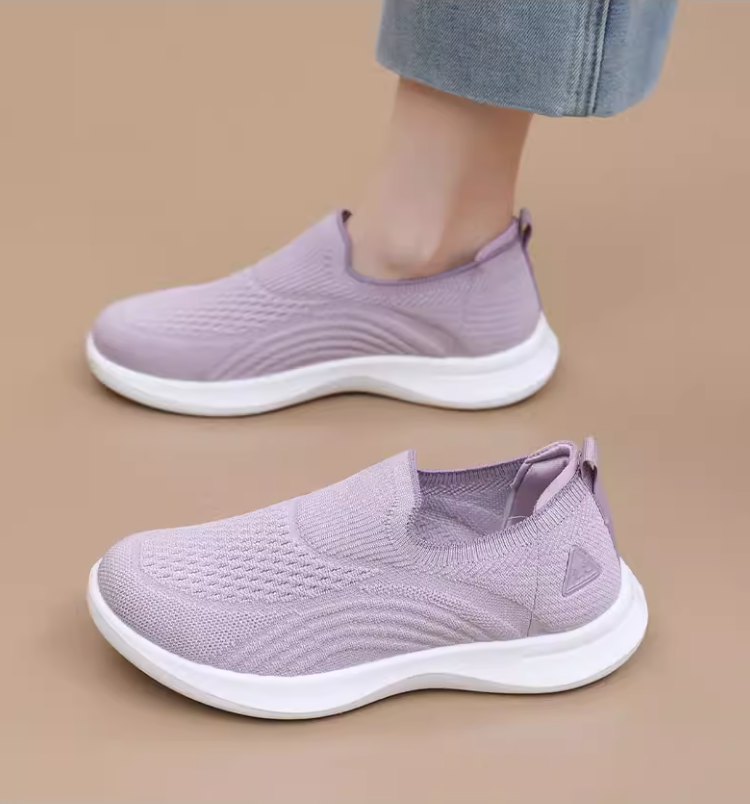
Most shoe boxes list a size and nothing else, which is a strange way to sell something your foot has to fit inside. Two women wearing the same size can be a full width apart. If your shoes always feel tight across the ball of the foot while the length is fine, you’re not between sizes. You’re in the wrong width.
Here’s the test I use. Take the insole out and stand on it. If any part of your foot hangs over the edge, the shoe is too narrow, full stop. No insert fixes that. A wide fitting or a different last will.
The instep matters too. If the laces gape open in a V across the top of your foot, the shoe is too shallow, and loosening them won’t stop the pressure. Look for a style with a softer tongue or fewer eyelets instead of fighting the fit.
Toe shape matters as much as width. A rounded or slightly squared toe box lets toes spread, which is how they’re supposed to carry your weight. Look for a pair where the widest part of the shoe lines up with the widest part of your foot, usually just behind the toes. If the widest point sits further forward, the shoe will squeeze the joint that hurts most when it’s squeezed.
Socks change the fit more than people expect. A thin merino sock and a cushioned cotton crew can be a half size apart in feel. Decide which you’ll wear most and test with those, not with the paper-thin try-on socks the shop hands you.
Wide feet are also where most cute comfortable walking shoes for women quietly give up. Brands chase a sleek silhouette, and sleek usually means a tapered toe. The fix isn’t to size up until the shoe swims. Look for a wide option in the same style, or pick a brand that builds its walking line on a roomier last and accept slightly less delicate proportions.
What actually looks right with jeans and a midi skirt
Low-profile soles read as intentional. A 25mm to 30mm stack with a clean sidewall looks like a shoe someone chose. A 45mm slab of white foam looks like you borrowed a teenager’s trainers, which is fine if that’s the point and awkward if it isn’t.
With straight-leg or wide jeans, the hem should break just above the shoe or graze the laces. Anything longer and you’re hiding the one part of the outfit that makes the leg look longer. With a midi skirt, show some ankle. A chunky sole plus a midi plus a thick sock turns into a lot of visual weight around the ankle, and the whole thing starts to look like a uniform.
Colour is simpler than the internet makes it. Bone, tan, chocolate brown and black cover about 90% of wardrobes. A single bright pair earns its place if you actually own things that pick it up. My one rule: match the sole to the upper, or go darker. White soles on a dark upper look sporty, and sporty is a commitment.
And honestly, the sock choice does more work than the shoe. A ribbed cream crew with a tan leather walking shoe looks deliberate. The same shoe with a shiny black ankle sock looks like a mistake at a wedding.
One shortcut that works more often than it should: pick the shoe first and build the outfit around its sole height. When I bought a 25mm pair last autumn, three pairs of jeans in my wardrobe suddenly looked shorter than they had in the shop. Hem and sole are in a relationship, and the hem always wins the argument.
If you mostly walk indoors, the styling maths changes entirely. I wrote a separate piece on shoes for treadmill walking because gym-floor pairs and pavement pairs aren’t the same purchase, even when they look identical in a photo.
Socks and insoles: the two cheap fixes that save a pair
Before you return a pair that’s almost right, spend eight dollars. A thin merino sock reduces friction, which is what causes most blisters, and it regulates temperature better than cotton. A heel grip fixes a shoe that slips by a few millimetres. A heel-lock lacing pattern, where you thread the lace back through the top eyelet on each side, holds the heel down without tightening the whole shoe.
Insoles are the other lever. The American Podiatric Medical Association notes that walking shoes typically need replacing somewhere around 300 to 500 miles, and the upper usually outlives the insole by a wide margin. Swapping in a supportive insole at the halfway point gets you another season from a pair that still looks fine. More on that at apma.org.
What doesn’t work: doubling up socks to fill space, spraying the inside with anything, and buying a size down because the shop assistant says leather stretches. It stretches a little. It won’t fix a shoe that’s a full size too small.
Insoles change the volume of the shoe, so factor that in. A thick replacement eats roughly half a size of depth, and if your pair is already snug across the instep, you’ll feel it within a mile. A thinner insole with a firmer arch shell adds support without stealing room you don’t have.
If you walk more than an hour a day, buy two pairs of socks for every pair of shoes. Sounds excessive. It isn’t. Socks wear out faster than shoes, and a thin sock with a hole in the heel is how you get a blister in a shoe you’ve worn happily for a year.
And wash them inside out, cold, no fabric softener. Softener coats the fibres and kills the wicking, which is the whole point of paying extra for merino in the first place.
Two pairs I’d skip, and why
The $28 online pair with the glued sole. It looks like a bargain until the sole separates at the toe after six weeks, usually on a day when it’s raining and you’re far from home. There’s no repair that costs less than the shoe. Cheap is fine. Cheap and unreturnable is not.
Rocker-bottom “toning” shoes. The curved sole is supposed to make your muscles work harder. In practice it makes balance worse on uneven ground, and if you have any ankle history, that’s a bad trade for a shape that looks dated anyway. I wore a pair for a month in 2019 and my knees filed a complaint before my calves noticed anything.
One more: all-white canvas with a thin rubber cup sole. Cute for a picnic, useless for a commute. Canvas soaks, the sole has no grip when wet, and the toe goes grey within a week. If you want the look, buy the leather version.
And I’d skip the barefoot-style shoes if you’re on pavement all day. They’re brilliant on grass and brutal on concrete, because there’s nothing between your heel and the slab. Fine for twenty minutes of foot strengthening. Not fine for a commute.
Most cute comfortable walking shoes for women get sold on looks and judged on the first ten steps, which is why so many of them end up in a cupboard by June. The pair that stays in the rotation is usually the boring one that never gave you a reason to think about it.
I’d rather own two pairs that work than five that nearly do. That’s the whole argument, really. Rotating two pairs also doubles the life of each one, because foam needs about 24 hours to recover after a long walk. Wear the same pair every day and you’re flattening it while it’s still warm.
Breaking them in without shredding your heels
Wear new walking shoes for 20 minutes at home first. Not an hour, not a shopping trip. Twenty minutes tells you where the pressure points are while you’re still near a plaster and a pair of old shoes. Do it on carpet, then on a hard floor, then outside for a short walk. Three stages, three chances to catch a problem early.
Build up by about 20% a week. If your current pair handles three miles comfortably, don’t take the new ones on a six-mile walk on day two, even if they feel fine. Feet lie to you for the first 40 minutes.
If a specific spot rubs, deal with it directly. A blister plaster on the spot before you leave beats one after. Lace looser across the top of the foot and tighter at the ankle. And rotate the new pair with an old one for the first fortnight, which gives any hot spot time to settle instead of turning into an open wound.
Leather needs a little help. A thin layer of leather conditioner on the inside of the heel counter softens the one area that causes most break-in misery. Do it the night before your first proper walk and let it sink in. Don’t soak the shoe. A damp cloth and a pea-sized amount is plenty.
Finally, give yourself a fortnight before you judge. Almost every good pair I’ve owned felt slightly wrong on day one and obvious by week three. The reverse is also true, which is why the shop test matters so much.
Go late in the day, take your own socks, and walk on hard floor for four laps. Check the outsole rubber at the heel. Bend the shoe and see where it folds. Pull the insole and stand on it. If the width is wrong, walk away no matter how good the colour is.
That’s the whole method, and it takes about 20 minutes per pair. It won’t make you immune to bad purchases. It does tilt the odds, and after a few years of walking a lot, tilting the odds is most of what anyone can do. What’s the pair you keep reaching for, and what made you keep it? That answer is usually more useful than any review, including this one.
