

Most people buy walking shoes by picking a size, wiggling a thumb at the toe, and hoping. If your foot is on the slim side, that routine fails more often than it works. The shoe feels fine standing in the shop, then turns into a loose bucket ten minutes into a real walk, and by the end of the week you have a hot spot on your heel and a shoe that slides with every step.
Womens narrow walking shoes exist for a reason, but the label on the box rarely tells you the whole story. A “narrow” marking can mean a genuinely slimmer last, a tighter upper stitched onto a standard sole, or nothing at all beyond a marketing line. Two pairs marked the same width can fit completely differently depending on the last shape, the volume through the instep, and how much structure the material has.
This guide is about fit mechanics rather than shopping lists. It covers what actually changes when a shoe is built narrow, how to read width markings without guessing, which upper materials hold a slim foot in place, and the free adjustments — lacing, socks, insoles — that fix half the problems people blame on their feet. If you have spent years sizing down to get a snug fit and paying for it in the toe box, this is the way out of that loop.
Why Standard Widths Fail a Slim Foot
A standard women’s shoe is built around a B width. That is the middle of the bell curve, and it fits the middle of the bell curve. If your foot measures an A or AA, the shoe is not merely a little roomy — it is wider through the ball, wider through the heel, and taller through the instep than your foot needs. The excess does not disappear when you pull the laces tight. It gathers in folds over the toes and bunches under the arch, and the shoe starts to behave like a loose slipper with a stiff sole.
The usual workaround is to size down half a size, which trades length for width. That is a bad trade. Length is the one dimension you cannot fake: take away 5mm at the toe and your longest toe starts tapping the front on every downhill section, which is exactly how black toenails happen. You end up with a shoe that is too short and still too wide, and now the flex point of the sole sits in the wrong place under your foot.
Volume is the part almost nobody talks about. Width is measured across the ball of the foot, but a shoe also has depth — how much space sits above your instep and around your ankle. A slim foot often has low volume as well as narrow width, so even a correctly marked narrow shoe can feel cavernous if the upper is cut generously. This is why some people with narrow feet do better in a standard-width shoe with a low-volume last than in a wide-fitting “narrow” shoe built on a roomy last.
There is also the question of shape versus size. Feet are not symmetrical ovals. A narrow foot with a wide forefoot and a skinny heel — a genuinely common combination — needs a shoe that is slim at the heel and moderate at the ball, and no single width letter describes that. You have to read the geometry of the shoe, not just the number.
Reading Width Markings Without Guessing
In US sizing, women’s widths run from AAAA at the narrowest through AA, A, B (standard), C, D, E and upward. The step between letters is small — roughly 5mm across the ball — which is why one width down often feels subtle while two widths down feels like a different shoe. UK sizing uses a different letter system, and European sizing usually ignores width entirely, printing only length. That mismatch is the source of a lot of online ordering pain.
The reliable starting point is a proper measurement. A Brannock device gives heel-to-toe length, heel-to-ball length and width in one go, and the heel-to-ball number matters as much as the overall length because it tells you where the shoe should flex. Podiatrists generally recommend re-measuring rather than assuming, since foot length and width change with age, weight, pregnancy and long-term loading — the American Podiatric Medical Association makes the point that adult foot size is not fixed for life. Measure late in the day, standing, in the socks you actually walk in. Feet swell by a few millimetres over the course of a day and more in heat.
When you shop online, ignore the width letter until you have checked the last. Look for a stated last width in centimetres, a fit note (“runs narrow, size up for wide feet”), or customer reviews that mention slim heels. Reviews are imperfect data, but twenty people saying the heel slips is a real signal. A single review saying “true to size” from someone with average feet tells you nothing about a narrow fit.
Measure the shoe you already own, too. Take the pair that fits best, pull the insole out, and measure its width at the widest point and its length. Compare those numbers to the size chart of anything you are considering. This converts a vague letter into a number you can check, and it takes about two minutes. It is the single most useful habit for anyone buying womens narrow walking shoes online, where returns are expensive and fitting rooms do not exist.
Upper Materials That Hold a Slim Foot in Place
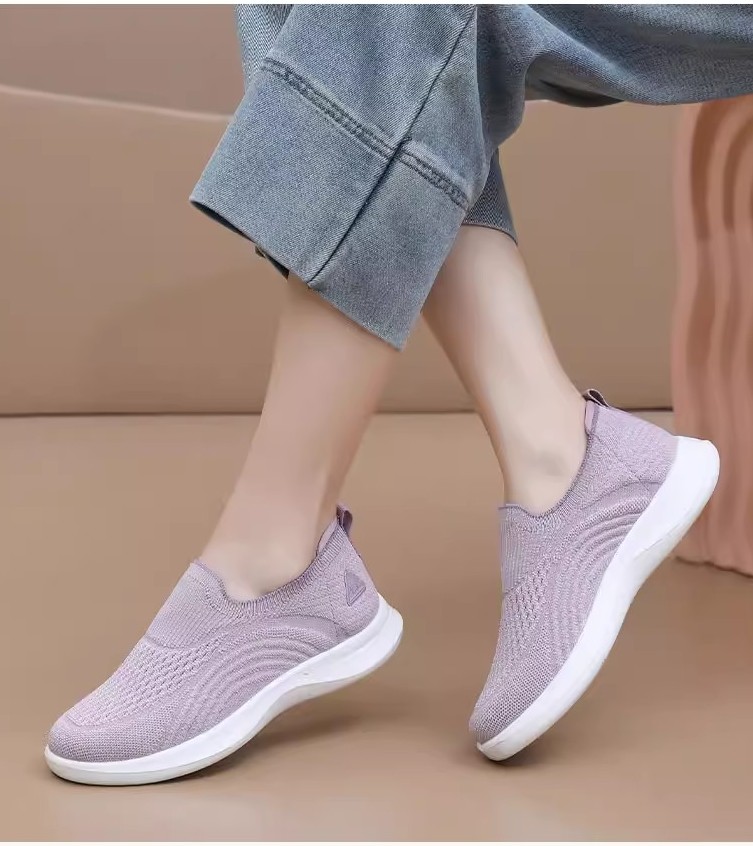
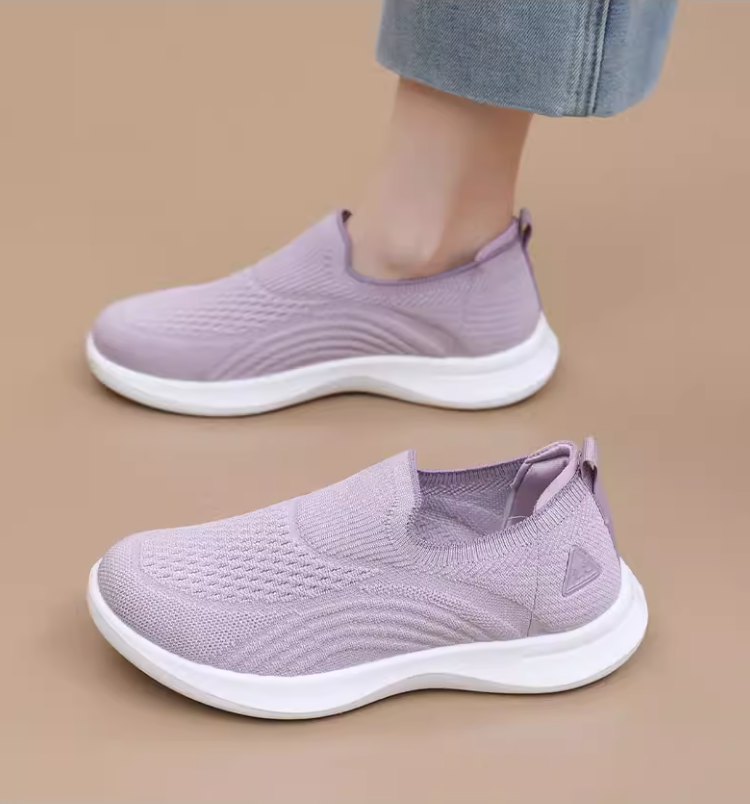
A narrow foot needs the upper to do structural work. Soft, unstructured knit stretches to accommodate whatever is inside it, which is comfortable for a wide forefoot and useless for a slim one — the shoe simply gives way instead of holding. That does not mean knit is off the table, but it has to be a denser, reinforced knit with a firm midfoot cage, not a sock-fit slip-on.
Leather and suede hold shape better. A full-grain or nubuck upper with a stitched midfoot panel resists the sideways spread that makes a roomy shoe feel sloppy. The trade-off is break-in time and less breathability, though a leather walking shoe that has moulded to your foot will hold it more securely than any mesh alternative. Look for a firm heel counter — squeeze it, and if it collapses between your fingers, it will not stabilise a narrow heel.
Stitch count and panel design matter more than the material name. A shoe built from many small panels with overlays at the midfoot and heel wraps the foot; a shoe built from two big pieces of soft material does not. Linings are the third variable: a padded, slightly textured lining creates friction against the sock and reduces the micro-sliding that causes blisters, while a smooth synthetic lining lets a narrow foot skate around inside the shoe.
Finally, check the tongue and gusset. A tongue that is attached at the sides — a gusseted or partially gusseted tongue — keeps the whole upper wrapped around the foot and stops the tongue from sliding sideways when you lace tightly. On a narrow foot, a loose, unattached tongue is the first thing to shift, and once it does, the lacing pressure goes crooked and the fit collapses. It sounds like a small detail. It is not.
Lacing and Volume Tricks That Cost Nothing
Before you return a pair, try re-lacing it. Most shoes ship with a ladder pattern that distributes pressure evenly, which is fine for an average foot and wrong for a narrow one. Two changes fix a surprising amount: a heel-lock lacing at the top two eyelets, and skipping the eyelet pair directly over the widest part of your foot if the shoe is tight there rather than loose.
Heel-lock lacing — sometimes called a runner’s loop — uses the extra eyelet pair at the top of the shoe to create a loop that pulls the heel counter forward and down around your ankle. You lace up to the second-to-last eyelet, run each lace end back into the top eyelet on the same side to form a loop, then cross the ends through the opposite loops before tying. The effect is a firmer grip on the heel with no extra pressure across the instep, and it is the standard fix for heel slippage in a shoe that is otherwise the right length.
Socks are the second lever. A thin merino or synthetic sock changes the internal volume by a couple of millimetres and changes friction more than that. Cotton socks pack down, hold moisture, and increase the chance of blisters. If a shoe is marginally too roomy, a slightly thicker technical sock is a legitimate short-term fix; if it is marginally too tight, a thin liner sock buys you space. Just be consistent — fit is only stable if the sock is.
Insoles are the third. A thin aftermarket insole with a defined heel cup takes up volume, raises the heel slightly into the counter, and adds arch contact. This is often all a narrow-footed walker needs to convert a slightly loose shoe into a secure one, and it costs far less than a new pair. Avoid thick cushioned insoles in a shoe that already feels roomy; they lift the foot but do nothing about lateral movement.
Heel Slippage, Blisters, and What Wear Patterns Tell You
Heel slippage is the classic complaint from narrow-footed walkers, and it has three usual causes: too much length, a soft heel counter, or a last that is wide at the rearfoot. Diagnose it by walking on a hard floor in the socks you plan to use and watching whether your heel lifts more than a couple of millimetres. A little lift is normal. A visible gap at the back of the collar every step means the shoe is a size too long or the counter is too soft.
Blisters follow from friction, and friction follows from movement. If you are getting hot spots on the back of the heel, the shoe is moving; if they appear on the sides of the big toe or the little toe, the toe box is too narrow or the foot is sliding forward on downhills. Those are different problems and they need different fixes — heel-lock lacing and a thicker sock for the first, a wider toe box or a shorter lacing pattern for the second. Treating both with padding is how people end up with a drawer full of gel patches and no solution.
Bunions complicate everything. A bunion is a bony bump at the base of the big toe, and the NHS notes that tight, narrow shoes can make the condition worse, even if they are not the underlying cause. For a walker with a bunion, the shoe needs a wide, rounded toe box and a soft upper over the joint — which sounds like the opposite of a narrow shoe, and in a sense it is. The answer is a shoe that is narrow through the heel and midfoot but generous across the toes, which is a shape, not a width letter.
Wear patterns on the outsole are free diagnostic data. Even wear on the outer edge of the heel is normal and reflects how most people land. Heavy wear on the inner edge suggests the foot is rolling inward, and in a narrow shoe that also means the upper is collapsing medially. Wear concentrated under the ball with nothing at the heel suggests the shoe never really fit and the foot has been sliding forward all along. Look at a pair you have retired before you buy the next one.
What the Sole Should Do on a Walking Shoe
Walking is not running, and the sole should reflect that. A walking shoe flexes at the ball, has a relatively flat profile with a modest heel-to-toe drop — typically 8 to 12mm for a supportive everyday pair — and prioritises a smooth roll from heel strike to toe-off over cushioning depth. A running shoe with a 10mm stack of soft foam will feel comfortable in the shop and vague on a footpath, because the softness lets a narrow foot move around inside the shoe instead of being guided by it.
Check flex by hand: the shoe should bend where your toes bend, and it should resist twisting along its length. If you can wring it like a towel, it will not support a slim foot over distance. A firm shank or a denser midsole through the midfoot does more for narrow-foot stability than any amount of padding at the collar.
Traction matters more than tread depth for urban walking. A mildly lugged rubber outsole with a defined heel strike area grips wet pavement and worn tile, which is where most slips happen. Deep aggressive lugs belong on trails; on a footpath they wear unevenly and can feel unstable on hard surfaces. If you walk in winter conditions, prioritise a rubber compound that stays soft in the cold over a pattern with bigger teeth.
Weight is the last variable worth considering. A lighter shoe reduces fatigue over long distances, but lightness usually comes from thinner materials, and thin materials hold a narrow foot less firmly. Somewhere around 250 to 320 grams per shoe is a reasonable band for a supportive women’s walking shoe; below that you are usually trading structure for grams.
One more thing worth checking is how the sole is attached. A stitched or cemented sole with a defined edge gives the upper something rigid to sit on, and that edge is what stops a slim foot from spilling over the platform on a turn. Womens narrow walking shoes built on a wider platform than the upper — a common shortcut in cheap construction — look fine new and feel unstable within a month, because the foot sits on top of the sole rather than inside it.
Three Fits Worth Trying Before You Settle
Rather than chasing one perfect pair, most narrow-footed walkers do better with a small rotation, because different shoes solve different problems. Three profiles cover most needs.
The first is a slim leather walking shoe with a firm heel counter and a gusseted tongue. This is the everyday option for pavement walking and long errands, and it is the easiest to fit because leather holds its shape and the lacing can be tuned precisely. Look for a rounded toe box so the slim midfoot does not come at the cost of toe room.
The second is a low-volume mesh trainer with a reinforced midfoot cage. Breathable, lighter, better in heat, and a good choice if you walk fast or in warm weather. The cage is the critical feature — without it, mesh gives way and the fit goes soft within a few weeks. If you are browsing options, this article on white walking shoes for women covers fabric choices in more detail.
The third is a slightly more structured shoe with a removable insole, which lets you fine-tune volume with an aftermarket footbed. This is the most adaptable option and the best one if your feet are asymmetrical or if you wear orthotics. The removable insole is not a gimmick: it turns a shoe that is close into a shoe that is right.
Try all three in the afternoon, in the socks you walk in, and walk on a hard surface rather than carpet. Carpet hides a loose heel and forgives a short toe box. Ten minutes on tile tells you more than thirty seconds on a rug.
If you can only try one, start with the leather option and treat the other two as fallbacks for hot weather and for feet that need an orthotic. Leather is the most forgiving of the three to fit, and it tells you quickly whether the last shape suits your foot at all. A pair that feels wrong in leather will rarely feel right in mesh.
Breaking Them In and Keeping the Fit Honest
New walking shoes should feel snug but not tight, with a thumb’s width — about a centimetre — between your longest toe and the front of the shoe. If they feel perfect standing still, they are probably slightly short once your feet swell. If they feel loose, no amount of break-in will fix it; leather softens and stretches, it does not shrink.
Break in gradually. Two short walks of twenty minutes, then an hour, then your normal distance. This lets the upper mould to your foot and reveals pressure points while they are still small enough to address. Blister plasters on day one of a long walk is a sign you skipped this step.
Pay attention to the width as the upper relaxes, not just the length. Womens narrow walking shoes that fit perfectly in week one often feel a few millimetres roomier by week six, and that is the moment to re-tie the lacing rather than to buy a thicker sock.
Keep the fit honest by checking in every few months. Laces stretch, linings pack down, and midsoles lose rebound after roughly 500 to 800 kilometres of walking. A shoe that fit well in spring can be a full half-size roomier by autumn, which is usually the point where people start blaming their feet for a problem that lives in the shoe. Rotating two pairs extends both, and it gives each midsole a day to recover.
Womens narrow walking shoes are not a niche curiosity, and you should not have to size down, double up on socks, or accept a heel that lifts with every step. Get measured properly, understand that width and volume are two separate things, choose uppers that hold their shape, and use lacing and insoles to close the last few millimetres. Walking is the cheapest exercise most of us have access to — the NHS recommends 150 minutes of moderate activity a week — and a shoe that actually fits your foot is the only equipment it requires.
