

You saw them in a shop window and they looked like a small piece of jewellery for your feet. Then you got them home and put them on with jeans, and something went wrong. Instead of looking polished, they looked like a wrapper.
That’s the risk with rose gold sneakers for women. The colour is doing something unusual on a shoe, and it either reads as warm and expensive or as party foil, depending on three things: the shade, the finish, and what you wear them with.
I’ve owned one good pair and one bad pair. The good pair lasted two years and got compliments at a wedding. The bad pair started flaking along the crease line after six weeks and went in a bin bag before the summer was out. The difference wasn’t the price.
Rose gold on a shoe is a finish, not a colour
Real rose gold is an alloy of gold with copper, which gives it that warm pinkish tone. Nobody is putting that on a sneaker. What you’re buying is a metallic effect achieved one of two ways, and the difference decides how long the shoe looks new.
The cheap method is a metallic pigment mixed into a polyurethane coating sprayed over a base material. The coating sits on the surface like paint. It looks convincing in photos and reflects light well, because the pigment particles are aligned flat.
The better method is a laminated foil or a metallic film bonded onto leather or a textile, then sealed with a clear topcoat. It’s more expensive and it bends with the material rather than sitting on top of it.
Here’s how to tell them apart in ten seconds: bend the shoe at the toe. A sprayed coating goes slightly matte along the fold and may show a fine white line where the pigment stretches. A laminated film creases in a soft, continuous way, and the colour stays even through the fold.
Then look at the edges. Where the upper meets the sole, and around the collar, a cheap metallic coating often stops short, leaving a visible seam or a thin pale line. Sealed foil wraps the edge properly.
Why does this matter so much with metallic shoes? Because a flat colour hides wear. Scuffs on navy leather are a small annoyance. A rub mark on rose gold breaks the illusion completely, and once the coating is broken you can’t match it back in. There’s no polish that restores a metallic finish, and no cobbler will touch a sprayed coating.
So the honest rule: buy metallic only if the finish is the good kind. If you can’t tell, don’t spend much. A cheap pair can still be fun for a season, as long as you go in knowing that’s what you’ve bought.
Three rose golds, three different jobs
The shade variation in this category is wider than in any other sneaker colour, and it changes who the shoe suits.
- Champagne or pale rose. Barely pink, closer to a warm silver. Reads almost neutral in daylight, which makes it the easiest to wear and the most forgiving with pale outfits. It also looks slightly dull in photos compared to the shop mirror.
- True rose gold. A clear pink-copper. The one most people picture. It’s warm, it flatters most skin tones, and it needs a black, white, or navy outfit to keep it from looking sweet.
- Copper or bronze rose. Darker, browner, and closer to a warm metallic brown. The most grown-up version, and the least likely to look like party wear. It also hides scuffs best, because the base colour underneath is similar.
If you wear mostly black, the true rose gold is the one with impact. With beige, cream, and grey wardrobes, champagne blends and copper adds depth. Copper is also the safest choice if you’re over 30 and slightly wary of the whole idea, because it reads as a metallic tan rather than a pink shoe.
Something else worth knowing: metallic colours shift under different light. The same pair looks silver in a cold-lit changing room and peach in evening light. Check them near a window before you commit, and don’t judge them under a shop’s warm spotlights.
One warning about online shopping. Metallic finishes photograph badly. The camera catches the brightest point and turns champagne into chrome. If the listing shows one photo only, expect the real thing to be at least a shade warmer and less mirror-like than it appears.
The other thing shade affects is how often you’ll actually reach for the pair. A champagne rose gold gets worn twice a week because it behaves like a neutral. A bright true rose gets worn for evenings and weddings. Both are fine purchases. They’re just different purchases, and paying metallic prices for a shoe you’ll wear four times a year is a bad trade.
Where a metallic upper fails first
All shoes wear out. Metallic ones wear out in a specific pattern, and it’s worth knowing where to look so you’re not surprised when it happens.
Start with the flex crease across the ball of your foot. Every step bends the upper there, and a sprayed coating will crack along that line in about 40 to 60 wears. You’ll see it as a lighter, chalky line before it flakes. Once it starts, small flakes come off onto your socks.
Next, the inner heel, where your heel rubs on the way in and out. Metallic film abrades faster than plain leather because the topcoat is thin. Check this area every few weeks, because once it’s through to the base material there’s no fix.
Third on the list is the toe bumper, which takes pavement knocks. A knuckled toe on a rose gold shoe shows as a dull patch. It won’t tear, but it will stop reflecting and the shoe will look worn even if the rest is fine.
Last, and the one nobody mentions, is sun fade. Metallic pigments are less UV-stable than solid dyes. A pair left on a balcony through a summer can shift toward a dull bronze on the sun-facing side, which on a two-tone pair means one shoe ends up a different colour from the other.
Practical takeaway: if you want metallic sneakers for regular wear, treat them as a two-season shoe rather than a five-year one. That’s not a defect. It’s the nature of the finish. Buy accordingly, and don’t pay a premium expecting durability that the material can’t offer.
There’s one small way to slow all of it down. Rotate the pair. Wearing rose gold sneakers four days a week puts 200 flex cycles a week through the same crease, and the coating gives up far sooner than it would on a pair worn twice a week. Rotating two pairs roughly doubles the life of both, which is the closest thing to a repair that a metallic upper has.

What they lift, and what they kill
Rose gold sneakers are a statement shoe, and statement shoes follow one rule: one statement per outfit. If your trousers are printed, your bag is studded, and your jacket has a metallic zip, the shoes will fight all of it.
Metallic trainers work best, honestly, with the plainest clothes you own. Black straight-leg trousers and a grey knit. A white shirt dress. Navy jeans and a plain white tee. The shoes do the talking, everything else stays quiet, and the result looks deliberate.
Evening is their natural home. They slip under a midi dress or a tailored jumpsuit in a way that a chunky trainer can’t, and they catch light indoors where a flat leather sneaker disappears. I’ve worn a pair to a low-key wedding and to dinner, and both times they did more than a heel would have.
What they kill: anything sporty. Gym leggings, a tracksuit, a puffer jacket. Metallic plus performance fabric reads as a costume, because the two things belong to different worlds. And they’re a rough match for floral prints and pastels, which turn sweet when the shoe is already warm and shiny.
Socks matter more than usual. Naked ankle with a rose gold shoe looks intentional; a white sports sock looks like you forgot to change. If you want coverage, use a thin sock in the same warm tone, or a sheer black one in winter.
One more thing about proportion. Metallic draws the eye downward, so it works best when the outfit is fairly simple above the ankle and the hem ends near the ankle bone. A long, wide trouser that covers most of the shoe hides the whole point. Cropped trousers, a midi skirt, or a dress that stops at mid-calf all give the shoe room to show.
Our breakdown of choosing a pink sneaker shade that survives real life follows similar logic, and it’s a good sanity check if you’re torn between pink and metallic.
Metallics have less give, so size carefully
A metallic finish makes leather slightly stiffer. The topcoat reduces how much the material can stretch, and foil-laminated uppers have almost no stretch at all. That changes how you should size.
Plain leather sneakers will give about 2mm across the width over a few months. Metallic ones give close to nothing. So the pair that feels snug in the shop will still feel snug in March, and a tight toe box becomes a genuine problem rather than a temporary one.
Try them at the end of the day, when your feet are at their largest. Leave 8mm to 10mm between your longest toe and the front, and check the width across the ball of your foot by pressing with your thumb. There should be a little spring, not a hard wall.
If you’re between sizes in a metallic shoe, go up. It’s the opposite of what I’d advise in a slip-on, and it’s because there’s no stretch to bail you out later.
The other comfort issue is heat. Metallic coatings don’t breathe, and a fully coated upper turns into a small oven on a warm day. If you plan to wear them in summer, look for a perforated panel or a mesh tongue, which lets some air through.
Break-in is short but real. Give them two or three short wears indoors before a long day out. The collar and the heel counter need to soften, and the toe box needs to find where it creases. Doing that at home means the crease forms where your foot actually bends, not where a shop mirror made it bend.
For a lighter everyday option with more give, the sports and leisure pair uses a softer upper that moves with your foot, and the mesh soft-sole version is the one I’d pick for a long walking day.
Caring for the finish, and the honest verdict
Metallic finishes need less care than leather and more caution. The goal is to remove dust without abrading the topcoat, and to keep water away from the seams where the coating is thinnest.
Wipe with a soft, slightly damp microfibre cloth after each wear. That’s it for most weeks. Don’t scrub. Don’t use a brush with stiff bristles, and don’t use a cream polish, because wax sits on the metallic surface and dulls it permanently.
For marks, a tiny amount of mild soap on a damp cloth, dabbed rather than rubbed. Then dry at room temperature. Never on a radiator, never with a hairdryer, because heat makes the coating lift at the edges.
Store them loosely, not squashed under other shoes. Metallic film creases sharply if something heavy sits on it for a month, and those creases become crack lines when you walk. A cloth bag is better than a shoebox for this reason.
If a small area does flake, there’s one trick worth trying: a matching metallic nail polish, applied with a fine brush and left to cure for a day. It won’t be invisible, but it stops the eye. It works best on copper and bronze shades, where the colour match is easier.
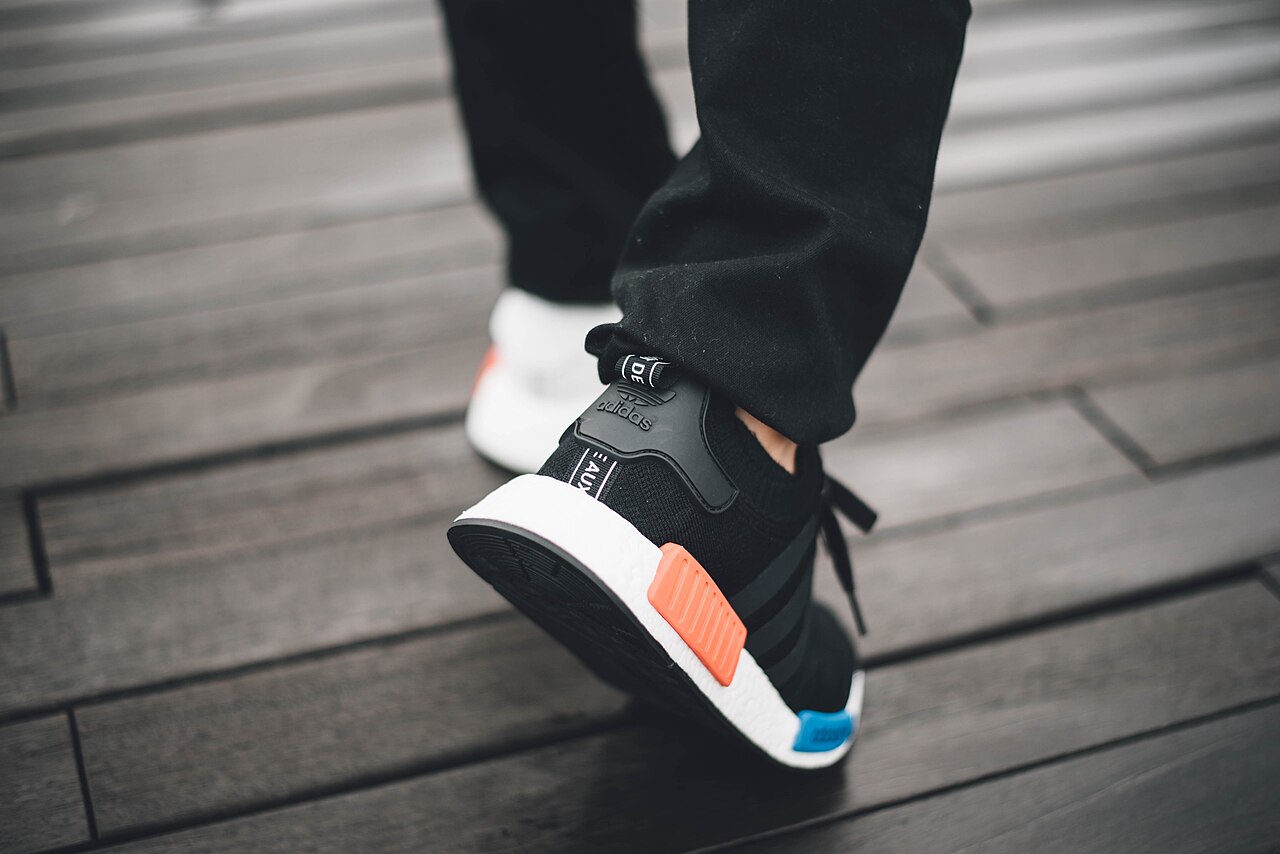
Rose gold sneakers for women are a great second pair and a risky first pair. They don’t do the job of a neutral, and they shouldn’t be asked to. What they do is make a plain outfit look considered, and that’s worth having in a wardrobe that’s mostly grey and navy.
If you’re buying rose gold sneakers for women, put your money into a sealed foil finish, choose the shade by your existing clothes rather than by the photo, and size up rather than down. Then wear them hard for two seasons and let them go.
And if you’re still hesitating, ask yourself one question: do you own at least three outfits with no pattern and no other shine? If the answer is yes, these will earn their space by the door. If it’s no, buy the plain leather pair first and come back to the metallic one next year.
