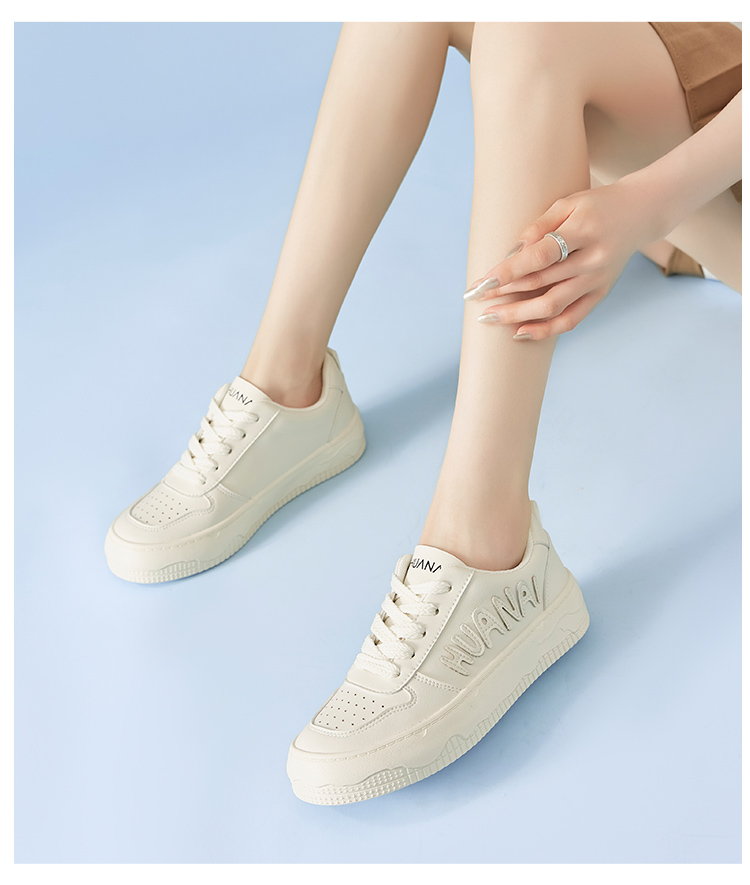
You’ve seen the photos. White sneakers with a hand-painted daisy on the heel, initials stitched in gold, two mismatched laces that somehow work. Custom women’s sneakers look charming on Instagram and cost twice as much as the plain pair.
Sometimes that’s worth it. Sometimes you pay 90 euros extra for a monogram that makes the shoe impossible to resell and slightly worse to look at.
The difference comes down to what you’re customising, who’s doing it, and whether the thing you’re adding will still make sense in eighteen months. Most custom women’s sneakers fail for the third reason, not the first two. Here’s the honest breakdown, including the parts the studios leave off the sales page.
What you can actually customise
Not everything is fair game, and the list is shorter than the marketing suggests.
- Colour on leather and canvas. Paint, dye and airbrush all work. Results range from gallery-quality to something a ten-year-old did at a birthday party.
- Initials and short words. Embroidery, heat-pressed vinyl, or hand-lettering. Up to about six characters before it starts looking cramped.
- Laces and eyelet hardware. Cheapest change, biggest effect, zero risk.
- Patches and pins. Reversible if you use the right backing. Glue is not reversible.
- Insoles. The only customisation that changes how the shoe feels rather than how it looks.
Most studios offer four or five of these and call it a design tool. In practice, the two that matter are colour and insole. Everything else is decoration, and decoration is the part you might regret.
There’s a practical limit on the shoe itself. Mesh and knit uppers are almost impossible to paint well, because the paint sits in the weave and cracks the moment the shoe flexes. Leather and canvas take paint properly. Suede takes dye but not paint. Know what your upper is made of before you order anything.
Time is the other limit. A studio that quotes a week for hand-painted work is either printing it or rushing it, and rushed paint looks like rushed paint.
Also worth knowing: many “custom” services are just a print. The design is applied as a transfer to a stock shoe, and it looks sharp for about six weeks before the edges lift. Ask directly whether the artwork is painted, printed or pressed, and ask what happens at the flex point.
Studios also differ in what they’ll refuse. Good ones talk you out of an idea that won’t survive. Bad ones say yes to everything and charge you for the mistake, which is how people end up with a pair they quietly stop wearing.
Paint holds, pleather doesn’t
The single biggest factor in whether a custom pair survives is the material underneath the paint, and it’s the thing nobody checks.
Full-grain leather takes acrylic paint beautifully. The surface has enough texture for the paint to key into, and it flexes with the shoe instead of fighting it. Prep with acetone, two thin coats, a matte sealer on top, and the design will outlast the sole.
Canvas is nearly as good and much more forgiving. Paint sits on the surface, so mistakes can be painted over. The catch is that canvas creases hard across the toe, and any design crossing that crease will crack within a month.
Coated synthetic leather is where custom jobs go wrong. The coating is designed to repel things, which includes paint. It looks fine for two weeks and then peels in sheets, usually starting at the toe. If the shoe costs under 40 euros and the label says “synthetic upper”, don’t pay for hand painting.
Mesh is the other problem. Paint fills the holes, kills the breathability that made the shoe worth buying, and looks lumpy. If you want a custom pair for summer, start with canvas or leather, not mesh. A pair of flat-soled board shoes with a paintable upper is a much better canvas than anything with a visible weave.
Check one thing before you pay: run a thumbnail across the upper. If it squeaks or slides, it’s coated, and paint won’t stay. If it grips slightly and shows a faint mark, it’s leather or suede and you’re in business.
This is also why the cheapest custom women’s sneakers on the market are usually the ones that get complained about. A studio offering hand-painted work for 50 euros over the shoe price is painting coated synthetic, because that’s what fits the budget, and coated synthetic is the one material that won’t hold.
Prep is where most DIY jobs fail. Acetone wipe, ten minutes to dry, then paint. Skip the wipe and the paint bonds to the factory finish instead of the material, and it lifts off in patches within weeks.
The monogram problem
Initials seem like the safest customisation. They’re personal, they’re small, and they can’t really go out of style. Then you see them on the shoe.
Size is the issue. A 15mm monogram in a matching tone reads as a detail. A 40mm monogram in contrasting gold reads as a name badge, and the shoe becomes about the letters rather than the person wearing them.
Placement matters as much. On the heel tab or the outer quarter, near the ankle, initials look deliberate. Across the toe box they look like a school nametag, and they will be the first thing to crease.
Then there’s the resale question. Nobody wants your initials. A monogrammed pair is worth roughly half of the same pair plain, and some resale platforms won’t take them at all. If you resell shoes every couple of years, keep the personalisation removable.
There’s a workaround worth knowing. Ask for the initials inside the tongue or on the insole instead of the outside. You still get the thing that’s yours. The shoe stays wearable and sellable, and nobody at a dinner table is reading your foot.
For anyone customising a pair as a gift, initials are the safest option that still feels personal. Just keep them under 20mm and put them where the shoe doesn’t flex.
Colour blocking is the alternative that ages better than a name. One panel in a second colour gives you something that reads as custom without reading as labelled. It’s also cheaper, because it’s a printing job rather than a hand-lettering job, and it’s the approach used by most of what shows up on a shelf as a limited edition.
If you do want lettering, pick a word rather than a name. Something short and abstract survives the moment when the person changes jobs, moves city, or falls out of love with the nickname their friends gave them in 2019.
Insoles are the upgrade nobody sells
Custom colour is what people ask for. Custom fit is what they should ask for.
A stock insole is 3mm of foam that flattens within a month. A proper replacement adds support under the arch, cushioning at the heel, and about 25g of weight. On a light sneaker, that’s the difference between a shoe you wear for two hours and one you wear all day.
Off-the-shelf insoles solve most cases for about 20 euros. Custom moulded ones cost 100 to 200 and are worth it if you have a diagnosed issue, a leg-length difference, or a job that keeps you standing for ten hours.
The part people miss is volume. A thick insole takes up space inside the shoe, so a pair that fit perfectly becomes tight across the top of your foot. If you’re planning to add insoles, buy a half size up, or choose a shoe with a removable stock insole and a bit of depth.
Light sneakers are the worst candidates for thick insoles, because the whole point was a thin sole. Something like these lightweight running shoes with real shock absorption already have enough underfoot, and adding more just makes them heavy. A flat-soled pair with a thin insole is where a custom insole earns its money.
If you’re paying a studio for customisation, ask whether insole work is included. It rarely is, and it’s the only upgrade that affects your body rather than your reflection.
Replacement insoles are also the cheapest way to salvage a pair that’s become uncomfortable. Shoes don’t usually fail at the upper. They fail at the insole, which flattens and stops absorbing impact while the outside still looks new. That’s why a three-year-old pair can be revived for 20 euros.
Trade coverage of the footwear market keeps returning to the same pattern: people replace whole shoes when replacing one component would do. Footwear News reporting has tracked the rise of the aftermarket in exactly these terms.
Lead times and the wedding-date trap
Custom takes time. Hand-painted pairs run two to four weeks. Embroidered or dyed pairs can run six. Anything involving a made-to-order shoe rather than a stock one runs eight to twelve, and the estimate you’re given at the start is usually the optimistic version.
That’s fine unless you have a date. Weddings are where this goes wrong most often, because the bride orders matching custom sneakers for photographs, the studio quotes three weeks, and the shoes arrive four days before the day.
Two rules protect you. Order with at least double the quoted lead time before your date. And confirm in writing what happens if they’re late, because a studio that won’t commit to a refund date has told you something useful.
Under EU and UK consumer rules, customised goods sit in an awkward category. Distance-selling cancellation rights often don’t apply to personalised items, which means you can’t simply change your mind and send them back. Which? explains the personalised-goods exception in plain terms, and it’s worth ten minutes before you pay a deposit.
Deposits are standard, usually 50%. Pay by card rather than bank transfer, so you have a chargeback route if the pair never arrives. Nobody thinks they’ll need it. A small number of people do.
Get the delivery window in an email, not a chat message. Screenshots of a WhatsApp conversation carry less weight than a written order confirmation, and the difference matters if you ever have to argue about it.
Small studios also go quiet in December and around major holidays. If your date falls in a busy period, add another two weeks. It’s not dishonesty on their side. It’s one person painting shoes at a kitchen table, and they take on more work than they can physically finish.
Ask for a photo of the pair before shipping. Any studio worth the money will send one, and it’s your last chance to catch a colour that came out wrong.
Doing it yourself versus paying someone
The gap between a good DIY job and a professional one is smaller than the price difference suggests, and the gap between a bad DIY job and a good one is enormous.
DIY works when the design is simple: a stripe, a block of colour on the heel, a small motif, new laces. Acrylic leather paint, a fine brush, acetone for prep, and a matte sealer costs about 30 euros and covers two or three pairs. The first pair is practice. Paint the inside of the tongue before you touch the outside.
Paying someone makes sense for anything detailed: hand-lettering, portraiture, airbrushed gradients, or a design that has to be symmetrical on both shoes. Symmetry is the thing amateurs underestimate. Two freehand flowers are never identical, and once you’ve noticed, you can’t stop noticing.
A middle option: buy the plain shoe and pay a local artist for one specific element, like a heel motif, rather than the whole design. You get the skill where it shows and keep the cost down.
Either way, practise on a cheap canvas pair first. Custom women’s sneakers are a skill, not a purchase, and the people who end up happiest are the ones who treated the first attempt as a test rather than a finished object.
Materials are cheap enough that this isn’t a real cost. Two brushes, three paint colours, one sealer: under 40 euros and enough for several attempts. Most people find the second pair is five times better than the first, which is a useful thing to know before you touch a pair you actually care about.
Dry time is the other thing amateurs ignore. Acrylic needs 24 hours between coats and a week before real wear. Put them on too early and the paint creases at the toe within an hour, and that crease never goes away.
What not to personalise
Some ideas look better in your head. These are the ones worth skipping.
Don’t paint the sole. It flexes constantly, and every coating available to a consumer cracks at the bend. Sole paint also wears off on the edges within days, and the result looks like a mistake rather than a design.
Skip novelty prints while you’re at it. A tiny cartoon on the heel is charming for a season and faintly embarrassing in year two, and there’s no way to remove it without damaging the finish underneath.
One last thing to weigh: most custom women’s sneakers can’t be cleaned the way the plain version can. Acetone, strong detergents and scrubbing all attack the paint. You’re trading easy maintenance for the design, and that’s fine as long as you knew.
Don’t personalise a pair you wear five days a week. Novelty has a shelf life of about three months. A plain pair you can wear with anything will always outlast a custom pair you can only wear with one outfit.
A date on a shoe is worse. Weddings, graduations, anniversaries, all of them. The date locks the shoe to a moment, and after the moment passes you own a pair you can’t wear without explaining.
And resist customising the most expensive pair you own. Start with something mid-priced where a mistake costs a season rather than a year. If colour is what you’re after, the guide to choosing a bright sneaker shade you won’t return covers the decision before you pick up a brush.
If you go ahead, choose one element. One heel motif, one stripe, one pair of coloured laces. Custom women’s sneakers go wrong when everything is customised at once, and right when a single detail makes the pair unmistakably yours. The women’s sneaker styles sorted by upper material is the practical place to pick a base, and this piece on building a small neutral rotation will tell you which pair is worth the effort.