

Two women can buy the same pair of ladies black leather sneakers, in the same marked size, and end up with completely different experiences. One wears hers for three years, until the outsole goes bald and the heel counter softens into something shaped exactly like her foot. The other gives up in a fortnight, with a blister on her little toe and a pair that never stopped pressing across the instep.
The difference is rarely the brand, the price, or how good the shoe looked in the photograph. It comes down to whether anyone matched the shoe to the shape of the foot inside it. Leather is a forgiving material — it moulds, it takes a polish, it hides a scuff better than any knit — but it has almost no give across the grain. A canvas plimsoll will eventually stretch to accommodate a wide forefoot. A leather sneaker mostly will not. That single fact explains the majority of fit complaints I hear, and it is the reason this guide spends so much time on measurement and so little on trends.
What follows is the unglamorous, practical side of buying: how to measure at the right moment of the day, what to look at in the toe box before you commit, how long break-in should honestly take, and how to keep a black pair looking black for years instead of months. None of it requires special tools beyond a pencil and a piece of paper.
Black Leather Behaves Nothing Like Canvas
Start with the material itself, because expectations set here determine whether you’ll be happy in week three. Leather is skin that has been tanned and finished, and like skin it has directional behaviour. It flexes generously along the vamp, where the foot bends at the ball, but it resists stretching lengthwise. Buy a leather sneaker a half size too short and you will still be buying a sneaker that is a half size too short a year from now.
The finish matters just as much as the fit. Smooth full-grain leather — the kind with visible pore structure and a soft sheen — breaks in gradually and develops a patina. Corrected-grain leather has been sanded and coated to remove imperfections, which makes it uniform and weather-resistant but far less breathable. Patent and other high-gloss finishes look striking in black and are almost completely non-porous, so feet run warm. None of these are bad choices; they simply suit different lives. A coated finish is the sensible pick for a commute that involves rain and slush. A softer full-grain is the better pick if the shoe will spend eight hours on your feet indoors.
Black also disguises wear in ways that lighter colours do not, and that cuts both ways. Scuffs along the toe bumper barely register. But creasing across the vamp is more visible on black than on tan, because the fold catches light and reads as a grey line. Deep creasing is normal and unavoidable — every leather shoe flexes there — but heavy creasing in the first week usually signals the shoe is too long, or that the leather is thin and loosely lasted.
One quick test in the shop: press your thumb into the vamp just behind the toe cap. Good leather creases into fine, tight lines and springs back. Coated leather creases into a few broad, hard folds that stay put. Neither is a defect, but the first will feel like a slipper by October and the second will feel exactly as it did on day one.
Measure in the Afternoon, and Measure Both Feet
Feet are not a fixed quantity. They flatten and spread through the day as you load them, and most people are measurably larger by late afternoon than they were at breakfast — commonly a few millimetres in length, more in width. If you try on shoes at nine in the morning, you are fitting the smallest version of your foot. Shop after lunch, or at least after a walk, and if you must order online, measure late.
A Brannock device — the sliding metal contraption in better shoe shops — gives you three numbers: heel-to-toe length, arch length, and width. Arch length is the one people ignore and the one that decides whether the shoe’s flex point lands under the ball of your foot or somewhere useless. Ask for all three, and write them down; sizes drift between lasts, and having your real numbers saves an argument with a size chart later. At home, the tracing method is good enough: stand on paper in the socks you’ll wear, weight on the foot, trace, and measure from the back of the heel to the tip of the longest toe.
Measure both feet and fit the larger one. A meaningful size difference between left and right is normal, not a sign that something is wrong with you. If the gap is more than half a size, buy for the bigger foot and consider a thin insert in the other shoe rather than living with a pinched toe on one side for the life of the pair.
Then translate carefully. A women’s US 8 is roughly an EU 38.5 and a UK 6, but the word “roughly” is doing real work in that sentence — many brands round, some run a full size small, and a size chart built on a men’s last will mislead you entirely. Where a shop lists internal length in centimetres, trust that over the letter on the box, and add about 8 to 10 mm of clearance beyond your longest toe. If you’re between sizes, size up in a leather sneaker with a fixed toe cap and size down only if the shoe has a soft, unstructured upper.
The Toe Box Is Where Most Pairs Fail
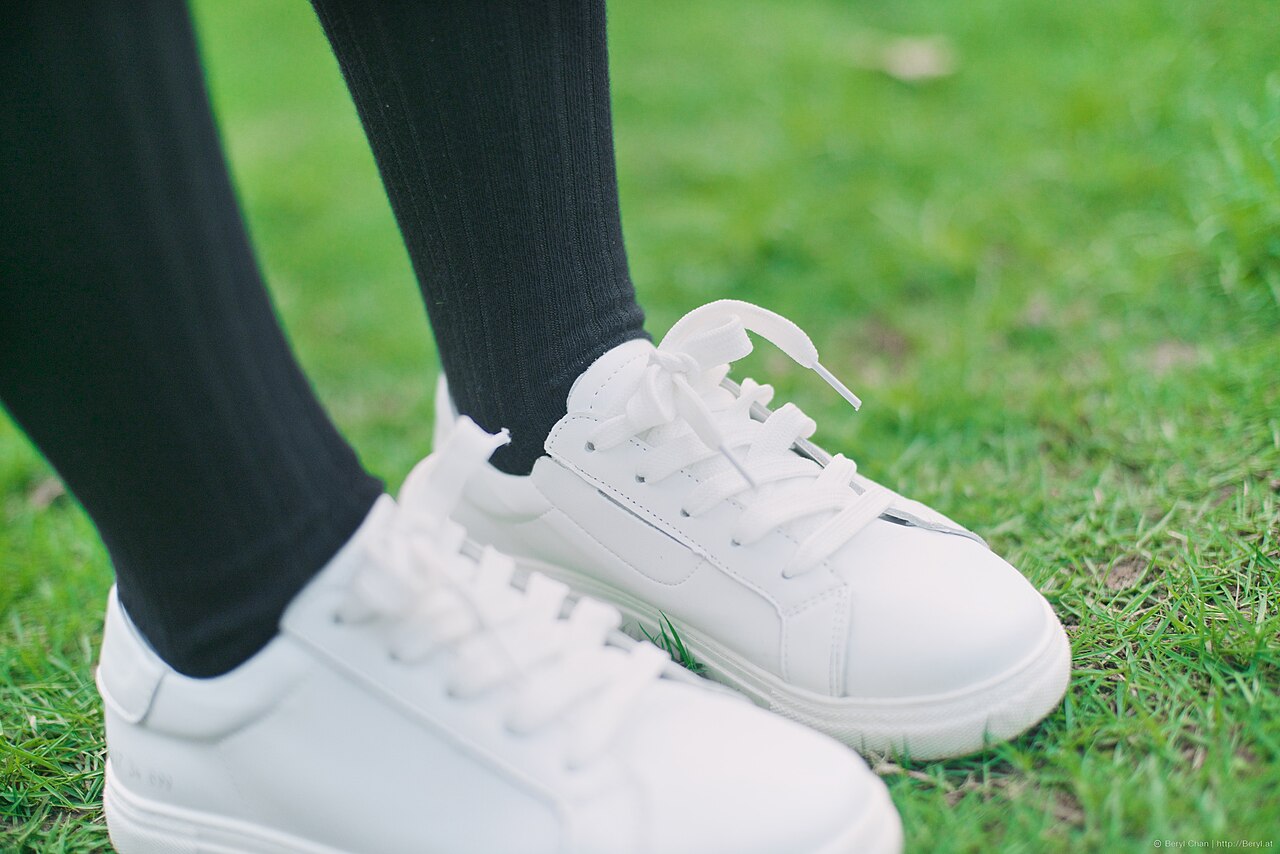
Nearly every pair of ladies black leather sneakers that gets returned for being “too tight” is actually fine through the heel and midfoot and simply wrong in the toe box. Women’s shoes are frequently built on narrower lasts than the equivalent men’s shoe, and a slim, tapered toe box looks elegant in a product photo while quietly compressing the two outermost toes. If you have a wide forefoot, a bunion, or a second toe longer than your big toe, this is the area to interrogate before anything else.
Look at the shape from above. A rounded or almond toe gives the most room for the toes to lie flat. A sharply pointed toe forces them into a wedge, and no amount of break-in will fix geometry. Then check height: press down on the top of the toe box. You want enough clearance that your toes don’t brush the leather when you stand, because the leather will drop slightly as it softens.
In the fitting room, stand up and wiggle. All five toes should move freely, and you should be able to feel a thumb’s width — roughly a centimetre — between the end of your longest toe and the front of the shoe. Walk a few paces. Your foot will slide forward a little with each step, and if the toe is already touching when standing still, it will be jamming on every stride. That jamming is what produces blackened toenails, and it’s an injury rather than an inconvenience.
Lacing is your fine-tuning tool. A shoe that feels tight over the instep often needs the lower two eyelets left looser rather than a bigger size, while a heel that slips can usually be locked down with a tighter top pair. If a pair feels tight everywhere at once, though, stop negotiating. A different shoe, not a different lacing pattern, is the answer.
What the First Ten Days Should Feel Like
Break-in is real, but it is smaller than most people hope. Ladies black leather sneakers should feel snug and slightly firm on the first wear — never painful, never pinching, never numb. Snug means the upper is in contact with the foot without pressing. Firm means the sole is stiff and the heel counter is holding you rather than collapsing. If you can feel a specific pressure point on a toe joint or the top of the instep, that point will still be there on day thirty, only more annoying.
Here is a rough schedule that works for most people. Wear them indoors for forty-five minutes on day one, with the socks you intend to wear. Day two, an hour, including a walk to the shop and back. Days three to seven, two to three hours at a time, ideally when you’re mostly on your feet rather than sitting, since sitting lets the leather cool and set in a folded position. By day ten the shoe should feel noticeably softer across the vamp and moulded at the heel. Length and width will have changed by hardly anything.
Skip the folklore. Do not soak leather sneakers in water, do not put them in an oven or attack them with a hairdryer, and do not fill them with wet newspaper unless you enjoy a pair that fits differently every time it dries. Heat shrinks and cracks the finish; water swells the fibre and then leaves it looser and stiffer in the wrong places. If a pair needs genuine stretching — usually across the instep or over a bunion — take it to a cobbler who has a proper stretcher and can work the leather slowly.
Also resist the urge to wear brand-new sneakers for a twelve-hour day involving an airport. Travel involves swelling, sitting, and walking on hard floors, which is the worst possible combination for a stiff upper. Break them in at home first, or accept that the first long day will be memorable.
Linings, Sockliners, and the Sweat Problem Nobody Mentions
Black leather sneakers get warm. Dark finishes absorb more heat in sunlight, coated leather doesn’t breathe, and a closed toe with a padded collar traps whatever moisture your feet produce — which, on an active day, is a surprising amount. What happens next determines comfort more than almost any other specification.
A leather lining absorbs and releases moisture gradually, which is why it feels dry at the end of a long day. A synthetic mesh lining wicks faster but saturates sooner, and once saturated it stays damp. Neither is a dealbreaker, but if you know your feet run hot, check the lining before you fall for the exterior. The American Podiatric Medical Association has long emphasised that fit and moisture management together matter more to foot health than cushioning alone, and that’s consistent with what most people discover on their own after one summer in a sealed shoe.
Two practical fixes cost almost nothing. First, wear wool or bamboo socks rather than cotton; cotton holds water against the skin, wool moves it away. Second, give the shoes a full day off between wears so they can dry from the inside out. A pair of cedar shoe trees helps here — cedar absorbs moisture and holds the vamp’s shape while the leather cools, which is exactly the window when it wants to crease.
Then there’s dye transfer. Black leather linings and black sockliners can tint pale socks and, occasionally, the soles of your feet, especially in the first weeks or after a soaking. It’s harmless and it stops. Wearing dark socks for the first fortnight avoids the surprise.
If the sockliner is thin and flat, a removable insole is the cheapest upgrade available. Take the original out, put a supportive one in, and check that the shoe still has room — a thick insole can eat the toe clearance you carefully measured.
Sole Thickness, Heel Drop, and How Many Hours You Can Wear Them
The upper gets all the attention, but the sole decides whether ladies black leather sneakers end up as your default pair or as the ones you only wear to the office. Three broad constructions cover most of the market. A slim leather or rubber sole stitched to the upper looks the sharpest and flexes most naturally, but it transmits every hard floor directly into your heel. A vulcanised sole with a rubber foxing tape sits in the middle. A thick cupsole or wedge gives the most cushioning and the least ground feel, at the cost of some flexibility and a chunkier silhouette.
Stack height is the number to compare if you’re shopping online — the total thickness from ground to footbed. Somewhere around 20 to 25 mm is a comfortable everyday range for most women. Below that, long days on concrete start to register in the knees. Above 30 mm, you gain cushioning but lose stability, which matters if you pronate.
Heel drop is the difference between heel and forefoot height. On most ladies black leather sneakers it sits between 8 and 12 mm. A lower drop asks more of your calves and Achilles; a higher drop feels easier on the heel but can encourage a heavier landing. If you’re moving into a flatter sneaker after years of wearing cushioned running shoes, do it gradually rather than wearing the new pair for a ten-kilometre city day on their first outing.
Cushioning is also the first thing to die. EVA foam compresses permanently, which is why a shoe that felt springy in March can feel like a plank by the following spring even though the leather looks perfect. Press your thumb hard into the midsole under the ball of the foot: if it barely gives and the surface has a wrinkled, crushed look, the foam is spent. That’s your signal to replace the midsole or the pair, not to keep going until something hurts.
Care That Keeps Black Leather Black
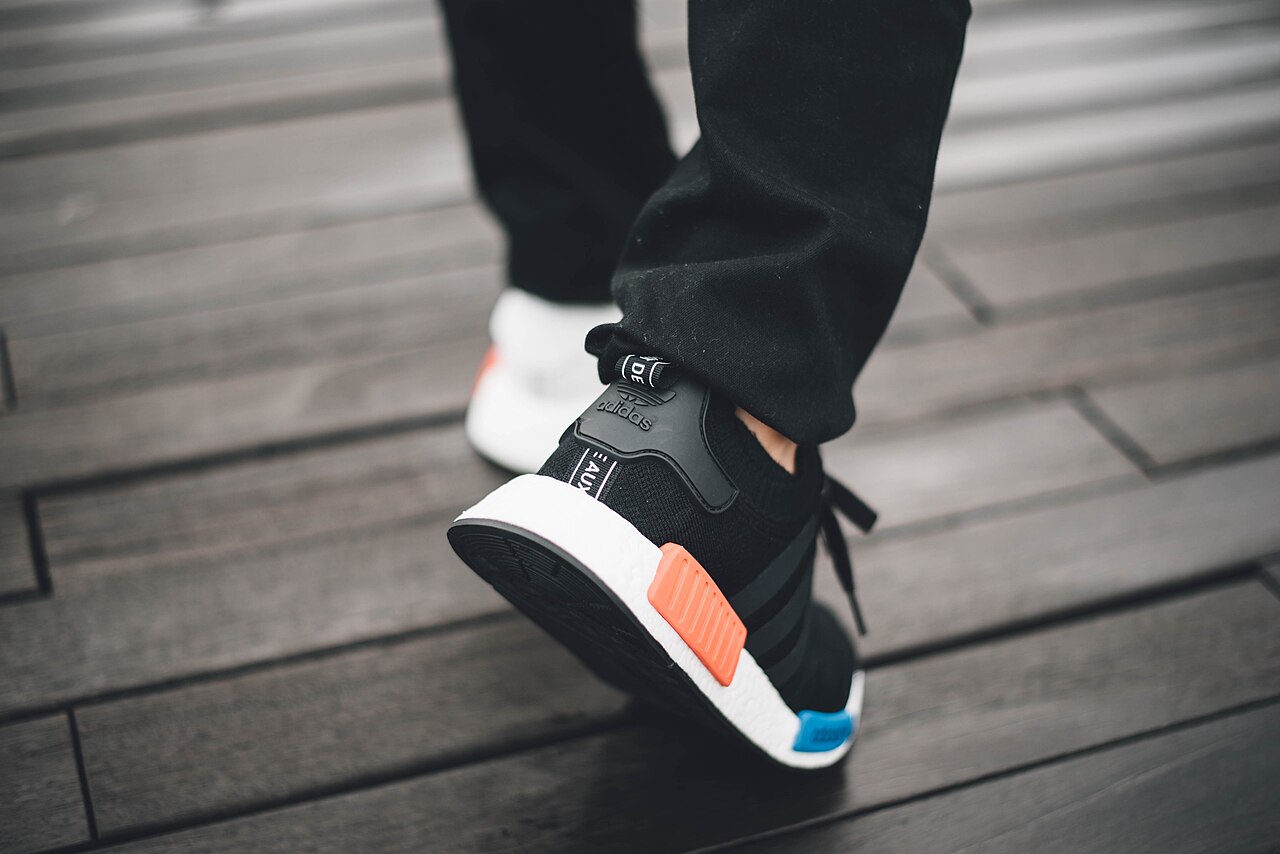
Ladies black leather sneakers don’t fade so much as they dull. Dust settles into the grain, the finish oxidises, and a once-deep black drifts towards charcoal grey at the flex points. Ten minutes of maintenance every few weeks prevents all of it.
Start dry. Brush or wipe off dust and grit before anything wet touches the surface — otherwise you’re sanding the finish with your own cloth. Then a barely damp cloth, wrung out properly, to lift marks. For smooth leather, a small amount of saddle soap or a dedicated leather cleaner, worked in with a soft brush, lifts grime out of the grain without stripping the finish. Wipe the residue off rather than letting it dry on.
Condition sparingly, maybe every six to eight weeks in normal use. Leather is a fibrous material that dries out and cracks when it loses its natural oils, and a thin layer of cream conditioner replaces some of them. Skip silicone-based waterproofing sprays on smooth leather — they seal the surface and leave a cloudy film that’s hard to remove. A cream polish in black does double duty: it feeds the leather and deposits pigment that covers scuffs along the toe.
Water is the enemy of the finish, not the leather. If your pair gets soaked, stuff them with newspaper or paper towels, leave them at room temperature away from radiators, and let them dry slowly. Never dry leather near heat; the surface will crack and no amount of polish will bring it back. Salt stains from winter streets should be wiped with a dilute vinegar solution and then conditioned, because salt left in the grain attracts moisture and stiffens the leather.
Storage matters more than most people think. Keep them out of direct sun, keep them off a hot floor, and use shoe trees. If you wear the same pair every day, consider a second pair — rotation is the single most effective care strategy there is, and it roughly doubles the life of both.
Repair Before You Replace
A well-made pair of ladies black leather sneakers is repairable, and repair is almost always cheaper than replacement. The jobs a cobbler can do quickly include replacing worn heel caps, restitching a seam that’s opened at the collar, patching a lining that has worn through at the heel, and stretching a shoe that’s tight over one specific spot. Resoling is the bigger job, and on a stitched construction it’s entirely routine — the upper outlives two or three soles.
Know when to stop. Cracking that runs right through the leather at the flex point, where the vamp folds over the ball of the foot, cannot be repaired; the fibres have failed. The same goes for a heel counter that has collapsed into mush, or a lining that has disintegrated across the whole heel cup. At that stage a new pair is the honest answer.
Your outsoles also tell you something useful. Wear concentrated on the outside edge of the heel suggests you supinate; heavy wear on the inner edge points to overpronation. Neither is a diagnosis, but if a pair wears visibly unevenly within a few months, it’s worth mentioning to a podiatrist before you buy the next one — the fix is often an insole, not a different shoe.
Two small habits extend life for free. Undo the laces before you put the shoes on rather than shoving your foot in and crushing the heel counter. And keep a spare set of laces; the laces usually fail long before the leather does, and a pair with frayed laces looks older than it is.
Building a Small Rotation Around One Pair
If you’re going to own one pair of ladies black leather sneakers, treat them as infrastructure rather than a fashion purchase. That means deciding what they need to do before you shop: a commute, a school run, eight hours at a desk, a weekend of walking, or all four. The answer changes the sole, the lining, and the toe box shape you should be looking for, and it stops you buying a beautiful pair that’s wrong for ninety percent of your week.
Once you have that pair dialled in, a second pair is easier to choose than it seems. Pick something that covers the gap rather than duplicating what you own — a lighter sole for summer, a slightly higher stack for long walking days, or a different texture such as suede or a matte finish for evenings. Two pairs worn alternately will outlast three worn in sequence, and they keep each other’s creases from setting.
Cost per wear is the honest way to judge the spend. A pair at a modest price worn twice a week for a year is worse value than a pair at three times the price worn four times a week for four years, especially once you factor in a resole that costs a fraction of a new shoe. The care routine for black leather sneakers matters more to that arithmetic than the label inside the collar.
Finally, be patient with the fitting. Order two sizes if you’re shopping online, try both on late in the day with the socks you’ll actually wear, walk around indoors for twenty minutes, and send back whichever one you’re negotiating with. The pair that needs no negotiation is the pair you’ll still be wearing in three years — and that, rather than any particular trend, is what makes a black leather sneaker worth owning.
