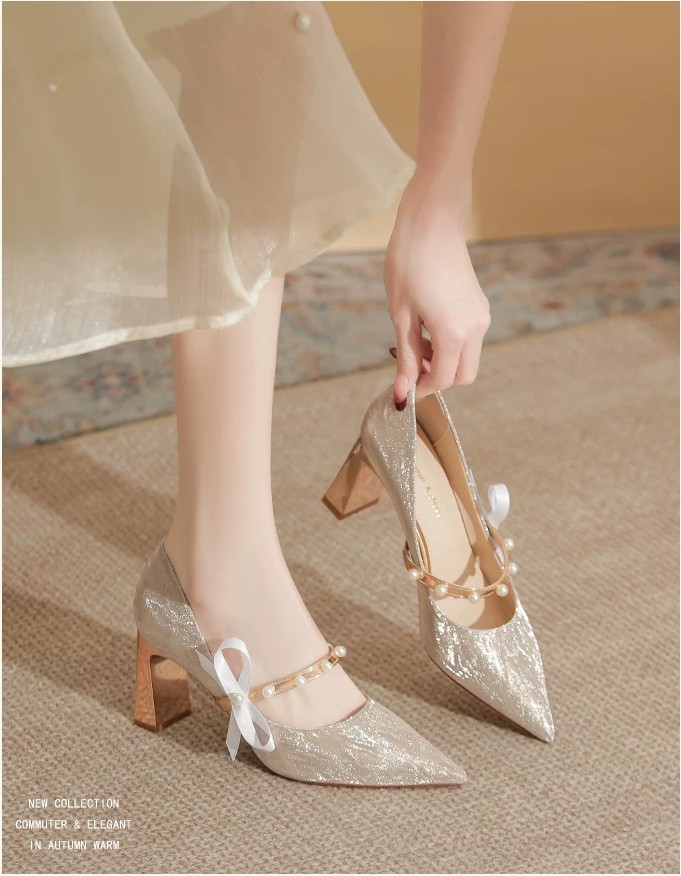
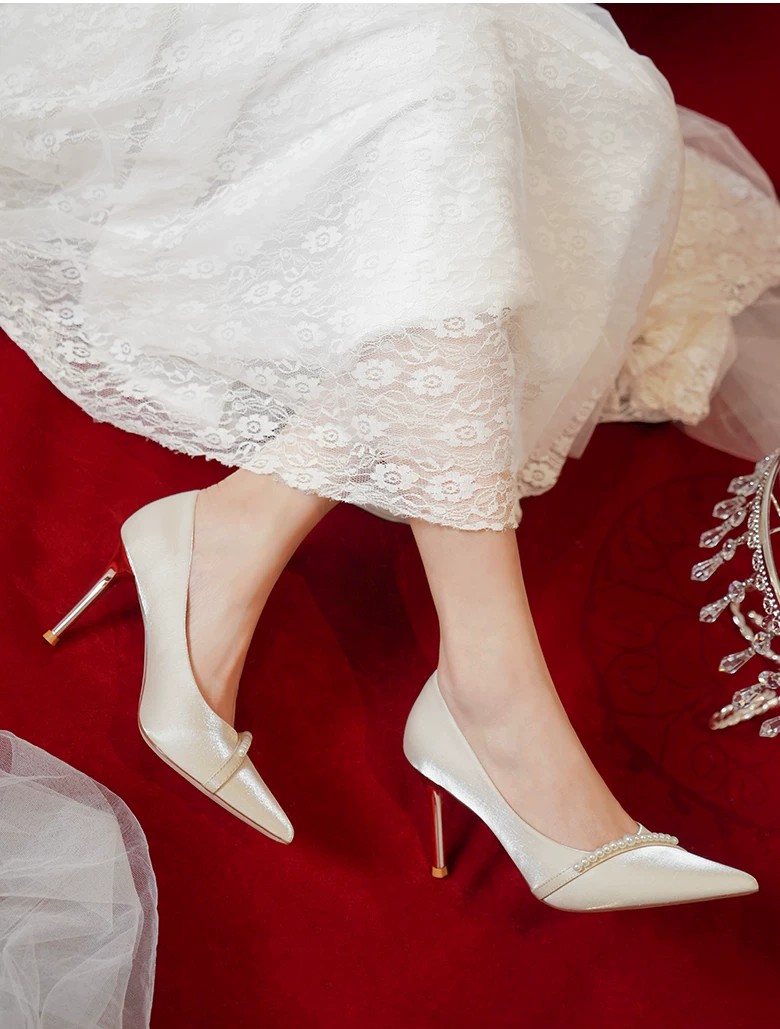
Nineteen pairs of heels live in my closet. Six of them get worn. That ratio took me about ten years and a fair amount of money to work out, and most of the waste came from buying a shape I liked in a photo without knowing what it would do to my feet by hour four. So here’s the version I wish someone had handed me: the types of heels for women that survive actual pavement, and the ones that look great in a picture and hurt by dessert.
One thing first. Almost every problem people blame on heels is really a problem with fit, or with pitch, or with standing on a 4mm square of plastic for six hours. Height alone isn’t the villain. Wikipedia’s entry on high-heeled shoes has a long section on the biomechanics if you want the physics; the short version is that a raised heel pushes load onto the ball of your foot and keeps your calf in a shortened position, and both of those get worse fast past about 80mm.
If you already know the shape you want and just need to see what’s in stock, the heels section is the fastest route. What follows is the map.
Stilettos: the 90mm pair everybody pictures first
The stiletto is the reference point most people have in their head, even if they’ve never owned one. Roger Vivier is usually credited with the modern version around 1954, and the claim has been argued over by fashion historians ever since, which tells you something about how much the shape matters to people. A true stiletto is a heel under about 10mm wide at the tip with a steel or alloy shank running down the middle. The narrow tip is the whole point: it’s what makes the silhouette read as sharp rather than chunky, and it’s also what makes it sink into grass, crack in pavement joints and wobble on wet tile.
Here’s my honest experience. At 90mm, my toes go numb somewhere around the ninety-minute mark, and no amount of gel insert changes that. At 75mm in the same last, I can do a three-hour dinner. Same shoe, same brand, 15mm of difference. If you’re buying your first pair of stilettos, that’s the number I’d argue for.
Of all the types of heels for women, this one has the least margin for error. A block heel forgives a slightly wrong size. A stiletto punishes it, because everything your foot does gets amplified: slide forward 5mm and your toes take the load, roll outward a degree and the ankle has to correct on every step.
Where they genuinely earn their keep: seated events, cars to the door, weddings where you’re a guest and not the help. Where they don’t: anything involving a cobblestone street, a train platform, or a venue with a gravel driveway. I’ve done all three and the walk back to the car is always the low point of the night.
One more thing nobody mentions. A stiletto needs a firm heel seat, and cheap ones skip it. Tap the heel against the floor before you buy. If it rattles, the shank is loose and it’ll start squeaking within a month.
Block heels do the actual heavy lifting
If I had to delete every other category from this list, the block heel is the one I’d keep. A 60mm to 75mm block gives you most of the visual lift of a stiletto with a base that’s 30mm to 45mm across, so your weight lands on a surface instead of a point. That difference is not subtle when you’re standing on a concrete floor at a trade show for five hours.
I wore a 65mm block heel through a nine-hour work trip last spring: 6am flight, two meetings, a dinner, then twelve blocks back to the hotel because the taxi line was forty minutes long. My feet were tired at the end. They weren’t angry, which is the distinction that matters. With a stiletto I’d have been barefoot on the sidewalk by block three.
What they cost you is elegance, in small doses. A wide block under a bias-cut slip dress can look like you borrowed your mother’s shoes, especially in black leather with a stacked heel. The fix is either a slimmer block (25mm) or a lighter color. Cream, bone, and soft tan read lighter than black even at the same width, which is why the woven white leather heels in our own range look far less heavy than they actually are.
Budget note: block heels are the cheapest category to repair, because a solid block can be reheeled with a single cap. Stilettos need the tip drilled and replaced, and a lot of cobblers won’t touch the thin ones. If you walk a lot, this is the pair that pays for itself twice over.
Watch the heel height on the inside of the shoe rather than the product page, too. I’ve bought a “70mm” block that measured 82mm on a ruler, and the extra centimeter was the difference between a work shoe and a wedding shoe.
Kitten heels: 45mm is a strategy, not a compromise
Kitten heels got a bad reputation in the 2000s, when they were shorthand for “gave up.” That was unfair then and it’s wrong now. A 40mm to 50mm heel with a slim post gives you a lift, keeps your foot closer to flat, and doesn’t force your weight forward the way a 90mm does. For anyone with a high arch or a history of plantar pain, it’s often the only dressy option that works for a full evening.
Most roundups of the types of heels for women file kittens under “beginner” and move on. I’d push back on that. They’re the hardest category to get right at the cheap end, because a thin post with a weak shank flexes sideways under a full-grown adult, and the shoes that cost under $50 are usually built exactly that way.
My mother wore a pair of navy suede kittens to my cousin’s wedding in Cleveland in July, outdoor ceremony, 94 degrees, and she was still standing at 10pm when half the party had changed into flats. She’s 68 and has hallux rigidus in her right foot. That’s a better endorsement than any marketing copy I could write.
The catch is stability. A kitten heel puts a thin post under the back of your foot with very little of your weight on it, and on wet tile or polished marble that post can slide out sideways. I’ve watched it happen at a hotel reception, and the fall is ugly because you’re not braced for it. Rubber caps help. Wearing them on dry ground helps more.
They also photograph badly in a full-length shot if the shoe is dark and the floor is dark. Not a reason to skip them. Just know that they read as sensible, and sometimes sensible is exactly the note you want to hit at a work dinner.
Slingbacks and mules: the strap question
These two get lumped together and they shouldn’t, because the difference is a 6mm elastic strap and that strap decides whether you can walk.
A slingback wraps behind the heel with a strap under tension. Done properly, the strap holds your heel against the back of the shoe and stops your foot from sliding forward on the insole, which is the actual cause of the “my toes are jammed into the front” feeling that people blame on toe shape. Done badly, the strap is too loose, your heel lifts on every step, and you get a blister on the Achilles by the end of the first hour. There’s no way to tell from a photo. Try them on and walk ten steps. If your heel lifts more than a few millimeters, size down or walk away.
Mules have no back at all, so your foot is held by nothing but friction and hope. I love how they look with wide-leg trousers, and I’ve lost one in a parking lot stepping out of a car, which is roughly the full mule experience in one sentence. They work for short distances and seated events. They’re a bit of a gamble for anything longer, especially on stairs.
Toe shape matters more here than in any other category. A pointed slingback with a low vamp will cut across the widest part of your foot and leave a red mark in twenty minutes, while a rounded or square toe in the same size feels completely different. Try the pointed version on late in the day, when your feet are at their largest, and you’ll get a truer read.
Practical compromise: a mule with a 50mm block and a slightly cupped footbed holds on far better than a flat-soled pointed mule. And if you’re between sizes, go down, not up. A mule that’s too long is a mule you’ll walk out of.
Wedges: the height is real, the pitch isn’t
A wedge looks like the sensible option because the sole runs continuous from toe to heel, and in one specific way that’s true: there’s no thin post to catch on a grate and no separate heel to snap. What a wedge does not do is reduce the incline. If the heel is 85mm high, your foot is at the same angle as it would be in an 85mm stiletto. The difference is the platform under the ball of your foot, which reduces the effective pitch.
That’s the number to look at, not the heel height. A 90mm wedge with a 25mm front platform is really a 65mm heel in disguise. A 90mm wedge with no platform is a 90mm heel with extra weight attached, and it’ll feel exactly that bad.
Plenty of the types of heels for women sitting on store shelves right now are wedges doing a bad impression of a pump, with a 100mm lift and a sole that weighs as much as a paperback. Try lifting the shoe with one hand before you try it on. If it feels heavy dry, it’ll feel twice as heavy at hour three.
Summer is where wedges win. Espadrille soles, cork, rope, anything that breathes, and they handle grass and gravel better than any other style on this list. Two of my three pairs come out every June and don’t go back in the closet until September.
Two drawbacks worth knowing. First, a rigid wedge doesn’t flex at the ball, so you walk from the hip and the whole leg works harder on a long day. Second, the wide sole gives you a false sense of stability on uneven ground. Rolled ankles happen on wedges more than people expect, usually on a curb or a root-covered path.
And keep them away from rain. Rope and cork soles soak, soften, and then dry out of shape. One downpour on a walk to the office was enough to retire a pair I liked.
Cone, Louis and sculpted heels: pretty, and picky
This is the family of heels that flares, tapers, curves, or does something sculptural between the sole and the ground. The Louis heel is the classic one, a curved heel that widens at the bottom, associated with the French court in the 17th and 18th centuries and named after Louis XIV. Cone heels taper from wide to narrow. Flare heels do the opposite. All of them sit somewhere between a stiletto and a block in terms of stability, and the exact position depends on how much surface area touches the floor.
Visually, they’re the most interesting thing you can put on your foot. A sculpted heel makes a plain black pump look designed, and it reads as considered rather than expensive, which is a useful trick when you don’t want to spend much.
They’re also the most outfit-specific of the types of heels for women in this list. A cone heel with a sharply tailored suit looks intentional. The same shoe with cropped jeans looks like a mistake, because the eye expects a cleaner line at the ankle. If you buy one pair in this family, buy it for a particular outfit you already own, not for “someday.”
The problem is repairability. A curved heel with a small contact patch wears through at an angle, and a lot of cobblers charge extra or refuse because the shape makes it hard to clamp. I paid $40 to reheel a pair that cost $130, which is a bad ratio. If you fall for a sculpted heel, check that the tip cap is replaceable before you commit.
They also tend to run narrow through the toe. Cone and Louis heels are usually built on dress lasts, and dress lasts assume a narrow foot. If you’re wide across the ball, size up half a size and plan on a thin insole.
What to buy first, and the 30-second fit check
If you own nothing and you’re starting from scratch, buy in this order: one 60mm block heel in a neutral you’ll actually wear, one 45mm kitten or slingback for anything that requires looking tidy, then a 90mm stiletto in black once the first two have proven themselves. That’s three pairs and it covers about 90% of what most people need from this category.
The fit check takes half a minute and saves a lot of returns. Press the back of the shoe with your thumb. If the heel counter folds flat, it won’t hold your heel and you’ll walk out of the shoe. Stand up and see whether your toes touch the front. They shouldn’t, not even slightly, because your foot slides forward the moment you start walking. And flex the shoe at the ball with both hands. It should give a little. A sole that won’t bend at all means your foot does all the work.
Fit is also where most of the “types of heels for women are painful” complaints actually come from. I’ve had a 100mm pair that was comfortable for four hours and a 50mm pair that wrecked me in twenty minutes, and the difference in both cases was the last, not the height. Chasing a lower heel to fix a fit problem is like buying a bigger bag to fix a heavy one.
Something else worth saying out loud: heels are a sometimes-shoe and that’s fine. Wear them for the dinner, not for the commute, and keep a pair of flats in the bag. If your feet still ache the next morning, that’s worth a look rather than a shrug, and the NHS guidance on foot pain is a reasonable place to start before you buy another pair.
One last thing about the stiletto itself, since it’s the shape everyone asks about. The 1954 version credited to Roger Vivier was built around a steel rod thin enough to bend. Modern cheap versions use plastic. That single material swap explains most of the difference between a pair that lasts eight years and a pair that wobbles by March.
Start with the 60mm block. Wear it to the boring places, the grocery run, the school pickup, the commute. If it’s still comfortable after three months of that, you’ve found your baseline and every other pair on this list gets easier to judge. If it isn’t, you’ve learned something about your own feet for the price of one pair instead of six. What’s in your closet right now, and how many of them have you actually worn this year?