

Hi tops get sold on nostalgia, which is a lousy reason to spend eighty quid. The collar creeping up over your ankle looks good in photos and feels like a completely different shoe once you’re actually walking in it. I’ve owned four pairs of sneakers with a high collar and worn exactly two of them past the first month. The other two sat by the door looking handsome and doing nothing, because a stiff collar rubs in a place you can’t fix with a plaster.
So this isn’t a roundup with affiliate links glued to every sentence. It’s what I’ve learned about women’s hi top sneakers from wearing them through wet springs, long airport days and one regrettable 9km walk home when the buses stopped running.
What a high collar actually changes about the way you walk
The collar sits above the ankle bone. That’s the whole idea, and it’s where most of the confusion starts. A stiffer collar changes how your foot rolls forward, and you notice it in the first ten minutes rather than the first mile.
Canvas basketball shoes had a high cut for a reason that had nothing to do with style. Laces that wrapped higher kept the shoe attached during hard cuts on a wooden floor, and the Chuck Taylor pattern from 1917 barely changed for decades because it worked. Modern women’s hi top sneakers borrow the silhouette and skip most of the purpose. Nobody is cutting on hardwood at the bus stop.
Two things genuinely shift. First, weight. A leather hi top usually runs 380 to 450 grams per shoe in a women’s size 38, against roughly 250 grams for a canvas low top. That extra mass sits at the end of a long lever, so it costs you something on stairs. Second, the collar pushes against the achilles tendon when you climb, which is why so many people end up with a red mark after a single afternoon.
Ankle support claims deserve a raised eyebrow. A soft canvas collar does almost nothing to stop a roll. A firm leather collar helps a little, mostly by reminding you where your ankle is. It won’t rescue you on wet cobblestones.
Here’s the test I use now. Put the pair on, walk twelve minutes at normal speed, then stand still for two. If the collar has already started digging into the tendon, it’ll be unbearable by hour three. That’s the real test.
Fit at the collar matters more than fit at the toe for this style. You want the padding to wrap the ankle without pressing on the bone, and you want about a finger’s width of give when you flex your foot upward.
Ankle height and the jeans problem nobody warns you about
A high collar wants a hem that ends above it or falls wide over it. Anything in between looks like an accident, and that’s most of the jeans in my wardrobe.
Straight-leg denim with a 7-inch hem opening works if you cuff it twice and let the cuff sit just at the top of the collar. Wide-leg trousers are easier, because the fabric drapes over the whole shoe and hides the transition. Skinny jeans are the hard case. Tucking them in reads very 2014, and letting them bunch on top of a padded collar makes the ankle look thick.
My fix is boring but effective. I keep one pair of cropped straight-leg jeans specifically for hi tops, hemmed to hit right above the collar, and I stopped trying to make the other three pairs work. Half the battle is admitting which clothes are not invited.
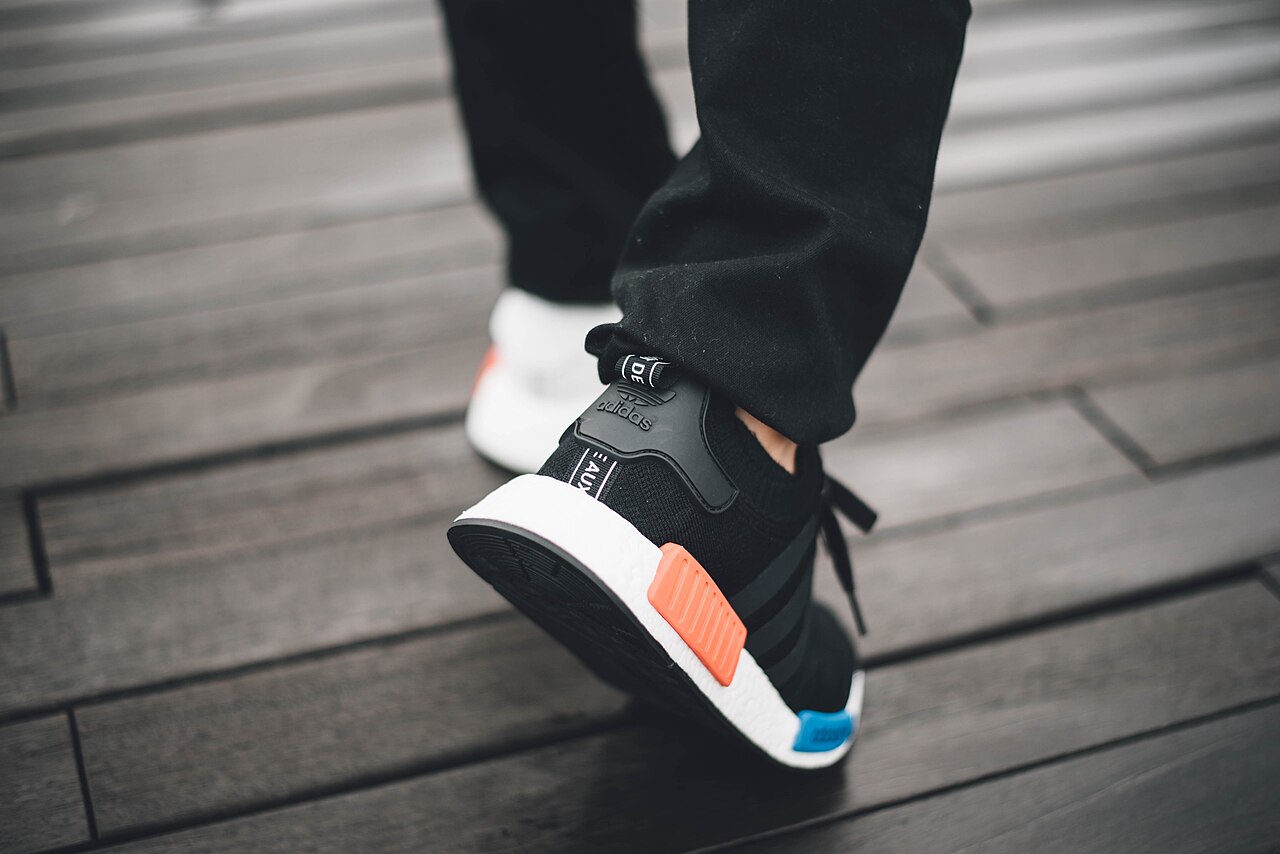
Socks are the other half. An ankle sock disappears and the collar rubs bare skin. A crew sock that peeks 2cm above the collar solves both the rubbing and the proportions, and it looks intentional instead of like you forgot to do laundry.
Wide-leg linen trousers in summer are the easiest pairing of all. The hem moves, the collar stays hidden, and you get the height without the styling argument. I wore that combination through a 34°C week in July and it was the only outfit I didn’t think about.
One more thing about proportions: a high collar shortens the visible leg line. If you’re 160cm and wearing a long coat, the shoe eats another few centimetres. Cropped jackets and shorter hems balance it out. Longer coats plus hi tops plus a midi skirt tends to look bottom-heavy.
Sizing: most pairs run a half size big, so don’t guess
Canvas hi tops stretch. Leather ones don’t. That single fact should decide how you size, and almost no product page says it.
In my experience, women’s hi top sneakers from most mid-range brands run about half a size large in canvas, because the fabric relaxes across the vamp after a week. Leather pairs tend to run true, and a few run narrow enough that wide feet need a full size up. If you’re between sizes and buying canvas, take the smaller one. If you’re between sizes and buying leather, take the larger one and add an insole.
Ordering two sizes and returning one is the honest approach if the shop allows it. I do this with anything over 100 euro, and I’ve stopped apologising for it. Return shipping is cheaper than a pair you resent.
Width is where high-collar styles get fussy. The collar holds the heel in place, so your foot slides forward into the toe box instead of staying put. If you have wide feet, that forward slide turns into a pinched pinky toe by the end of the day. Try the pair with the socks you’ll actually wear, not the thin try-on socks in the shop.
Check the insole too. Many pairs ship with a glued-in foam insole that compresses within a month, which adds maybe half a size of volume back. If the pair feels snug on day one, it’ll feel right by week three. If it feels tight across the top of the foot, it won’t get better.
There’s one more quirk specific to women’s hi top sneakers: the collar padding packs down after a few weeks. A pair that feels snug against the ankle in the shop usually loosens by 3mm or so, and on a slim ankle that’s enough to lose heel grip. If you want that locked-in feel, add a thin felt tongue pad rather than sizing down. It takes up space without shoving your toes into the front. Sounds fussy. It’s a two-minute fix that saves a pair you’d otherwise stop wearing.
Canvas or leather: a quick way to decide
Canvas breathes and dies young. Leather costs more, weighs more, and lives longer. Pick based on your weather rather than your wardrobe.
Where I live the rainy season runs about six weeks and the pavements hold water. Canvas soaks through in a minute, and once the rubber foxing gets wet repeatedly it starts to separate from the fabric. Leather wipes clean with a damp cloth and holds up to a downpour if you’ve treated it once.
That said, canvas wins from May to September. It doesn’t trap heat the way a padded leather collar does, and the whole shoe weighs less, so a long walking day doesn’t punish you. My canvas pair gets worn maybe four days a week in summer and sits out the winter entirely.
Care is where people ruin good shoes. Machine washing a canvas hi top is a gamble that sometimes works and often warps the sole. Hand wash with a soft brush and cold water, stuff the shoe with newspaper, and let it dry away from a radiator. Heat is what shrinks the canvas and cracks the glue.
Leather needs less than you’d think. A brush to lift dust, a damp cloth for marks, and a neutral cream twice a year. Skip the silicone sprays that make the surface look greasy.
Price doesn’t predict durability as reliably as material does. A 45 euro canvas pair that fits well often outlasts a 130 euro leather pair that pinches, simply because you keep wearing the cheap one instead of leaving it in the cupboard.
A three-pair rotation covers nearly everything
You don’t need eight pairs of women’s hi top sneakers. Three does the job if you choose on purpose instead of buying whatever’s on sale.
Pair one: plain canvas, off-white or black, no visible logo. This is the workhorse. It goes with denim, with a slip dress, with the trousers you’d normally wear with loafers, and it survives being thrown in a tote bag.
Second pair: leather in a colour you’ll actually wear in winter. Mine is dark brown, which hides scuffs far better than white and looks less sporty with a wool coat. This is the pair for rain and for anything resembling an office.
Third pair: something with a platform or a chunkier sole, worn when you want height without a heel. Platform high top styles add 3 to 5cm and change the whole proportion of an outfit, which is a lot of leverage for one purchase.
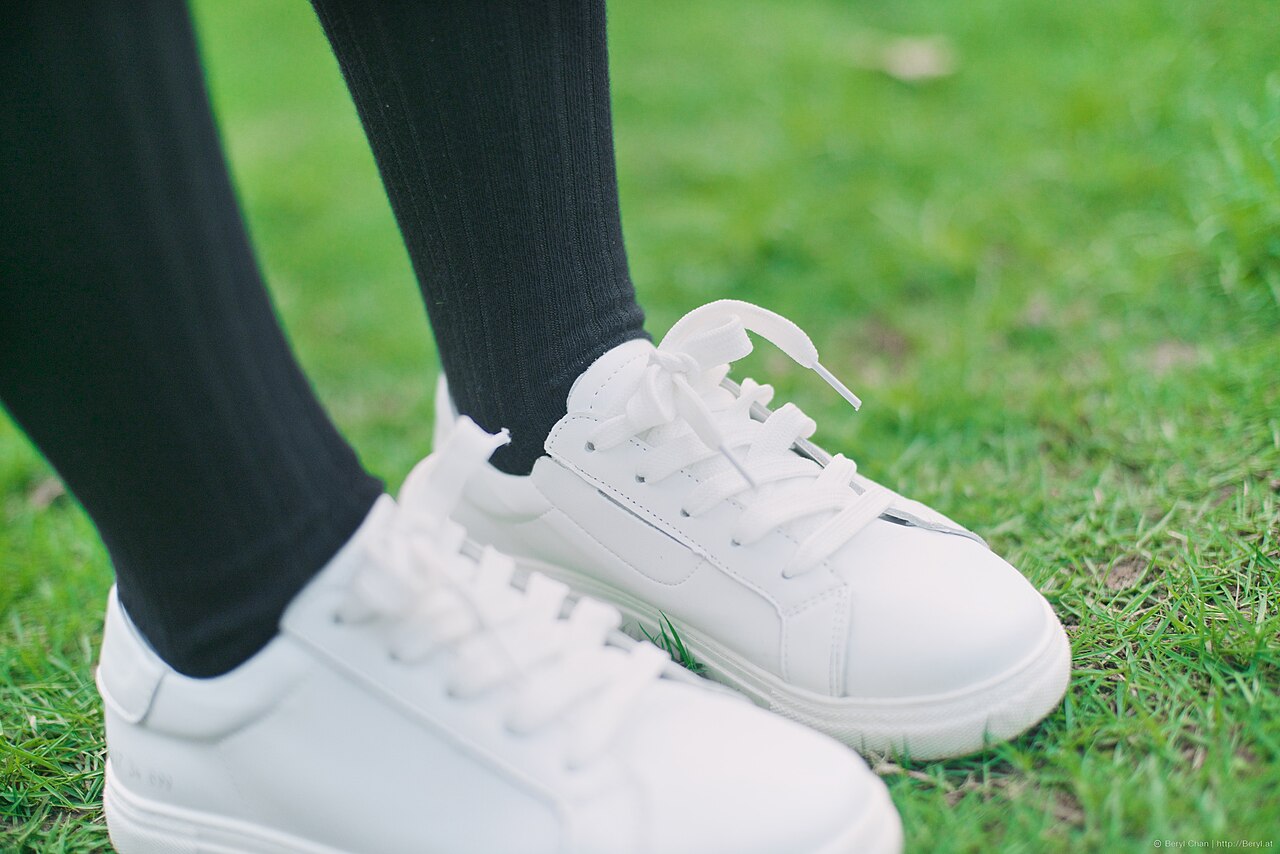
What I’d skip: the fourth pair in a colour that only matches one outfit. That’s the pair that ends up on the shelf with the collar still stiff.
Buying secondhand is worth considering for leather. A broken-in pair skips the blister stage entirely, and the resale market for classic high-collar shapes is deep enough that you can find your size with a bit of patience.
Breaking in a stiff pair without wrecking your heels
New leather hi tops are the worst offenders, and the damage happens on day one, so plan for it.
Wear them indoors for twenty minutes with thick socks, twice, before you take them outside. That softens the collar where it bends rather than where it presses. Then do a short outdoor walk, no more than fifteen minutes, and check your heel as soon as you get home. A hot spot means stop.
Moleskin beats a plaster every time. Cut a piece slightly larger than the sore spot, stick it to the shoe rather than your skin, and it stays put through a full day. Plasters roll off sweating skin within an hour.
Lacing changes the pressure more than people realise. Skip the top eyelet and the collar sits looser against the tendon while the midfoot stays locked. If the heel still slips, use a heel-lock lacing pattern, which pulls the collar back and down instead of forward.
Heat helps leather and ruins glue, so keep a hairdryer on the lowest setting and at least 20cm away, and only warm the collar for a few seconds at a time. Never put sneakers in an oven, no matter what a forum says. I’ve seen a pair come out with a sole shaped like a banana.
Canvas needs almost nothing. Wear it, walk in it, and accept a week of mild stiffness. If the canvas version is hurting your heel, the size is wrong, not the break-in routine.
Where women’s hi top sneakers fall short
No shoe does everything, and this style has real limits worth saying out loud.
Arch support is minimal in most pairs. The flat insole that ships with a canvas hi top offers almost nothing, and if you have plantar fasciitis or high arches, you’ll feel it after a long day on hard pavement. Swapping in a proper insole helps, though it eats volume, which brings you back to sizing.
Heat is the second problem. A padded collar plus a closed toe means sweaty ankles in August. Leather breathes less than canvas, so a summer leather hi top can feel like a small oven by mid-afternoon.
They’re also heavy to pack. Two pairs of leather hi tops can eat a third of a carry-on, and they don’t compress. For a weekend trip, one pair plus a flat is a smarter load than three pairs of sneakers.
And they look wrong with formal clothes. I’ve tried hi tops with a tailored suit and it read like a costume, not a choice. Low-profile leather sneakers work in that slot. High collars want casual hems and a bit of slouch.
None of this means skip the style. It means buy it for the right job: walking, weekends, casual offices, and anything where you want height without a heel.
Start with the twelve-minute walk. If the collar behaves, you’ve found a pair worth keeping, and the rest is just deciding which jeans get to come along. Wear them for a fortnight before you decide they’re keepers, and be honest with yourself about the ones that never made it out of the hallway.
