

Some shoes announce themselves from across the room. Others do their work quietly, and those are usually the ones you end up reaching for every morning. A pair of backless, slightly pointed mules with a stacked heel belongs firmly in the second group. They borrow the swagger of a boot, the ease of a sandal and the polish of a pump, then strip away everything that gets in the way — laces, buckles, straps, even the back of the shoe itself. That is the plain-spoken appeal of western mule shoes for women: they look like they have a story, but they never make you work for it.
If your current women’s shoes collection leans heavily on sneakers and one dependable pair of heels, a western mule is the piece that fills the gap you did not know was there. It handles a Saturday market run, a long lunch and an early dinner without a costume change. It works with wide-leg denim and with a slip dress. And unlike a cowboy boot, it does not demand that the rest of your outfit commit to a theme.
What follows is a working guide rather than a trend report: how the western mule is constructed, which details actually matter once you are standing in them for six hours, how to style them without looking like you raided a costume shop, and how to spot a pair that will still look good after three winters of real wear.
Why the Western Mule Feels Different From Every Other Slip-On
The mule is one of the oldest shoe shapes still in daily production, and its endurance comes from a simple piece of engineering: a closed toe with an open back, held on by nothing but fit and gravity. Historical accounts trace the form back to ancient Rome and later to sixteenth-century European dress, where backless slip-ons were worn by both men and women indoors and out. You can read a fuller history in the encyclopedia entry on the mule, and what stands out is how little the basic pattern has changed. Heel heights rise and fall, toes sharpen and round, but the silhouette is stubbornly consistent.
What separates a western mule from a plain fashion mule is a set of references pulled from ranch and rodeo gear. The heel is the first clue: a stacked, slightly underslung block rather than a slim stiletto, often with a defined heel breast that gives the shoe a grounded stance. The toe is usually tapered but not needle-sharp, somewhere between a snip toe and a soft almond. Then come the surface details — whipstitching along the vamp, a shaped collar, burnished leather, a leather sole with visible stitching, sometimes a low decorative buckle at the side that serves no fastening purpose at all.
Those details matter because they change how the shoe reads with the rest of your wardrobe. A sleek, minimal mule whispers “office adjacent.” A western mule says “I have opinions about denim.” The distinction is not about cost or brand; a well-made pair at a mid-range price can carry every one of those signals if the proportions are right. The trap is buying a mule that has the decorations without the structure — stitching on a flimsy sole, a synthetic upper that creases into a permanent fold across the toe box by week two.
There is also a practical reason the shape works so well for daily wear. Because there is no heel counter pressing on your Achilles tendon, the shoe never rubs the spot that turns most new footwear into a blister factory. Because there are no laces, you can step in and out at a doorway without balancing on one leg. And because the sole is usually stiffer than a ballet flat’s, the foot is supported rather than left to flatten against the pavement. For anyone who has quietly given up on flats because they feel like walking on cardboard, that difference is not cosmetic.
What Actually Makes a Mule “Western”
Four elements do most of the work, and once you know them you can scan a product photo in about four seconds. The first is the heel: look for a stacked block, roughly one and a half to two and a half inches, with a slight forward slant under the arch. Stacked leather or a convincing wood-look resin reads authentic; a hollow plastic shell with a seam down the middle does not, and it will also sound like a tap shoe on tile.
The second element is the toe shape. Western footwear traditionally favors a tapered or snip toe, and on a mule that translates into a toe box that comes to a soft point rather than a rounded bulb. It lengthens the leg line noticeably, which is why the shape keeps returning season after season. The caveat is fit: a sharp taper squeezes anyone with a wider forefoot, so try before you commit or size up half a step if the brand runs narrow.
Third is the upper’s construction. Whipstitching — the visible over-and-over stitch around the vamp or collar — is the most recognizable western signature, and it also does structural work by stiffening a soft edge so it holds its shape. Burnished or hand-rubbed leather, woven panels, and contrast stitching all fall into the same vocabulary. So does a slightly higher vamp that covers more of the instep, which keeps the shoe on your foot when you walk fast.
Fourth, and most overlooked, is the sole. Traditional western boots use a leather sole with a stacked heel and a pegged or stitched waist. On mules, you will more often find a leather sole with a rubber insert at the heel for grip, or a full rubber outsole dressed up to look like leather. Both are workable. What you want to avoid is a paper-thin sole with no shank, because it will flex in the middle, collapse the arch and make the shoe feel twice as heavy as it is.
Put those four together and you have something that reads western without a single longhorn motif. That restraint is the point. The pairs that look best in 2026 are the ones that could pass as a plain leather mule from three feet away and reveal their character only up close.
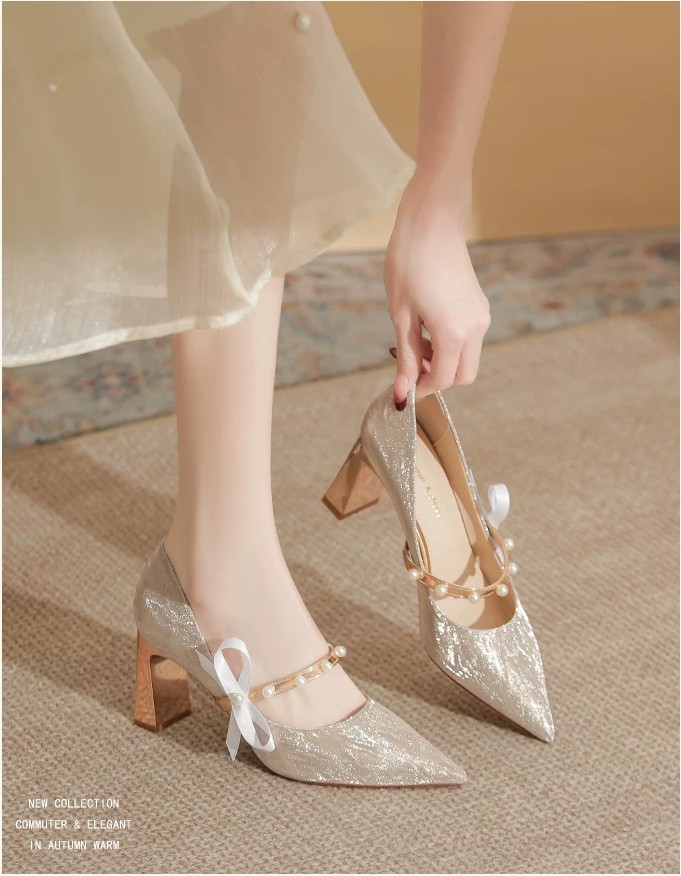
Heel Height and Shaft Height: Finding the Pair You Will Wear Weekly
Heel height is where most people get the decision wrong, usually by buying the version they admire in photographs rather than the one they can walk in. A low block of roughly one inch behaves like a flat with better posture — ideal if you cover a lot of ground, take public transport, or work on your feet. The two-inch range is the sweet spot for most wardrobes: enough lift to change the line of a trouser, stable enough to wear from morning to night. Anything above three inches on a backless shoe starts to demand a particular kind of grip from your toes, and the muscles in your forefoot will file a complaint by evening.
Shaft height matters just as much, though it is rarely discussed. A mule that cups the heel loosely will flap and eventually trip you; one that grips too tightly will rub. The ideal is a collar that sits just under the ankle bone with a slight inward curve at the sides, so the shoe holds the foot without clamping it. If you have a narrow heel and a wide forefoot — a very common combination — look for a pair with a padded collar and laces-free adjustability, such as an elastic gore hidden under the vamp.
Consider the toe-box depth too. Backless shoes rely on the vamp to keep the foot from sliding forward, and a shallow toe box means your toes do the gripping instead. Press down on the vamp before buying: there should be a little give, and your toe tips should not touch the end when you stand. If they do, the shoe is too short regardless of what the size label claims.
Finally, think about where the shoe will actually go. A one-inch western mule in oiled leather is a genuine everyday shoe — school run, grocery store, office with a relaxed dress code. A two-and-a-half-inch pair with a snip toe and a leather sole is a dinner shoe that happens to look casual. Buying both is not excessive; buying one pair at the wrong height for your life is how shoes end up in the back of the closet with the tags still on.
Materials That Survive Real Wear
Suede is the material people picture first, and it is genuinely lovely: soft from day one, forgiving over the instep, and it takes color beautifully. It is also the least forgiving in rain and the hardest to restore once it has absorbed a winter’s worth of road salt. If suede is the look you want, treat it before the first wear with a fluoropolymer protector, keep a suede brush by the door, and accept that the pair will look loved rather than new by the end of the season.
Full-grain or oiled leather is the more practical long-term choice. It scuffs, but a scuff on oiled leather can usually be rubbed out with a thumb; on suede it becomes a permanent mark. Smooth leather also holds a shape better, which matters on a backless shoe where the collar is doing structural work. Look for leather that feels firm rather than floppy, with a visible grain rather than a plastic sheen, and check that the lining is leather or at least a breathable textile — a synthetic lining in a closed-toe shoe turns into a sauna by mid-afternoon.
Woven and braided leather has become a quiet favorite for spring and summer. The open weave breathes, the texture does the styling for you, and the construction is more forgiving across the instep than a solid panel. Do check the weave quality: tight, even braiding holds up, while loose strips stretch out and start to gap within a few months. The same logic applies to real leather woven heels for women, where the weave is the entire design rather than a decorative accent.
Vegan options have improved considerably, but the category is uneven. A good plant-based upper can look and feel convincing for a couple of seasons; a poor one cracks along the flex line above the toe within weeks. If you go that route, prioritize brands that state the material composition clearly and offer a warranty. Whatever you choose, avoid shoes described only as “man-made upper” with no further detail — that phrase usually signals the cheapest possible coated fabric.
How to Style Western Mule Shoes for Women
The easiest pairing is straight-leg or wide-leg denim, and it works for a simple reason: the mule’s tapered toe balances the volume of a wide hem. Cropped jeans show the whole shoe and the ankle, which is the most flattering proportion for a backless style. Full-length jeans should break just above the vamp, not drape over it, or the heel will catch in the hem every time you stand up. A dark indigo wash with a plain white tee and an oiled-leather mule is about as close to a formula as this style gets.
Dresses and skirts need a little more thought. Because there is no back to the shoe, the ankle is fully visible, which draws the eye downward — helpful with a midi skirt, less so with a very short hem. A slip dress in satin with a suede mule is a reliable evening combination; a cotton poplin midi with a woven pair reads easy and intentional for daytime. If you want to lean into the western reference without looking costumed, add one more western-adjacent piece and stop there: a leather belt, a chambray shirt, a suede jacket. The broader tradition of western wear is built on workwear logic, and it looks best when the references are spare rather than stacked.
Tailoring is the underrated option. A relaxed suit with a straight-leg trouser and a pointed mule looks sharper than the same suit with sneakers and far more comfortable than the same suit with pumps. Keep the trouser hem just at the ankle bone so the shoe’s line is visible. For office settings, choose a two-inch stacked heel in black or deep brown leather and skip the whipstitching; for weekends, invert all of that.
Color is where most people play it too safe. Black and tan are sensible first purchases, but a western mule in oxblood, olive or cream does more for a neutral wardrobe than another pair of black shoes. If you own a lot of denim, cream and bone-colored mules brighten the whole look. If you live in dark tailoring, a deep burgundy adds depth without becoming the loudest thing in the room.
Fit, Sizing and the Walking Test
Backless shoes have less margin for error than any other style, because nothing but fit holds them on. Start by measuring your foot at the end of the day, when it is at its largest, and compare that to the brand’s specific size chart rather than your remembered size. Sizing varies wildly between manufacturers; a 38 from one label is a 37 from another.
When the shoes arrive, wear them indoors on carpet for twenty minutes before deciding. Walk ten steps, then stand still for two minutes. If your heel lifts more than a quarter inch with each step, the shoe is either too long or too wide at the collar. If your toes curl to keep the shoe on, the vamp is too short or the sole too stiff. Both problems get worse with time, not better.
The walking test that actually predicts long-term comfort is the stair test: go up and down a flight slowly. A mule that slips on stairs will slip on a wet sidewalk, and the fix — gripping with your toes — leads to cramping and, eventually, tendon strain. If a pair fails the stair test at home, return it. Do not convince yourself it will loosen up.
Width deserves a specific mention. Many western-styled mules are built on a narrow last, and the tapered toe amplifies the effect. If you normally wear a wide fitting, look for brands that publish width options or choose a rounder toe version of the same design. Half-sizing up to gain width usually creates a length problem instead, which on a backless shoe means a shoe that clacks off your heel with every step.
Care, Repair and Getting Three Winters Out of One Pair
A leather mule will outlast three pairs of cheap ones if you give it twenty minutes a month. Wipe dust off with a damp cloth, let the shoe dry away from direct heat, then apply a thin layer of neutral cream conditioner and buff it in. Do this before the leather looks dry rather than after; cracked leather cannot be reversed, only disguised.
Salt stains are the enemy of winter wear, and the fix is immediate action: a solution of one part white vinegar to one part water, dabbed on — not rubbed — then blotted dry. On suede, skip the liquid entirely and use a suede eraser followed by a brass brush once the nap has dried. Store mules with a shoe tree or rolled newspaper in the toe to hold the shape, and never stack them heel-to-vamp in a closet; that is how the collar collapses.
Soles are where repair pays off. A cobbler can add a thin rubber half-sole to a leather-bottomed mule for a modest sum, which triples its life on pavement and improves grip in the rain. Heel tips (the small plastic or rubber caps at the back) wear through first and should be replaced before the stacked heel itself starts to erode — once the stack is damaged, the repair becomes a rebuild.
Rotate your pairs. Wearing the same mule five days a week traps moisture in the footbed and compresses the padding permanently. Two pairs worn alternately will each last longer than either would alone, which is the most practical argument for buying a second pair in a different color rather than replacing the first one every year.
A Short Buying Checklist
Before you commit, run through six questions. Does the heel sit under your body weight rather than behind it? Can you lift your heel a quarter inch without the shoe coming off your foot? Is the vamp deep enough that your toes are not gripping? Does the sole flex only at the ball of the foot, not in the middle? Is the collar padded where it meets your heel? And would you wear the pair with at least three outfits you already own?
If the answer to the last question is no, put them back. A western mule is a workhorse, not a collector’s item, and the pairs that earn their space are the ones that slip on without a decision. Retail coverage of the category tends to focus on novelty — you can follow the seasonal churn through outlets like Footwear News — but the shoes that stay in rotation year after year are rarely the loudest ones on the shelf.
What makes western mule shoes for women worth the shelf space is precisely their lack of drama. They solve a specific problem — how to look pulled together without wearing something that hurts — and they solve it with a shape that has been in continuous use for centuries. Buy a pair in a material you can maintain, at a heel height you can walk in, and you will get more wear out of them than anything else in the closet. That is a modest promise, and it is the only one that matters.
