

One Pair of Black Sneakers, Three Very Different Days
My black sneakers have been to a wedding, a client pitch, and a hospital appointment in the same fortnight. They’re on their third set of laces. I’ve stopped counting what they’ve cost per wear because the number got embarrassing for every other pair in the cupboard.
That’s the case for all black sneakers women actually keep wearing, rather than the pair that looks great in a photograph and shreds your heel by noon. Black hides the scuffs, matches whatever you grabbed off the rail, and doesn’t announce itself in a meeting. What it doesn’t do is fix bad construction, which is why the buying part matters more than the styling part.
Why black sneakers end up doing all the work
There’s a reason people reach for them on the days they can’t think. A black shoe stops the outfit-deciding process at the ankles. You’re not matching a colour, you’re removing a decision.
Black also reads as slightly formal in a way other sneakers don’t. A white trainer with black trousers looks like a commute. A black trainer with the same trousers looks like a choice. That one shift is why they get worn to things white sneakers can’t go to.
The catch, and there’s always one: black on black kills definition. If your trousers are black and your shoes are black, the leg line runs into the floor and you look shorter. I’m 5’4″ and I learned this the hard way in a pair of wide black trousers that made me look like a candle.
Fix it with one of two things. A slightly cropped hem that shows ankle. Or a shoe with a visible sole edge in a lighter tone, which breaks the line without adding colour.

The three shapes, and who each one suits
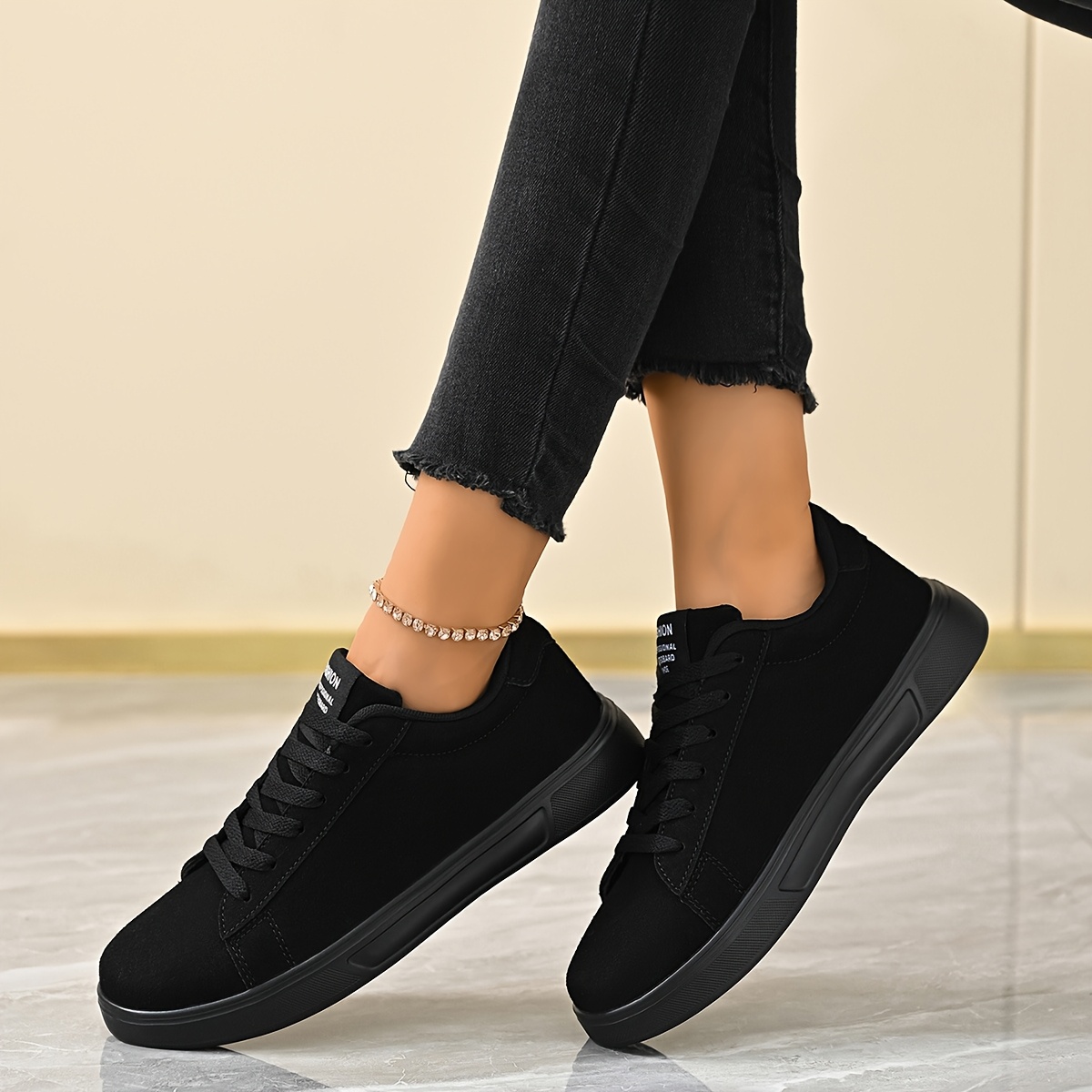
Classic low-top. Think Converse, or a Stan Smith in full black. Flat sole, canvas or smooth leather, nothing clever. This is the one that goes with everything and supports nothing, so it’s a bad choice if you’re on your feet for eight hours. Great for a desk job and a train.
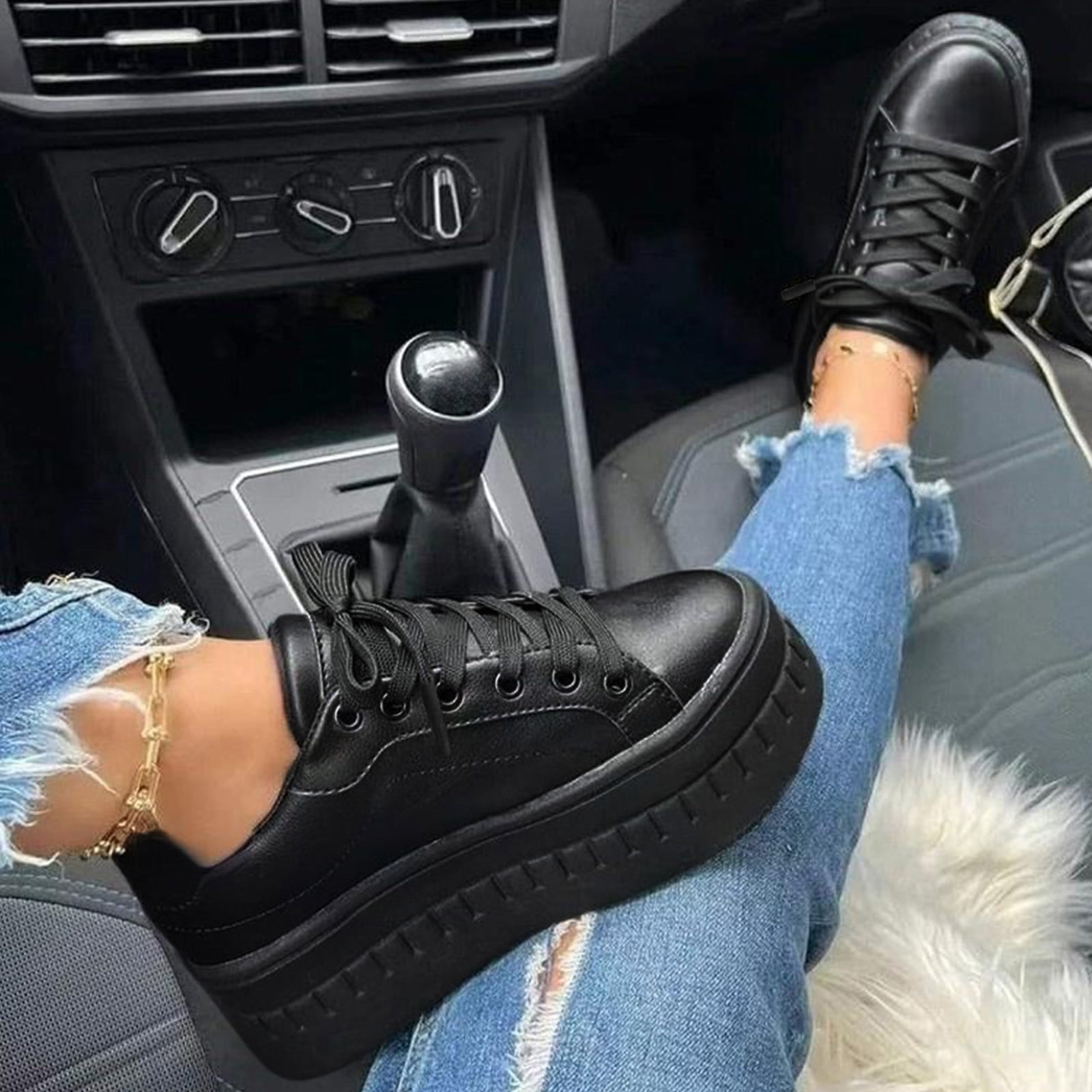
Platform. An extra 3 to 4cm of sole, no heel to speak of, and a lot more height than people expect. They look good with straight-leg jeans and terrible with a midi skirt, in my opinion, though plenty of people disagree. The honest downside is weight. My platforms are 380g each and you feel every gram by the end of a long day.
The chunky layered kind. Complex upper, thick sole, a lot of shoe. Brilliant if you want the sneaker to be the point of the outfit. Awful if you’re wearing anything voluminous, because then it’s shoe plus coat plus bag all competing and nothing wins.
My recommendation, if you’re buying one pair: low-top in leather. It’s the least interesting and the most useful, and interesting is overrated at 7am.
Where they earn their keep in a work wardrobe is underneath tailoring. A black low-top with a navy suit and no socks looks like a decision somebody made on purpose. The same shoe with a floral midi dress looks like you forgot your real shoes, so if you’re going to mix them with something feminine, keep the rest of the outfit sharp and let the sneaker be the one soft thing.
What to check before you pay
Pick the shoe up and twist it. A good sneaker resists in the middle and bends at the ball of the foot. If the whole thing folds like a sock, there’s no shank in it, and after a month your arch will file a complaint.
Press the heel counter, the stiff part at the back. It should hold its shape when you push. Soft heel counters are comfortable for a week and then collapse, and once they go, the shoe rubs.
Then look at the upper material. Knit breathes and stretches, which is lovely in summer and hopeless in rain. Leather holds shape and wipes clean. Cheap synthetic leather creases into white lines within a fortnight, and no amount of polish hides it.
Fit tip that took me years: go true to size in canvas, half a size up in leather if you wear thick socks, and ignore the “runs large” reviews because they’re usually written by men with narrow feet. Try them on at the end of the day when your feet are at their biggest.
Keeping them black
Black sneakers don’t show dirt, which is why people stop cleaning them, which is why they end up grey. A wipe with a damp microfibre cloth once a week is enough for leather. Canvas needs a brush and a small amount of soap, and it needs to dry away from heat or the glue goes soft.
The white midsole is the real problem. It yellows, and it yellows faster if you leave the shoes in sunlight. A melamine sponge gets most of it back. Nothing gets all of it back.
And don’t machine wash leather. I did it once, out of laziness, and the pair came out a half size smaller and slightly misshapen. Canvas survives the washing machine on a cold cycle in a pillowcase. Leather does not.
How much is enough to spend
Here’s the unpopular bit. You don’t need the designer version. I’ve owned a £400 pair and a £70 pair, and the £70 pair lasted longer because the sole was stitched instead of glued. What you’re paying for above about £120 is the name on the side, not the shoe.
Where the money does buy something real: better leather that softens instead of cracking, a replaceable insole, and a sole that a cobbler can actually repair. Those three things matter if you’ll wear them four days a week. If you’ll wear them twice a month, buy cheap and replace them.
One last thing, and it’s the reason I stopped buying bargain pairs online. Check the returns policy before you order, because sneaker sizing is a mess across brands and a shoe that doesn’t fit is a shoe you’ll never wear, no matter how good the discount looked at checkout.

So: one good black pair, worn into the ground, resoled once, and replaced when the sole finally goes. That’s the whole strategy. Mine are on year three and I’ve just started looking at what comes next, which is about as good a review as a shoe can get.
